









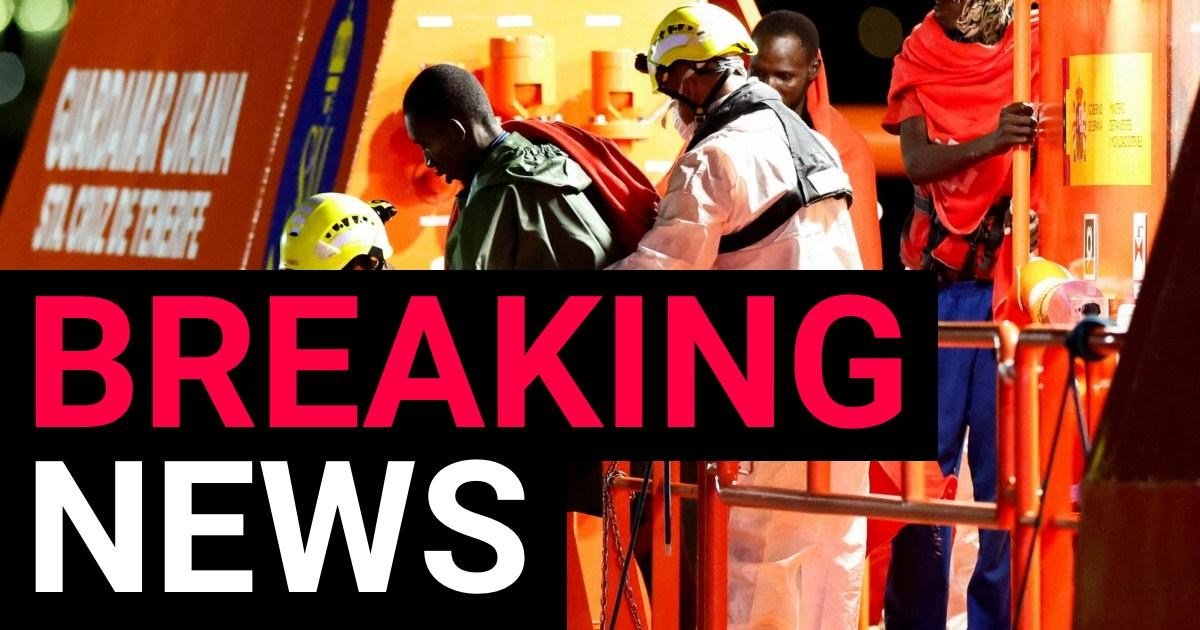
Dozens dead after migrant vessel drifts in Atlantic for 26 days
Dozens of people, including an infant, have perished after a fishing vessel was left adrift in the Atlantic Ocean for nearly a month, marking yet another humanitarian tragedy on one of the world’s most perilous maritime routes.
The small canoe-style boat, which reportedly set sail from Gambia nearly four weeks ago, was carrying 128 people with the goal of reaching the Canary Islands. However, the vessel became lost at sea, leaving those on board to endure 26 days of exposure and starvation before being discovered.
Authorities confirmed that only 45 people survived the harrowing ordeal. They were rescued early Thursday morning approximately 74 miles (120km) off the coast of Las Palmas, Gran Canaria.
Upon reaching the boat, rescue teams discovered the remains of five individuals still on board. Due to treacherous sea conditions, rescuers were ultimately forced to leave the bodies behind at the time of the initial operation. The survivors were subsequently transported to the port of Arguineguin for urgent medical assessment and care.
The rescue was initiated after a Maritime Rescue plane spotted the distressed vessel and alerted authorities overnight. Spain’s Civil Guard has since confirmed that the inscriptions found on the hull of the boat match those of a vessel reported to have departed from Gambia last month, confirming the tragic scale of the journey.
The crossing from the African coast to the Canary Islands is widely considered one of the deadliest migrant routes in the world, with hundreds of lives claimed every year. The journey from Gambia is particularly grueling, often covering an expanse of roughly 1,242 miles (2,000 km). According to data from the NGO Caminando Fronteras, an estimated 1,300 people had already lost their lives attempting to reach the Spanish archipelago by June of this year.
This latest incident highlights the intensifying pressures of the ongoing migration crisis in Spain, which faces the highest number of arrivals in the European Union. In addition to the Atlantic route, the Spanish autonomous enclave of Ceuta on the African coast has seen its own surge in activity, with thousands of migrants swimming to its shores earlier this summer.
The situation has sparked a heated domestic political debate. Prime Minister Pedro Sánchez has faced significant criticism regarding the government’s handling of the crisis, particularly after thousands were seen arriving in Ceuta, leading to mass protests in Madrid. While opposition groups accuse the administration of failing to support local residents, government officials have defended their actions and accused political rivals of exploiting the humanitarian disaster for partisan gain.
As international focus returns to the dangerous conditions of these crossings, the loss of dozens of lives—including a baby—serves as a grim reminder of the deadly migrant routes that continue to claim lives in the pursuit of safety and opportunity.