







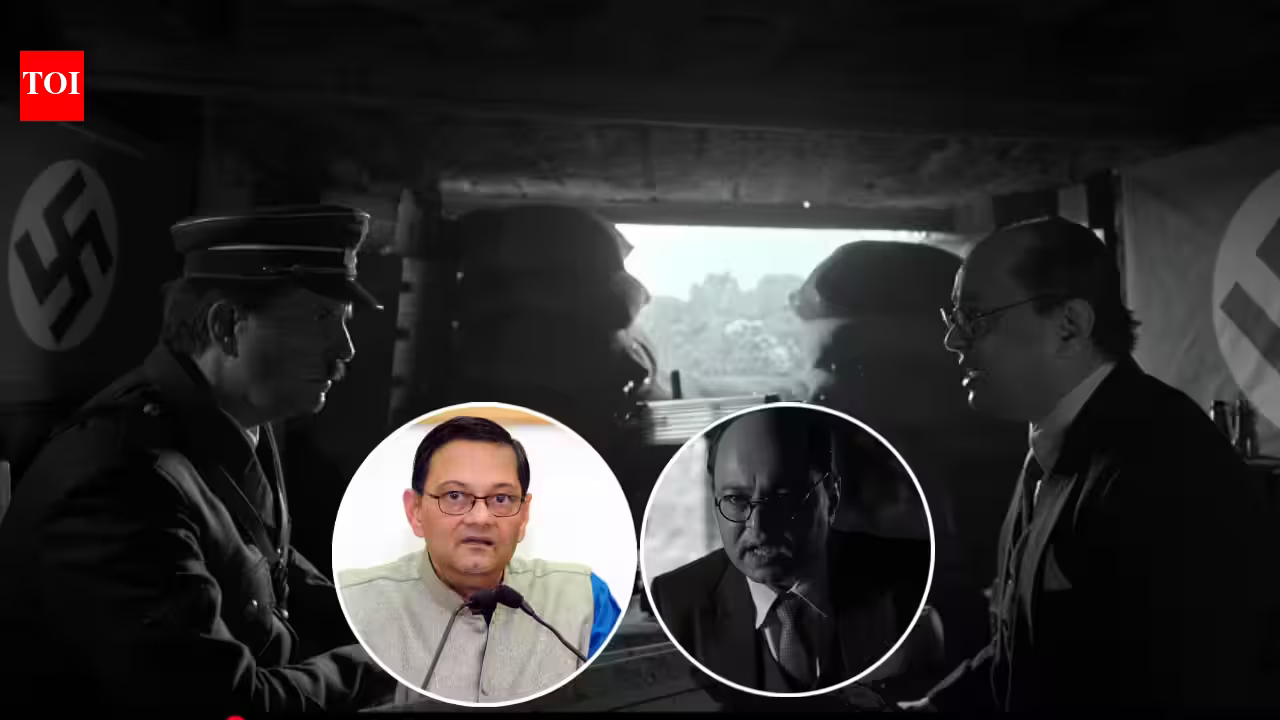
The intersection of Indian cinema and historical legacy has always been a volatile landscape, but the recent backlash against the upcoming Prabhas-starrer Fauzi has elevated the stakes to a new, nationalistic level. At the heart of the storm is Chandra Kumar Bose, the grandnephew of Netaji Subhas Chandra Bose, who has launched a scathing critique of director Hanu Raghavapudi. The contention? A cinematic depiction of Netaji’s historical meeting with Adolf Hitler that Bose labels not just as inaccurate, but as a “crime” against the sanctity of India’s freedom struggle.
As the film industry grapples with the pressure to balance high-octane commercial entertainment with the reverence afforded to national icons, this controversy serves as a stark reminder that when filmmakers reach into the history books, the descendants of those history-makers are watching—and they are not in the mood for artistic license.
The Collision of Creative Freedom and Historical Integrity
For many in the creative fraternity, “creative freedom” is the bedrock of storytelling. Directors often argue that historical dramas are interpretations rather than documentaries, designed to evoke emotion and provide a canvas for legendary figures. However, Chandra Kumar Bose’s retort to this age-old defense is sharp and uncompromising.
Speaking with conviction, Bose argued that while filmmakers possess the liberty to explore the annals of the Indian independence movement, that freedom must stop where factual distortion begins. By framing the interaction between Netaji and Hitler through a lens of fiction, Bose believes the production has compromised the dignity of a man whose legacy is synonymous with the nation’s fight for sovereignty. In his view, distorting the truth in a commercially driven venture isn’t just a creative choice—it is a moral transgression that trivializes the sacrifices made by the architects of modern India.
Recontextualizing the Hitler-Bose Alliance
Central to the dispute is the historical nuance behind Netaji’s outreach to Nazi Germany. It is a topic that has often been misconstrued in popular media, and Chandra Kumar Bose is clearly exhausted by the oversimplification. He emphasized that Netaji’s engagement with Hitler and Hideki Tojo was never about an alignment with fascist ideologies. Instead, it was a calculated, pragmatic maneuver by a leader desperate to secure the resources necessary to liberate his country from British colonial rule.
According to Bose, Netaji operated from a position of intellectual and moral strength. He approached Hitler as an equal, not as a subordinate seeking permission. It was Netaji’s unwavering commitment to democracy and human rights that stood in stark contrast to the regimes he was forced to negotiate with at the time. By allegedly portraying the meeting in Fauzi as a subordinate encounter, the film is accused of ignoring the strategic genius and the sheer diplomatic weight Netaji carried on the international stage.
The Myth of the Subservient Meeting
The trailer for Fauzi has become the smoking gun in this dispute. Clips circulating online suggest a scene where Netaji is seen introducing the fictional character played by Prabhas to Hitler. For the Bose family and many historians, this is a bridge too far. It suggests that the film’s narrative hierarchy elevates the fictional protagonist at the expense of the real-life icon.
Chandra Kumar Bose pointedly noted that Hitler’s own writings, specifically Mein Kampf, revealed a profound ignorance regarding India’s heritage and culture—a fact that Netaji would have been acutely aware of. While the film may be aiming for a thrilling “what-if” scenario, the reality of the era was far more complex. By reducing a titan like Netaji to a supporting player in a fictionalized interaction, the director risks misinforming a generation of viewers who may lack the historical context to distinguish the film’s version of events from reality.
The Call for Accountability
The demand for an apology is not being framed as a trivial grievance or an attempt to censor art; it is being presented as a demand for national accountability. Chandra Kumar Bose maintains that when a filmmaker decides to utilize real historical figures in a commercial blockbuster, they take on an implicit responsibility to uphold the truth. When that truth is sensationalized to garner cheap thrills or to boost the arc of a fictional hero, it fundamentally devalues the stature of a national hero.
“The director should apologise to the people of India and all those who value the country’s freedom struggle,” Bose declared. His words echo a broader sentiment that there is a line—a line between dramatization and defamation. As audiences become more historically conscious, they are increasingly demanding that their cinema reflect the dignity of the heroes who defined the country’s past.
The Burden of the Blockbuster
Director Hanu Raghavapudi, known for his work in the period-drama genre, now finds himself in a difficult position. The film features Prabhas, one of India’s most bankable stars, ensuring that Fauzi will have a massive reach upon its release. This reach is a double-edged sword: while it guarantees box-office viability, it also amplifies the potential impact of any historical inaccuracies.
The industry is currently divided. Some argue that historical epics must focus on the ‘spirit’ of the times rather than the exact transcript of events, while others insist that the sanctity of national figures is non-negotiable. As the debate rages on, the controversy surrounding Fauzi underscores a vital lesson for Indian cinema: when you feature the ghosts of the past, you must be prepared to answer for how you depict them.
For now, the film’s production team remains under pressure, and the public is left to wonder if the final cut will address these concerns or if the director will stand by his creative vision. One thing is certain—the shadow of Netaji Subhas Chandra Bose is long, and it is far from being a prop for the silver screen. The demand for an apology serves as a reminder that for many, history is not just a background for a movie; it is a sacred heritage.
Disclaimer: This content is auto-generated for informational purposes only.
Source: Read Original News