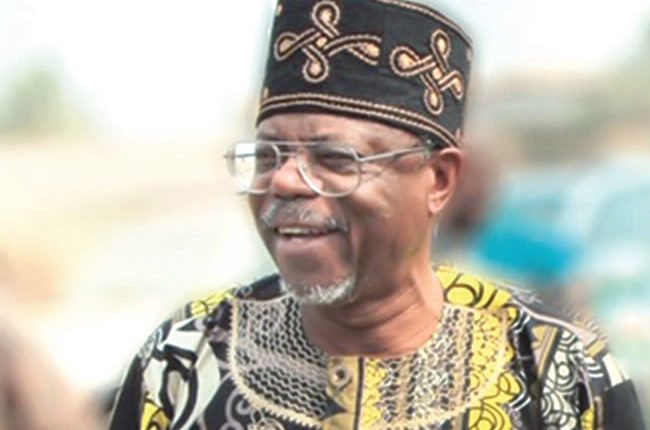








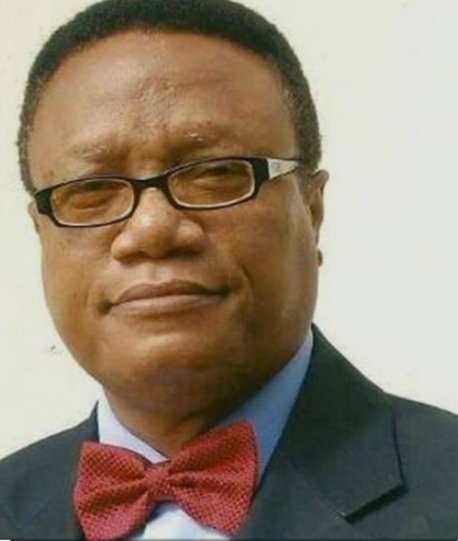
Lagos, Nigeria – In a milestone celebration marking his 65th birthday, Professor Gabriel Olatunde Babawale has been lauded as a rare archetype of the “public intellectual,” a scholar whose career has consistently bridged the gap between theoretical research and national institutional transformation. The celebration, held virtually on October 4, 2026, drew tributes from across the globe, highlighting a career that has spanned over four decades of service to Nigeria’s academic, cultural, and political landscape.
Renowned scholar Professor Toyin Falola, who taught Babawale at the University of Ife in the 1970s, spearheaded the tributes, describing the professor’s trajectory as a “unique case study” of how knowledge can be harnessed to serve the public interest.
Born on October 4, 1961, in Osun State, Babawale rose from humble beginnings to become a titan in the Nigerian academy. After distinguishing himself as an academic at the University of Lagos—where he attained the rank of professor in 2002—Babawale famously refused to confine his expertise to the classroom. His professional journey has been marked by a seamless transition between various spheres of influence: he has served as a cultural administrator at the Centre for Black and African Arts and Civilization (CBAAC), an electoral commissioner for Lagos State, and, most recently, as the Provost of the Anti-Corruption Academy of Nigeria (ACAN).
Colleagues note that Babawale’s career is defined by his refusal to view disciplines in isolation. By merging political economy with history, culture, and governance, he has pushed for a holistic approach to Nigeria’s development. His work at CBAAC, for instance, was not merely about archival preservation; he argued fervently that African culture is an essential engine for sustainable development, diplomacy, and national identity.
“The Nigerian professor need not remain enclosed within the walls of the university,” noted Professor Falola during the commemorative lecture. “Babawale’s life suggests that scholarship can enter the public institution. The practice of electoral administration could become a laboratory for democratic theory, and anti-corruption training could borrow from the disciplines of ethics and political economy.”
Throughout his 65 years, Babawale has remained a prolific writer, contributing seminal texts on the crises of governance, democratic consolidation, and the political economy of underdevelopment. His latest monograph, Democracy and Its Future in Nigeria: Constraints and Prospects (2025), confirms that his intellectual rigor remains undiminished.
The celebration also underscored his commitment to the “mundane” but vital work of institutional building—serving as a union leader, departmental dean, and committee member. His contributions have been recognized with numerous accolades, including the Distinguished Public Service Award from the University of Texas at Austin.
As he marks this milestone, peers suggest that Babawale’s legacy is not found in a list of titles, but in the conviction that knowledge must be a form of public service. His career stands as a testament to the idea that for a nation to thrive, its intellectuals must be willing to step out of the library and into the arena of action.
Disclaimer: This content is auto-generated for informational purposes only.
Source: Read Original News