

!['Awarapan 2' box office collection Day 2 [LIVE]: Emraan Hashmi film races towards Rs 30 crore after Rs 22 crore opening](https://dailysamchar.in/wp-content/uploads/2026/08/1786783687_photo.jpg "‘Awarapan 2’ box office collection Day 2 [LIVE]: Emraan Hashmi film races towards Rs 30 crore after Rs 22 crore opening")






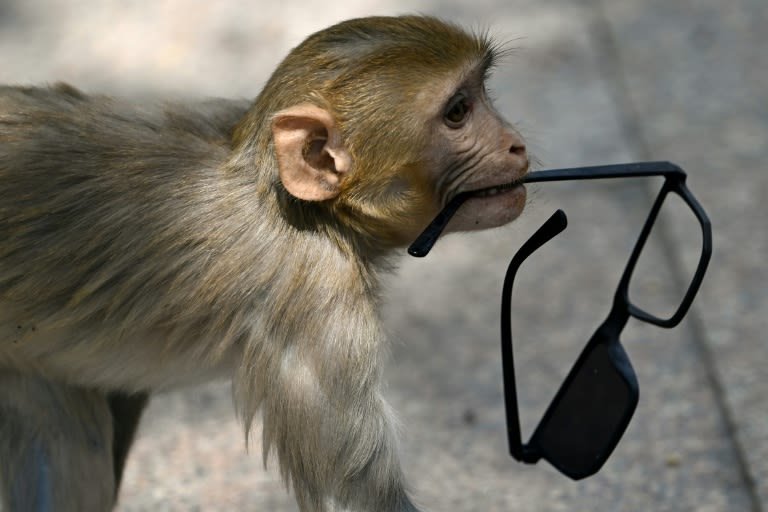
Delhi, India – As the world’s elite badminton players prepare to converge at the Indira Gandhi Indoor Stadium for the prestigious World Championships, organizers are taking extraordinary measures to ensure an undisturbed event. A unique and age-old solution has been employed to combat a persistent local problem: rhesus macaques. At the forefront of this effort is Nazar Khan, a 65-year-old “monkey whisperer,” part of a specialized four-member team tasked with preventing any primate intrusions.
The venue has a rather notorious history, particularly during the India Open in January, when a monkey was spotted amidst the spectators, and even more disruptive, bird droppings and nest debris interrupted play, drawing considerable criticism. Determined to prevent a repeat of such an embarrassing spectacle, event organizers have turned to the traditional practice of engaging “monkey wallahs,” individuals who expertly mimic the calls of langurs, the natural predators of the smaller rhesus macaques.
“We have been in this profession for generations, initially with street performances involving monkeys and bears,” Khan explained to AFP. “However, once those acts were banned, we adapted to scaring away monkeys to sustain ourselves, which is how we find ourselves here today. We used to keep langurs, but that practice was also prohibited.”
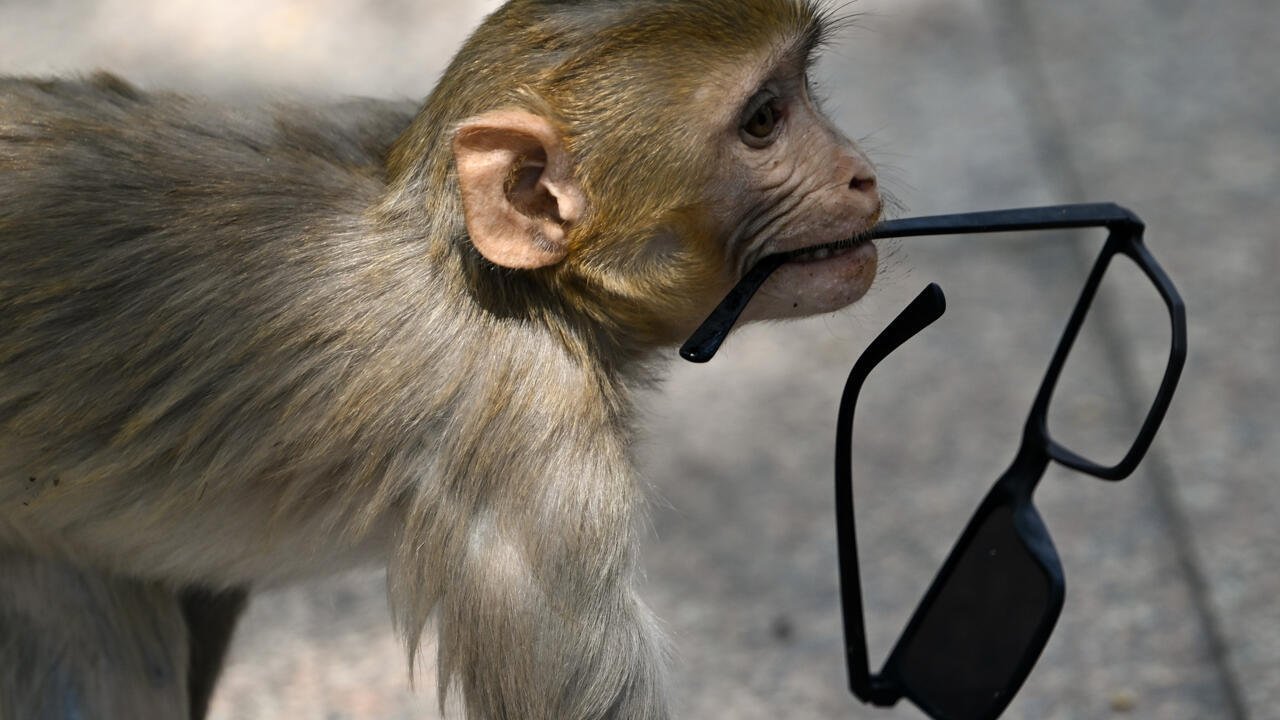
Despite their revered status in this predominantly Hindu nation, monkeys pose a significant public nuisance in India’s capital. They frequently cause damage to gardens, offices, and residential areas, and are known to aggressively snatch food from people. For many decades, professional monkey handlers utilized trained black-faced langurs to deter these smaller primates from urban spaces. However, this method was discontinued following a court ruling that banned the capture and use of these animals.
This legal shift has meant that families like Khan’s now rely primarily on their extensive experience, keen observation skills, and an impressive repertoire of convincing animal impersonations. Khan, referring to the macaques inhabiting the championship venue, remarked, “There are three or four monkeys, and two particularly large ones that many consider dangerous. But we employ specific vocalizations that effectively scare them away. We truly understand our craft.”
Beyond primates, Khan’s team also manages other potential animal disruptions. “We are also responsible for keeping stray dogs away,” he noted. “We catch them and escort them out of the stadium, always ensuring that no animal is harmed in the process.” He proudly mentioned that his grandson is involved in a similar capacity, safeguarding the office premises of Prime Minister Narendra Modi from monkey incursions.
Faryad Ali, Khan’s nephew and fellow “monkey wallah,” readily demonstrated his skills, producing a rapid succession of convincing hoots, screeches, and growls. However, this profession is not without its risks. “There are dangers inherent in this job, and sometimes we do get bitten,” Ali revealed to AFP, displaying bite marks on his back. “But it’s simply part of the trade. We get bitten, apply some chili powder to the wound – no need for injections or anything – and we’re back to work.”
The news of deploying monkey whisperers for badminton’s premier event initially sparked some online amusement. Nevertheless, Indian badminton star and Olympic medallist P.V. Sindhu defended the initiative on X, stating, “You can chuckle at the solution, but one must appreciate the effort.” Sindhu drew a parallel between this arrangement and Wimbledon’s long-standing tradition of employing Rufus the hawk to deter pigeons from its famous grass courts. “Every major sporting event faces its unique local challenges,” she explained. “This is simply an additional measure among the countless others already implemented.”
Tournament organizers emphasize that this unconventional workforce is just one component of a comprehensive strategy to avoid the disturbances that marred the India Open in January. A non-toxic gel has also been applied to roof structures and ducts to prevent pigeons from roosting. Sanjay Mishra, Secretary of the Badminton Association of India, affirmed that officials are leaving nothing to chance. “I am absolutely confident that this time, any issues related to pigeons or any other birds and animals will not arise during the World Championships,” he declared.