








Philippine Mining Expansion Sparks Conflict Over Indigenous Rights and Environmental Safeguards
The Philippine government has launched an ambitious new national policy aimed at transforming the country into a global powerhouse for critical mineral production. However, the initiative is meeting fierce resistance from environmental advocates and Indigenous leaders, who warn that the push for speed and scale could come at the cost of the nation’s most vulnerable ecosystems and ancestral domains.
Signed by President Ferdinand Marcos Jr. on August 18, Executive Order (EO) No. 122 establishes a comprehensive framework to accelerate the development of the mining sector. The directive identifies roughly 9 million hectares (22 million acres) of “prospective mineral areas”—an expanse covering nearly 30% of the Philippines’ total land area. According to the Legal Rights and Natural Resources Center (LRC), this represents a footprint more than 11 times larger than the country’s currently approved mining projects.
A Controversial “Fast-Track” Strategy
At the core of the controversy is the administration’s strategy to streamline permitting. Under the new executive order, the Department of Environment and Natural Resources (DENR) is tasked with creating a “virtual one-stop shop” that allows for the simultaneous processing of permits and clearances.
While the mining industry has lauded the move as a long-awaited boost for predictability and efficiency, rights groups argue that this accelerated timeline is fundamentally flawed. Specifically, critics fear that forcing agencies to process permits simultaneously will inevitably undermine the process of “Free, Prior, and Informed Consent” (FPIC).
“Communities cannot give informed consent to a mining project if they have yet to see and understand the full environmental impacts of that project,” said E.M. Taqueban, executive director of the LRC. Indigenous advocates worry that when public consultations are compressed to meet government quotas, the result is a disingenuous process that prioritizes industry timelines over community sovereignty.
The Human and Environmental Cost
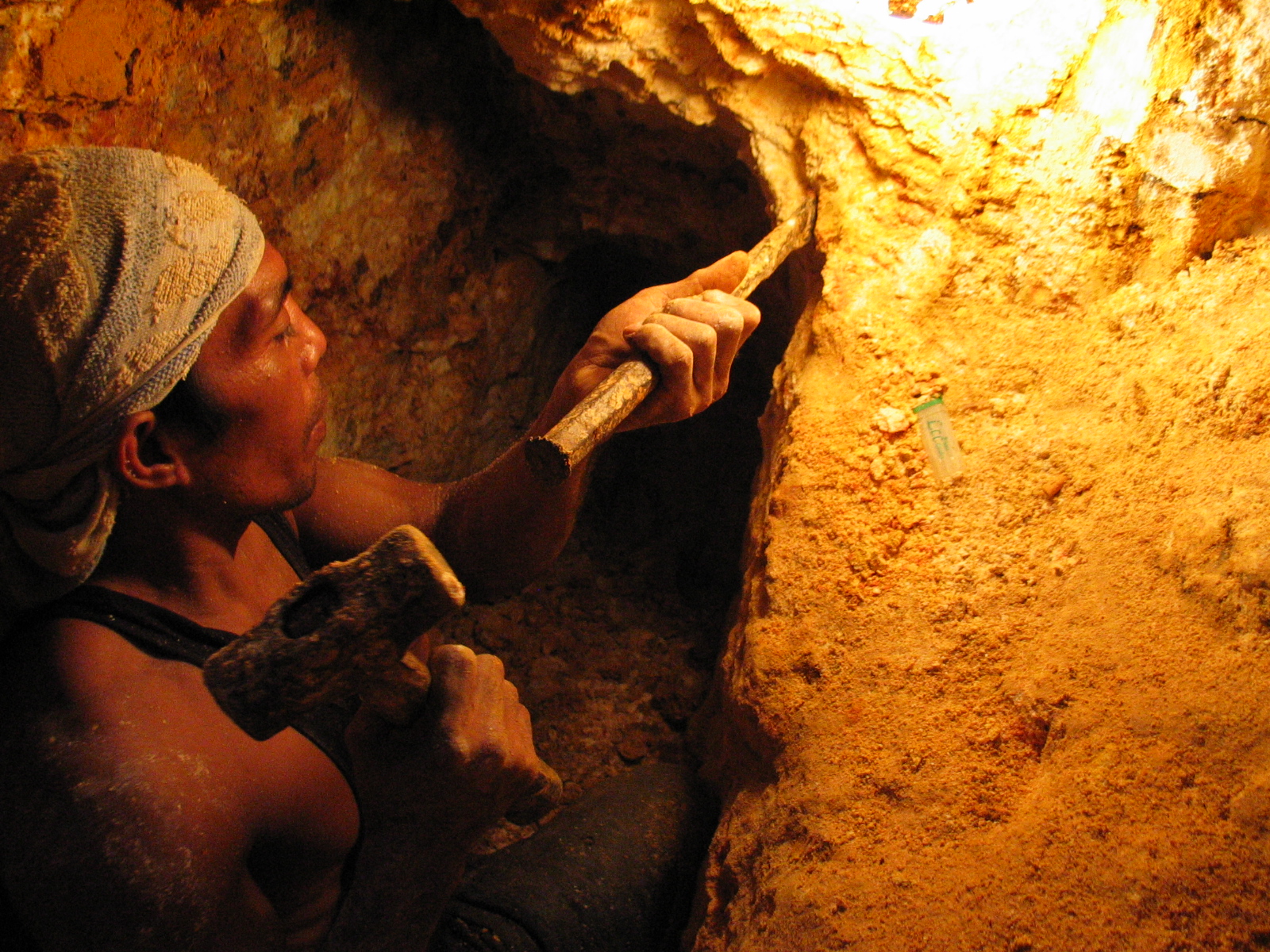
The expansion raises alarm bells for Indigenous communities, who hold deep-rooted ties to the regions targeted for exploration. Over 50% of the Philippines’ currently active mining sites already overlap with ancestral domains, and experts warn that further development could exacerbate existing social fissures and economic instability.
Victor Colili, a leader from the Pala’wan Indigenous community, describes the threat as an existential one. “In Palawan, there is practically nowhere you can mine that is not forest and ancestral land,” Colili told reporters. He noted that as mining operations shrink the territory available for farming and subsistence, the resulting displacement often pushes local families into deeper poverty.
Rogelio Andrada II, a forestry professor at the University of the Philippines Los Baños, emphasized that even early-stage exploration can leave lasting scars on delicate ecosystems. “Mining, whatever technology is used, is essentially disruptive to any ecosystem,” Andrada stated, warning that once the integrity of a forest or watershed is compromised, the damage is often irreversible.
Looking Toward Reform
The Philippine government maintains that the strategy is designed to move the nation beyond simple raw material extraction, encouraging downstream processing, manufacturing, and mineral recycling to drive economic industrialization.
However, as the government moves to implement these reforms, civil society groups are urging a change in course. The LRC is calling on the Philippine Congress to prioritize the passage of the Alternative Minerals Management Bill, which would shift the focus of national policy toward robust community participation and strict ecosystem protections before any new large-scale extraction begins.
As the debate continues, the fundamental challenge for the Philippines remains clear: finding a way to balance the global demand for transition minerals with the rights of the Indigenous peoples who guard the land where these resources are found.