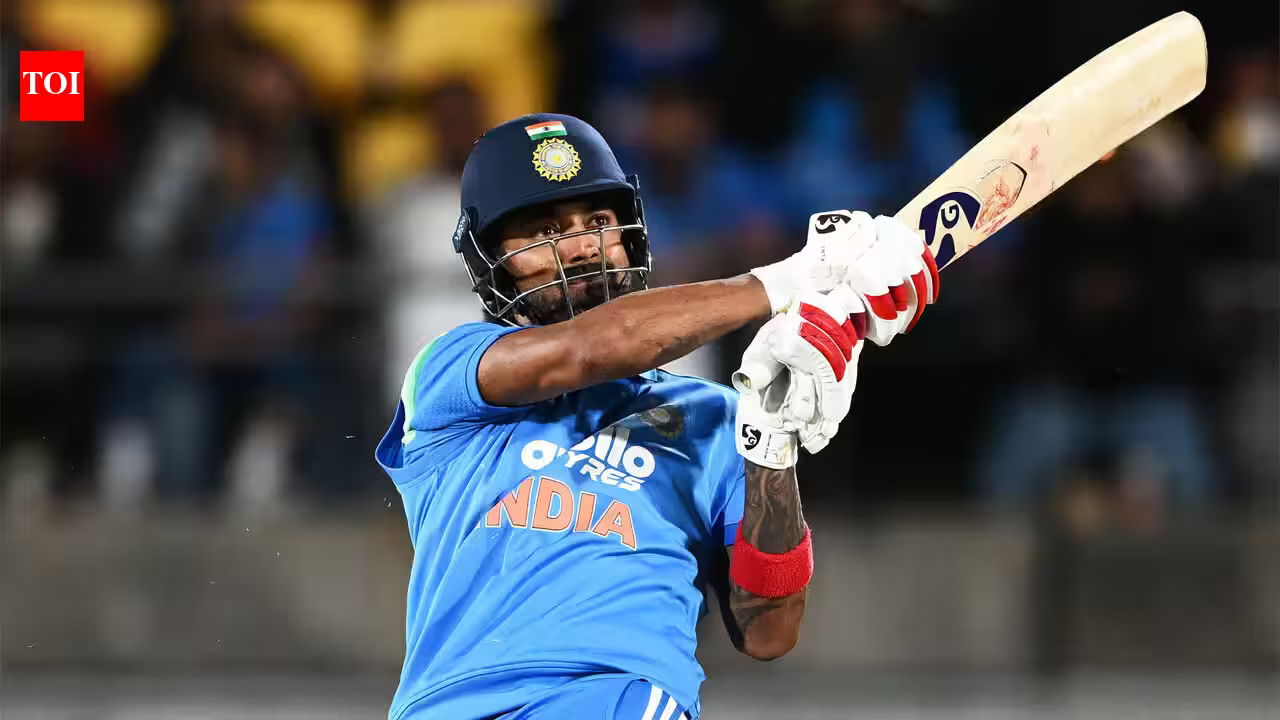








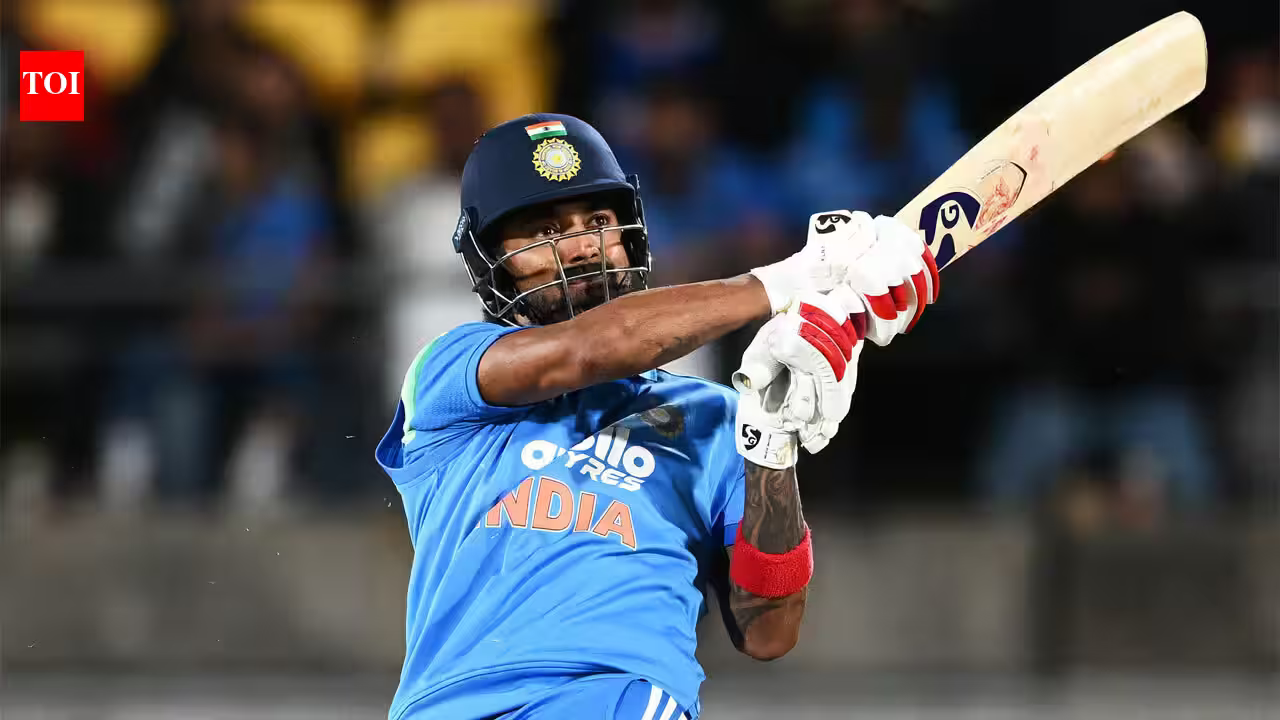
Wellington’s biting winds and unpredictable track provided the backdrop for a tactical firestorm that has engulfed the Indian dressing room following their recent ODI clash against New Zealand. As the dust settles on a challenging outing, the primary point of contention isn’t just the final score, but the strategic decision-making that saw one of India’s premier batters, KL Rahul, relegated to the No. 6 position.
The debate centers on a pivotal moment in the second ODI, where India found themselves in a precarious position at 39/3. With the top order dismantled by the New Zealand pace battery, the team management opted to promote all-rounder Axar Patel up the order, pushing the seasoned Rahul further down to No. 6. The gamble, intended to provide tactical variation, backfired spectacularly as Patel struggled to navigate the uneven bounce and aggressive short-pitched bowling, eventually perishing for a meager seven runs off 17 deliveries.
Srikkanth: A “Gross Injustice” to Rahul’s Pedigree
The decision did not sit well with former India selector and legendary opener Krishnamachari Srikkanth. Known for his candid and often fiery analysis, Srikkanth took to his YouTube channel to launch a scathing critique of the team’s current handling of Rahul. For Srikkanth, the issue is not merely tactical; it is a fundamental misunderstanding of the value an experienced player brings to the middle overs.
“What justice is it to send Rahul at No. 6 after Axar Patel?” Srikkanth questioned, visibly frustrated by the management’s choice. He went on to highlight Rahul’s impressive resume, which includes international centuries while batting at No. 3 and No. 4. “Gautam Gambhir needs to understand Rahul is a marquee player. He has scored centuries at No. 3 and 4 for India. Yet, he is being reduced to such a role. It’s gross injustice.”
Srikkanth further emphasized that when conditions become treacherous, experience is the only currency that matters. He pointed to Rahul’s brief but assured time at the crease in Wellington as evidence of his quality. “He’s the only one who looked comfortable in the second ODI. Once the conditions are difficult, only two players step up – Virat Kohli and KL Rahul. If Rahul got out early in the last match, India were finished. How can you justify Axar batting ahead of him?”
The Tactical Defense: Gavaskar’s Perspective
While Srikkanth focused on the stature of the individual, former India captain Sunil Gavaskar offered a more nuanced, structural defense of the team management’s mindset. The legendary “Little Master” acknowledged that while the move yielded poor results in Wellington, the underlying philosophy—utilizing a left-handed batter to disrupt the opposition’s bowling rhythm—is a staple of modern white-ball strategy.
“The bowlers have slight difficulty if a left-handed batter comes because you have to change the line and length you would have for a right-hander,” Gavaskar explained. “In trying to do that, your line can change slightly even to the right-hander, where more chances of getting runs are created.”
Gavaskar urged fans and critics alike to separate the execution of a plan from the logic behind it. He argued that the intent was to build a buffer and disrupt the New Zealand bowlers’ momentum. When that fails, the optics are always poor, but that doesn’t mean the blueprint was flawed from the start.
“There was nothing wrong with that thought process,” Gavaskar noted. “If Axar had scored runs, you would have said how good the captaincy was. Such moves work at times and don’t work on other occasions, and it didn’t work this time. You also knew there was a solid player like Rahul after him. That’s why you experiment at times.”
The Path Forward for the Men in Blue
The dichotomy between Srikkanth’s demand for stability and Gavaskar’s embrace of tactical experimentation highlights a growing tension within the Indian cricketing fraternity. As the team looks to solidify their batting lineup ahead of future series, the role of KL Rahul remains a critical puzzle.
Is he a stabilizer intended to anchor the innings from the top four, or is he a versatile engine room protector tasked with managing the death-over volatility? While the management seems intent on testing their depth and flexibility, the fallout in Wellington serves as a reminder that even the most well-intentioned tactical tweaks can unravel when the world-class quality of an established star is left waiting in the pavilion.
Ultimately, the match in Wellington was a microcosm of the risks inherent in modern-day selection. While experimentation is vital for growth, the shadow of “gross injustice” cast by pundits like Srikkanth suggests that the Indian team management may need to strike a more delicate balance. Whether they continue to favor the “left-field” approach to disrupt bowling rhythms or pivot back to placing their premier run-scorers in their traditional roles, one thing remains clear: in international cricket, the margin for error is razor-thin, and every decision is scrutinized under the microscope of history.
Disclaimer: This content is auto-generated for informational purposes only.
Source: Read Original News