






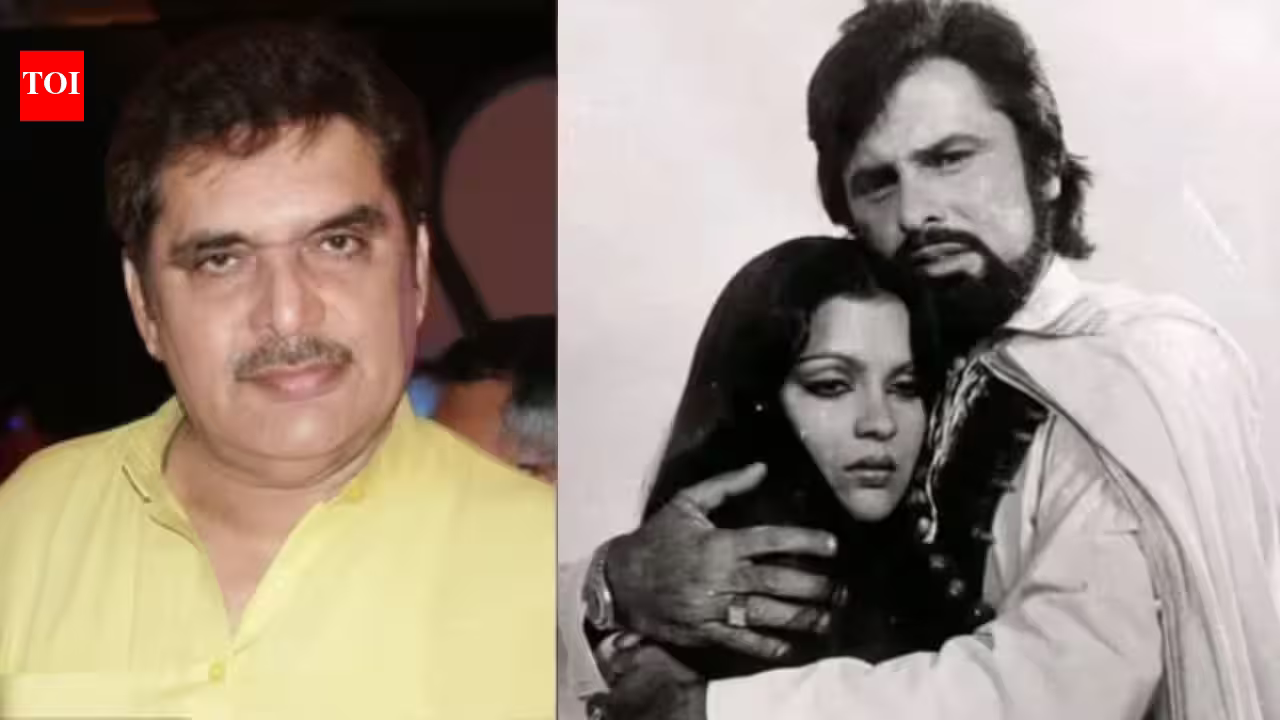
The image of Zeenat Aman in the 1970s was one of untouchable, cinematic grace. As the face of the hippie movement in Bollywood, she was the quintessential trendsetter—a woman who possessed the confidence to drape a saree over a bikini and look regal doing it. Yet, as the headlines of the time often obscured, the woman behind the screen lived in a landscape far removed from the Technicolor glamour of her filmography.
For decades, the shadows cast by her personal life have been dissected by the tabloids, but they have rarely been addressed with the raw candor seen in recent weeks. Veteran actor Raza Murad, her cousin and a contemporary from the industry’s golden age, has finally pulled back the curtain on the formative pain that shaped one of India’s most resilient stars.
A Childhood Defined by Absence
To understand the choices Zeenat Aman made in adulthood, one must first look at the quiet, fractured home she inhabited as a child. Born Zeenat Khan, she was affectionally known in her inner circles as ‘Babbushah.’ However, that pet name belied the instability of her early years.
Raza Murad, who shares a close familial bond with the star, points to the divorce of her parents as the primary fissure in her foundation. In an industry that often celebrates the “self-made” narrative, the emotional toll of a broken home is frequently overlooked. Zeenat was an only child, caught in a tug-of-war between two parents who, while loving, were incapable of sustaining a cohesive unit.
“The effects of growing up in a broken home inevitably fall on children,” Murad noted in a recent interview. He described a life of movement—toggling between her father’s home and her mother’s, and eventually finding herself in the rigid, structured halls of a convent school in Panchgani. This, according to Murad, was the genesis of a lifelong struggle with loneliness, a vulnerability that would later complicate her romantic pursuits in the public eye.
The Sanjay Khan Chapter: A Dark Turning Point
Perhaps the most infamous chapter in Zeenat’s life remains her entanglement with actor Sanjay Khan. It is a story that has been whispered in the corridors of Bollywood for over forty years—a narrative involving a secret marriage, a high-profile hotel brawl, and a physical injury that forever altered her signature gaze.
The incident, which reportedly occurred in a Mumbai hotel, left Zeenat with a lasting, visible injury to her right eye. While the details of that night have been the subject of speculation for decades, the discourse has rarely been as direct as it is now. Murad, breaking the industry’s unspoken code of silence, was categorical in his assessment of the encounter.
“It was a violent incident, because of which her eye was affected,” Murad stated, before adding a moral indictment that resonates in today’s cultural climate: “You have no right to raise your hand against a woman.”
A Culture of Silence vs. The Reality of Trauma
For years, the industry’s reaction to the alleged abuse was a mixture of morbid curiosity and polite avoidance. Zeenat herself, in a 1999 interview on Rendezvous with Simi Garewal, offered a poignant glimpse into how she survived the trauma. She spoke of “obliterating” memories, a psychological survival mechanism where the mind simply refuses to acknowledge the cruelty inflicted upon it.
This, however, did not erase the physical reality. In later years, Zeenat would use social media to address her “droopy” eyelid, a byproduct of the injury that transformed her face, yet she remained largely tight-lipped about the perpetrator. It was a stoic defense, one that prioritized her own mental peace over the public’s thirst for a confession.
Sanjay Khan’s Counter-Narrative
The controversy, however, remains a point of intense friction. Sanjay Khan has consistently pushed back against the “villain” label, characterizing the long-standing media reports as a “well-planned PR attack.” In his autobiography, The Best Mistakes of My Life, Khan argued that he was never given a fair hearing and labeled the version of events that has dominated the public consciousness as entirely one-sided.
Khan has gone as far as to attribute Zeenat’s ocular condition to heredity, a claim that stands in direct opposition to the accounts provided by those who were close to the actress during the time of the alleged assault. It highlights the ongoing dissonance in Bollywood history: the clash between a star’s personal truth and a public figure’s desire to sanitize their legacy.
Lessons from a Life in the Spotlight
When asked about the context of their volatile relationship, Raza Murad offered a sobering observation about the nature of love in the film industry. He noted that entering a relationship with someone who is already married and has children requires a level of psychological fortitude that is rarely discussed.
“You also need to prepare yourself mentally for the repercussions,” he said. It is a harsh take, perhaps reflective of a generation that viewed marriage as an immutable social contract, but it underscores the immense pressure under which Zeenat Aman operated. She was a woman who navigated a landscape that was simultaneously hungry for her talent and judgmental of her non-conformity.
Today, as Zeenat Aman finds a second wind of popularity through social media, sharing wisdom with a new generation of fans, her past serves as a reminder of the fragility behind the fame. Her journey—from the loneliness of a convent-raised only child to the resilient icon she is today—is not just a story of cinematic success. It is a testament to the fact that while some scars may be visible on the face, the ones that remain hidden are often the ones that dictate the strength of a woman’s character. She didn’t just survive the spotlight; she survived the dark, and in doing so, she became more than an icon. She became a survivor.
Disclaimer: This content is auto-generated for informational purposes only.
Source: Read Original News