







Infrastructure Integration and the Strategic Significance of North-East Connectivity
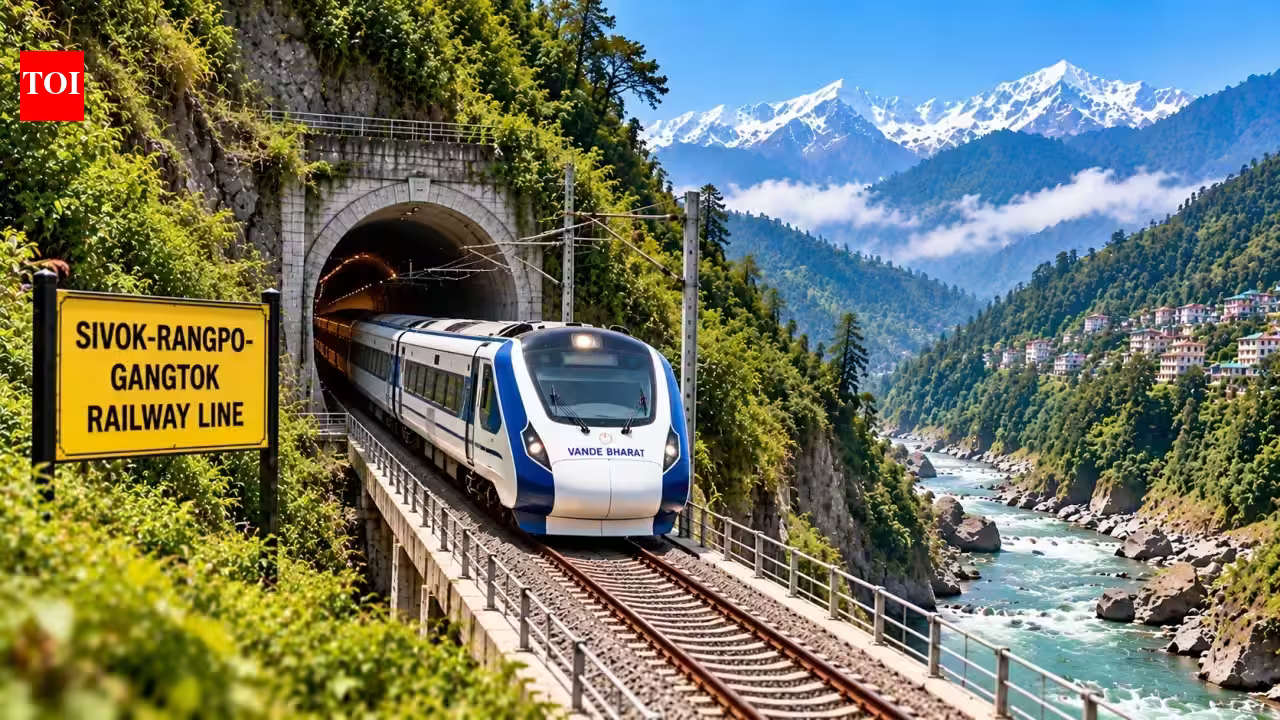
The integration of Sikkim into the Indian railway network represents a transformative shift in the logistical and economic landscape of Northeast India. For decades, the mountainous terrain and fragile ecology of the Himalayan region presented formidable barriers to conventional transport infrastructure. However, the advancement of the 44.5-km Sivok-Rangpo railway project, which has now crossed the 75 percent completion milestone, signifies a pivotal turn. As the nation pivots toward a more robust, multimodal infrastructure framework, the focus has expanded beyond the initial connectivity between West Bengal and Sikkim to the ambitious extension toward the state capital, Gangtok.
The proposed 34-km Rangpo-Gangtok rail link, estimated at Rs 9,000 crore, is being evaluated under the PM GatiShakti National Master Plan. This approach signals a move away from siloed project planning toward an integrated, multi-modal network. By aligning the Rangpo-Gangtok extension with the ongoing progress of the Sivok-Rangpo line, the government aims to create a seamless supply chain. This is not merely a transport project but a strategic initiative designed to bolster national security, facilitate trade, and ensure that Sikkim—a state traditionally dependent on road transport—gains reliable access to the rest of the country.
Engineering Marvels and the Technical Challenges of Himalayan Construction
Constructing a railway line through the Himalayan foothills requires pioneering engineering techniques. The Sivok-Rangpo project is a case study in managing extreme geological complexity. With approximately 86 percent of the route passing through tunnels and another 5 percent crossing major bridges, the project relies heavily on the New Austrian Tunnelling Method (NATM). This technique is essential for maintaining structural integrity in a region prone to seismic activity and landslides.
The geography of the project involves 14 tunnels, the longest stretching 5.30 km, and 13 major bridges. Such technical requirements highlight the immense capital expenditure involved—currently estimated at Rs 17,124 crore for the Sivok-Rangpo section alone. The transition from the alluvial plains of West Bengal to the high-altitude terrain of Sikkim necessitates a precise alignment that balances speed, safety, and environmental mitigation. For the Indian construction and engineering sector, these projects serve as benchmarks, demonstrating the capacity to execute highly complex infrastructure works in some of the most challenging terrains in the world.
Economic Drivers and the Shift in Market Dynamics
The primary economic impact of connecting Gangtok to the national rail grid will be a substantial reduction in the cost of logistics. Currently, Sikkim relies almost exclusively on road transport via National Highway 10. Disruptions to this route, often caused by monsoon-induced landslides, lead to spikes in the cost of essential commodities, construction materials, and consumer goods. A dedicated railway line introduces a stable, high-capacity alternative.
Beyond basic logistics, the project is a catalyst for the tourism and hospitality industries. As one of India’s premier tourist destinations, Sikkim has struggled to scale its visitor numbers due to the time-consuming and sometimes unreliable nature of travel from the nearest major railheads in Siliguri. Direct rail access to the capital will shorten travel times, increase the inflow of domestic and international travelers, and likely encourage further private sector investment in the hospitality sector. The ability to move passengers and freight efficiently will turn Gangtok into a more viable hub for regional business, potentially attracting industries that require consistent connectivity to the Indian mainland.
PM GatiShakti and the Future of Regional Infrastructure
The inclusion of the Rangpo-Gangtok proposal in the Integrated Multimodal Network Planning Group (NPG) indicates that the project is being viewed through a macro-economic lens. The PM GatiShakti initiative emphasizes the avoidance of bottlenecks by coordinating across different departments—railways, highways, and telecommunications—to share data and resources. By fast-tracking the Gangtok link while the Sivok-Rangpo work is still underway, the NPG is working to ensure that the infrastructure is ready for the future, rather than simply reacting to current needs.
This administrative shift reduces the risk of long-term project delays. Historically, large-scale infrastructure projects in India have suffered from fragmented execution and procedural lags. The current directive to hold officials accountable for timeline adherence, combined with a centralized monitoring system, creates a more disciplined environment. This approach is essential for a project of this scale, ensuring that the heavy capital allocation of Rs 9,000 crore for the Gangtok extension yields tangible dividends in a reasonable timeframe.
Long-term Strategic Outlook for the North-East
Sikkim’s integration is the latest chapter in a wider strategy to bring all North-Eastern state capitals into the national railway fold. The strategic importance of this region cannot be overstated. Improved infrastructure serves as a deterrent to logistical isolation and strengthens the socioeconomic ties between the Northeast and the rest of the country.
As the project progresses toward its December 2027 completion target for the initial line, the state government and local businesses must prepare for the secondary effects of this connectivity. This includes developing the necessary rail-side infrastructure, such as warehousing, cold-storage facilities for agricultural produce, and better urban transit systems in Gangtok to handle the influx of travelers. The transition from road-dependent to rail-linked logistics will require a significant re-alignment of existing trade models. Businesses that anticipate these changes by diversifying their supply chains and investing in local capacity stand to benefit from the new economic landscape.
The Sivok-Rangpo and subsequent Rangpo-Gangtok lines will ultimately transform the region from a remote frontier into a connected hub. By prioritizing this infrastructure, the government is not only fulfilling a long-standing developmental promise but also laying the groundwork for sustainable, high-growth economic integration that will serve the state for generations to come. Through the application of advanced technology, integrated planning, and sustained capital investment, the railway project remains the most significant developmental benchmark in Sikkim’s history.
Disclaimer: This content is auto-generated for informational purposes only.
Source: Read Original News