






Standlee Forage Set to Acquire Anderson Hay’s Operational Assets for $16.9 Million in Landmark Deal
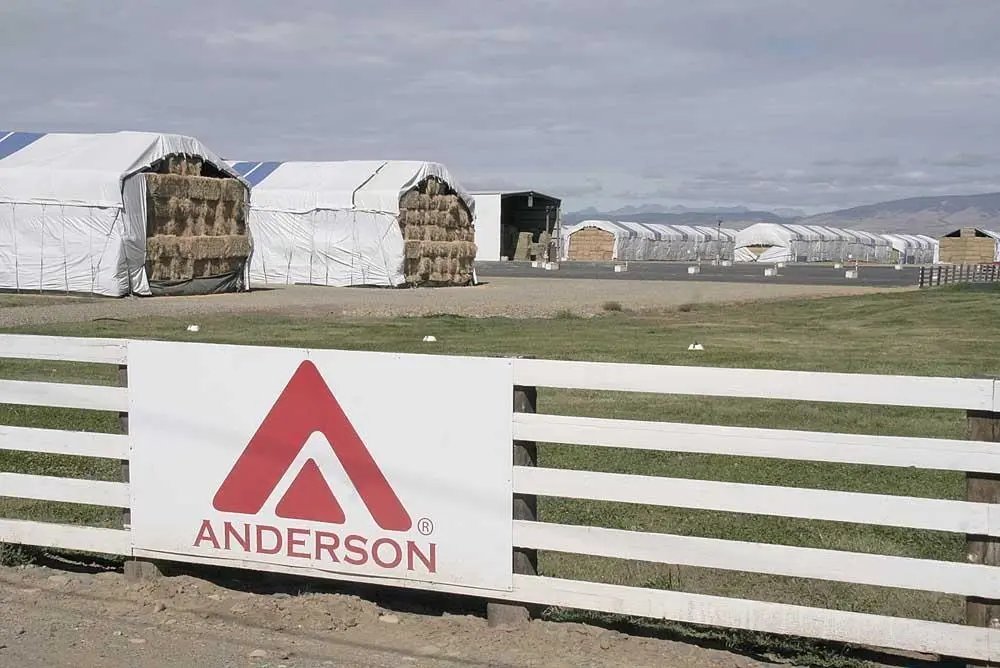
Kimberly, Idaho & Ellensburg, Washington – August 17, 2026 – In a significant development for the agricultural forage industry, Standlee, a prominent Idaho-based forage company, has reached an agreement to acquire the majority of Anderson Hay’s operational assets for approximately $16.9 million. The proposed sale, which excludes Anderson Hay’s real estate holdings, is currently awaiting approval from a bankruptcy court, with an expedited timeline aiming for a closing next month.
The acquisition marks a strategic move for both companies, promising to create a powerful synergy within the competitive forage market. Anderson Hay, headquartered in Ellensburg, Washington, filed for Chapter 11 bankruptcy protection last year, citing weakened overseas demand for its hay and straw products as a primary driver for its financial restructuring. This sale is a crucial step in its reorganization plan, with the proceeds expected to cover a substantial portion of its outstanding debts.
"By joining together and combining the strengths and resources — from production and procurement to sales and logistics — there is a great opportunity to better serve the industry and expand the collective reach while preserving what makes each company and brand special," stated Anderson Hay in a recent court filing.
The transaction is poised to leverage the distinct strengths of both entities. Anderson Hay has historically dominated "high-value export markets" to Asia and the Middle East, establishing a robust presence in international trade. Conversely, Standlee, founded approximately 45 years ago in Kimberly, Idaho, has cultivated an extensive domestic distribution network, boasting "distribution centers through which it sells forage products to every state in the country and owns the ‘leading brand’ sold through major farm retailers such as Tractor Supply," according to the motion presented to the court.
The integration of these complementary operations is expected to yield "significant benefits." Court documents emphasize that "combining sellers’ export infrastructure and supply chain depth with Standlee’s retail expertise and value-added processing will create a set of premium brands serving all markets, from elite equine programs to pet owners to mega international dairies."
While the integration of operations is acknowledged as a "complicated transaction," the sale of Anderson Hay’s assets themselves is anticipated to be "straightforward." Standlee will pay $16.9 million in cash for "substantially all non-real estate property assets" belonging to Anderson Hay. This includes all of Anderson’s vehicles, machinery, equipment, inventory, customer lists, licenses, and permits. Anderson Hay will retain ownership of its real estate but will lease the necessary parcels and facilities to Standlee to ensure the continued conduct of its forage business.
Anderson Hay is pushing for an accelerated review of the transaction by the bankruptcy judge, with a target closing date in mid-September. The company asserts that the deal meets all requirements for such a sale under bankruptcy law, citing a "sound business reason," "good faith" negotiations, and "arm’s length bargaining" between two independent parties.
Steve Gordon, Anderson Hay’s chief operating officer, voiced strong support for the motion in a declaration, stating, "I believe the proposed sale represents the highest and best offer received or that could be received in a marketing timeframe relevant to these bankruptcy cases."
A key condition of the sale ensures continuity, with Anderson Hay’s founder and principal, Mark Anderson, remaining employed by the company following its acquisition by Standlee.
The financial implications of the deal are significant for Anderson Hay’s bankruptcy reorganization plan. The proceeds from the sale are projected to "pay substantially all claims in full," with the exception of PGIM Real Estate Finance, which is owed approximately $15 million. While PGIM will retain collateral in the form of Anderson Hay’s retained real estate assets, providing a "sizable equity cushion," it is also expected to receive a portion of the sale proceeds, although the exact amount is currently undisclosed. Anderson Hay’s debts to PGIM are slated to be repaid either through a refinancing agreement with another lender or as per the terms of its reorganization plan, which may involve the sale of additional properties.