







Tamil Nadu Unveils Ambitious 10 GWh Energy Storage Policy to Stabilize Power Grid
Chennai: In a major push to overhaul its renewable energy infrastructure, the Tamil Nadu government has officially launched the “Tamil Nadu Battery Energy Storage Systems (BESS) Policy, 2026.” The initiative sets an ambitious roadmap to develop a storage capacity of 10 gigawatt-hours (GWh) by 2029, a move aimed at fortifying the state’s energy security while simultaneously reducing the financial burden of high-cost power procurement.
Addressing the Renewable Energy Gap
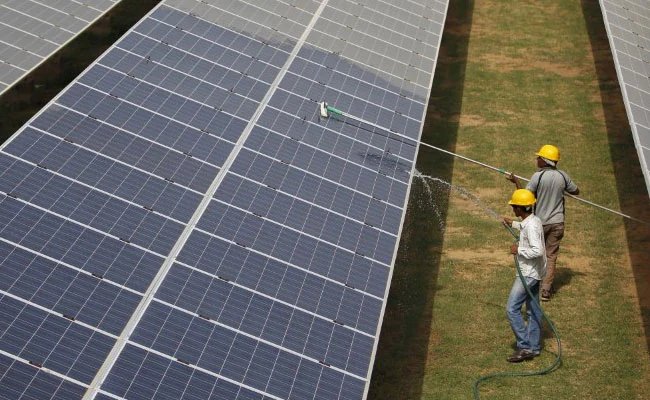
While Tamil Nadu has emerged as a leader in clean energy with an impressive 29.8 gigawatts of combined solar and wind capacity, this success has brought significant grid integration challenges. Currently, the state frequently grapples with power deficits during the evening hours. To bridge this gap, authorities have historically relied on short-term market purchases and power swaps, which are both costly and volatile.
The new BESS policy is designed to solve this by acting as a buffer. By capturing surplus solar power generated during the day and discharging it during peak demand windows, the state expects to stabilize its grid and minimize reliance on external market fluctuations. To streamline the rollout, the government has launched a dedicated single-window portal, simplifying the application process for developers and industry stakeholders.
Mandatory Requirements and Operational Standards
The policy introduces stringent mandates to ensure the reliability of the storage infrastructure. Effective immediately, any new solar or solar-hybrid project with a capacity of 1 megawatt (MW) or higher must integrate a BESS facility. This system must have a storage capacity equivalent to at least 10 percent of the project’s total solar capacity and provide a four-hour discharge duration.
Furthermore, the Tamil Nadu Power Distribution Corporation Limited (TNPDC) plans to procure 2,500 MW/10,000 MWh of storage capacity through competitive bidding in its inaugural phase.
To guarantee that these systems deliver when the grid is most strained, the policy sets high performance bars. BESS projects are required to maintain an annual availability of 95 percent. They must also be fully operational and available during critical peak demand seasons—specifically from March 1 to June 30 and September 1 to October 31. Additionally, to bolster national security, the government has mandated that all Energy Management System (EMS) platforms must be domestically developed, protecting vital grid infrastructure from potential cyber threats.
Incentivizing Private Participation
Recognizing that the transition requires significant capital, the government has introduced robust financial incentives to lure private investors and fast-track the implementation of these projects. The policy provides a 10-year complete waiver on transmission and wheeling charges for eligible BESS projects that reach commercial operation within the defined policy window.
By blending mandatory deployment with strong fiscal incentives, the Tamil Nadu government aims to transform its energy landscape. The 2026 policy not only signals a shift toward a more resilient, sustainable power grid but also positions the state as a blueprint for other Indian states navigating the complexities of large-scale renewable energy integration.
Disclaimer: This content is auto-generated for informational purposes only.
Source: Read Original News