







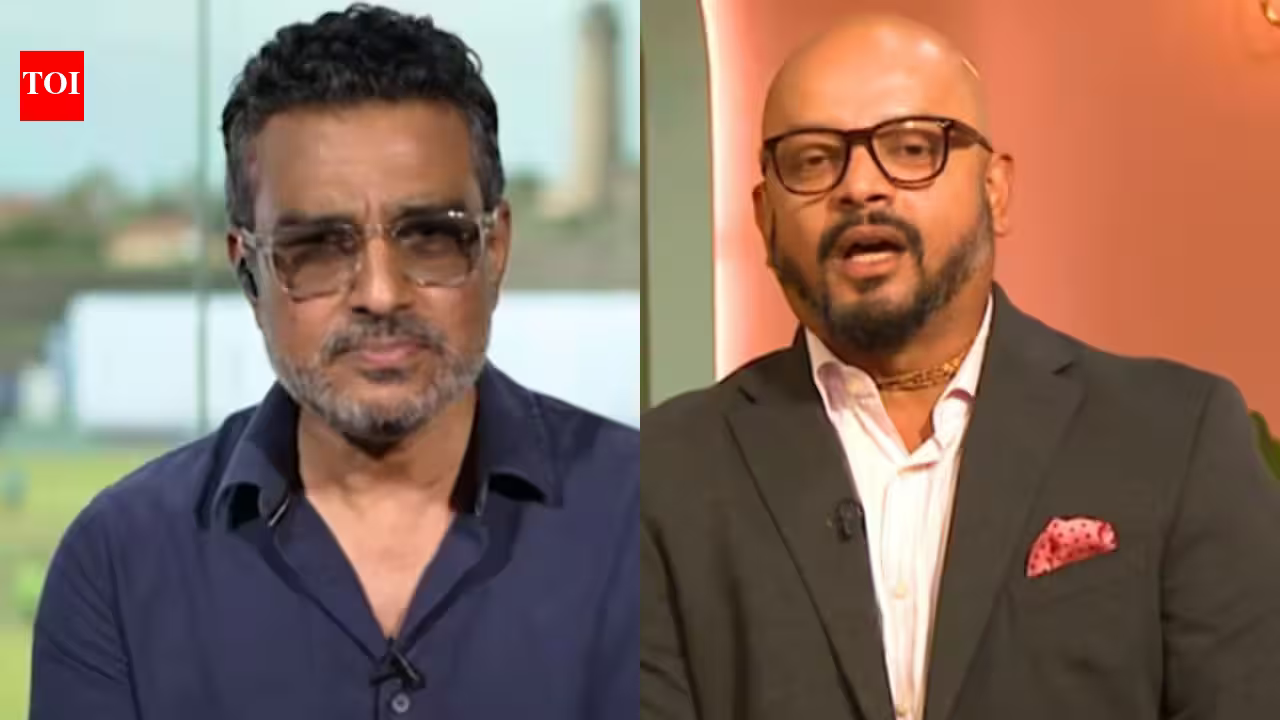
On-Air Banter Between Sanjay Manjrekar and Murali Kartik Turns Sour During Sri Lanka Test
Galle, Sri Lanka – A seemingly innocent exchange between former India cricketers and broadcast commentators, Sanjay Manjrekar and Murali Kartik, took an unexpected and awkward turn during the ongoing Test match between India and Sri Lanka in Galle on Monday. What began as lighthearted banter quickly escalated into a series of increasingly personal remarks, leaving viewers and fellow commentators surprised.
The incident unfolded as the two veteran cricketers, part of the official broadcast team for India’s tour of Sri Lanka, were discussing the match’s developments. However, the conversation veered sharply off-script, shifting from the nuances of cricket to Manjrekar’s facial expressions.
Murali Kartik initiated the exchange with a playful jab, humorously admonishing Manjrekar for what he termed the "pout of the century," claiming it was making his speech difficult to comprehend. Manjrekar, initially, attempted to deflect the comment, responding with a curt, "That’s a bad one." He then retaliated by suggesting the camera should focus on Ajinkya Rahane, who was also present, implying Rahane possessed a "more pleasant face."
The tit-for-tat continued, with both commentators taking further digs at each other. Kartik hit back, alleging that Manjrekar was the one who enjoyed looking at himself, a claim Manjrekar countered by hinting that Kartik had an "incentive" to gaze into mirrors. Kartik then emphatically denied this, adding that anyone who had worked with or known Manjrekar would be well aware of his personality.
It was at this point that Manjrekar appeared to recognize the escalating nature of the exchange. He visibly attempted to de-escalate the situation, acknowledging that they were nearing a line that should not be crossed. The awkward conversation concluded with Manjrekar stating, "We are both going to cross lines here and social media will have a field day."
The unusual on-air spat quickly garnered attention across social media platforms, primarily due to the abrupt and personal shift in the commentators’ interaction. While the initial moments seemed to be in jest, the subsequent comments became increasingly pointed and personal, diverging significantly from typical cricket commentary. Manjrekar’s final remark underscored a recognition that the interaction had moved beyond professional decorum and was likely to become a talking point online. The incident serves as a stark reminder of the fine line between playful banter and potentially uncomfortable personal exchanges, particularly in a live broadcast setting.