







Engineering the Impossible: The Sapphire Bezel
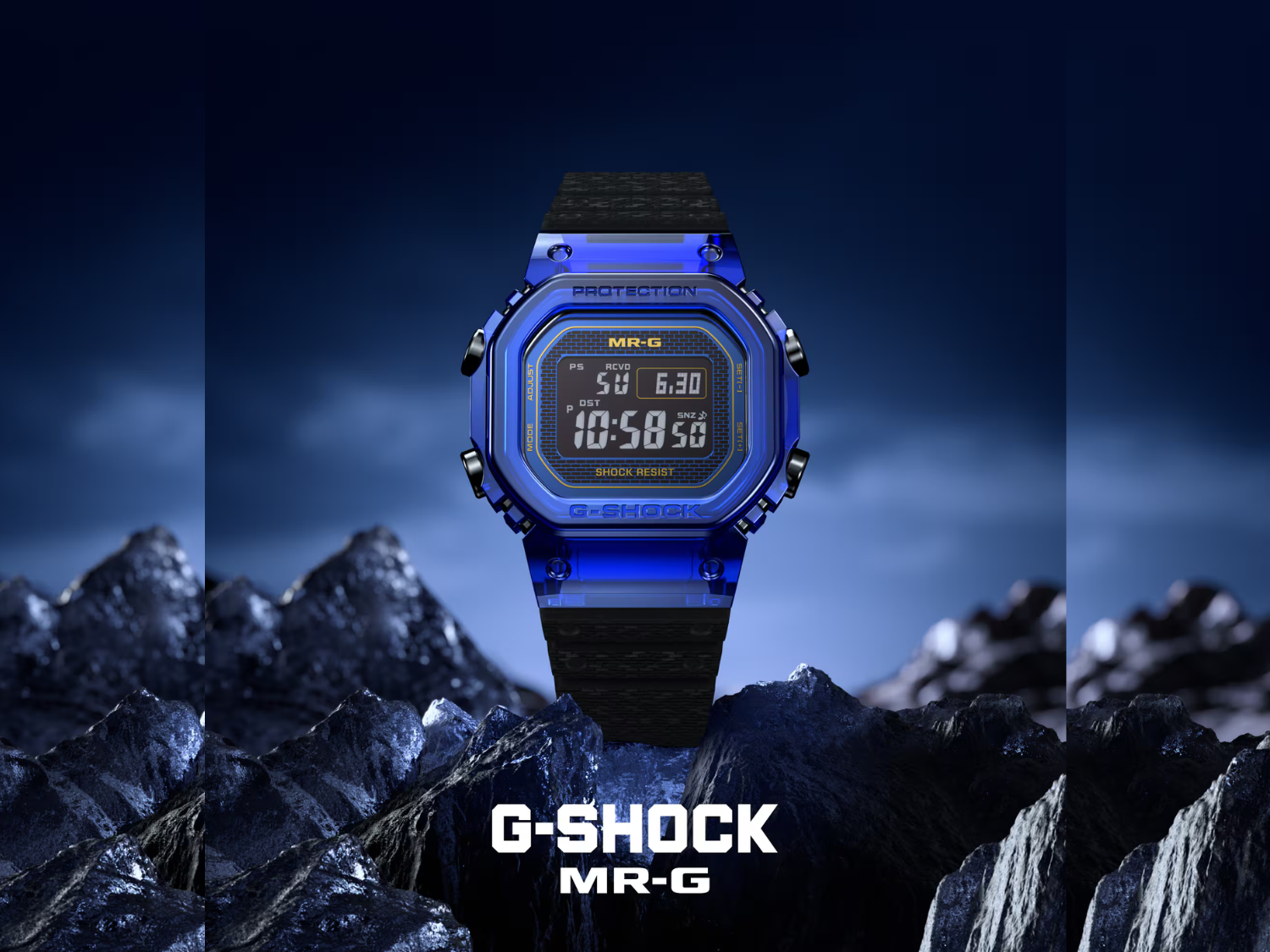
Casio has officially unveiled its most ambitious project in the history of the G-Shock line: the MRG-D5000. Priced at 11 million yen—approximately $69,520—this timepiece represents a departure from the brand’s utilitarian heritage, pushing into the realm of ultra-high-end horology. What justifies this significant investment is primarily the bezel, a component that pushes the boundaries of material science in watch manufacturing. Unlike traditional resin or stainless steel bezels, the MRG-D5000 features a bezel cut entirely from a single piece of blue sapphire crystal.
Sapphire is notoriously difficult to machine due to its extreme hardness, ranking just below diamond on the Mohs scale. Shaping this material into the complex, multi-faceted geometry of a G-Shock bezel requires specialized diamond-tipped tools and precision CNC milling processes. This is not a standard watch component that can be easily mass-produced; it is a manufacturing achievement that demands significant labor and risk. By successfully crafting such a complex structure, Casio has demonstrated that the G-Shock design language, traditionally associated with heavy-duty plastic and metal, can be translated into luxury materials without sacrificing the brand’s core identity.
Material Innovation and Structural Integrity
The integration of a brittle material like sapphire into a shock-resistant watch required a fundamental redesign of the internal housing. The MR-G series is defined by its ability to withstand extreme impacts, a feat usually accomplished by the protective qualities of the bezel. To protect the sapphire component, Casio has implemented a reworked multi-guard structure. The internal chassis is constructed from titanium treated with a Diamond-Like Carbon (DLC) coating, providing a rigid and lightweight foundation.
The engineering challenge lay in ensuring the sapphire bezel remains intact during a drop or vibration. The watch structure isolates the bezel from the primary movement, acting as a buffer that absorbs kinetic energy before it reaches the fragile sapphire outer ring. This ensures that the aesthetic brilliance of the blue sapphire does not come at the expense of the G-Shock’s primary mandate: survivability. This technical solution proves that the integration of luxury materials does not have to render a watch purely decorative; it retains a high level of physical resilience.
Hardware Specifications and Timekeeping Technology
Beneath its striking exterior, the MRG-D5000 adheres to the proven hardware specifications of the flagship MR-G range. The watch measures 51.1 × 43.2 × 16.5 mm and features a weight of 121 grams. For comfort and durability, the watch is secured to the wrist with a Dura Soft rubber strap. In terms of water resistance, it maintains the standard 200-meter rating expected of the G-Shock lineage, making it suitable for aquatic activities.
Powering the device is Casio’s proprietary Tough Solar system, which harvests energy from light to charge an internal battery. Under optimal conditions, the watch can operate for approximately 11 months without exposure to light, and this capacity extends to 22 months when the device enters power-saving mode. For time synchronization, the MRG-D5000 utilizes Multiband 6 technology, which automatically adjusts the time by connecting to radio signals broadcast from atomic clocks in Japan, North America, Europe, and China. This ensures precision without the need for constant manual correction.
Absence of Connectivity and Functional Focus
A notable technical distinction of the MRG-D5000 is the complete absence of Bluetooth connectivity. While many modern high-end G-Shock models, including the sibling MRG-B5000SA, rely on smartphone applications for time sync and configuration, the MRG-D5000 opts for a traditional, standalone operational approach. This choice positions the watch as a purist’s timepiece, removing reliance on external software or cloud-dependent infrastructure.
The feature set remains comprehensive despite the lack of smart connectivity. Users have access to world time across 38 cities, a 1/100-second stopwatch, a 24-hour countdown timer, and five daily alarms. The display is protected by a secondary sapphire crystal with an anti-reflective coating on the inner surface, ensuring legibility under various lighting conditions. By stripping away digital integration, Casio focuses the user experience on the mechanical and physical craftsmanship of the timepiece, reinforcing its status as a collector’s item rather than a smart device.
Market Scarcity and Exclusivity
The MRG-D5000 is defined not just by its price, but by its extreme scarcity. Casio has limited production to only 20 units worldwide. This figure places the watch in a unique category of high-horology collectibles that are often only seen in museum catalogs or private archives. The distribution of these units will be managed through a lottery system in Japan starting in December, ensuring that access to the watch is controlled and fair given the global interest in such a rare specimen.
For the watchmaking industry, this release serves as a statement of intent. By pricing a G-Shock at nearly $70,000, Casio is signaling that its brand equity has reached a level capable of competing with traditional Swiss luxury manufacturers. Whether judged by the precision of the sapphire machining or the scarcity of the production run, the MRG-D5000 represents a technological milestone. It confirms that the G-Shock platform has successfully bridged the gap between durable tool-watch functionality and the realm of exclusive, artisanal jewelry, setting a new benchmark for what the company can achieve when material science meets horological ambition.
Disclaimer: This content is auto-generated for informational purposes only.
Source: Read Original News