







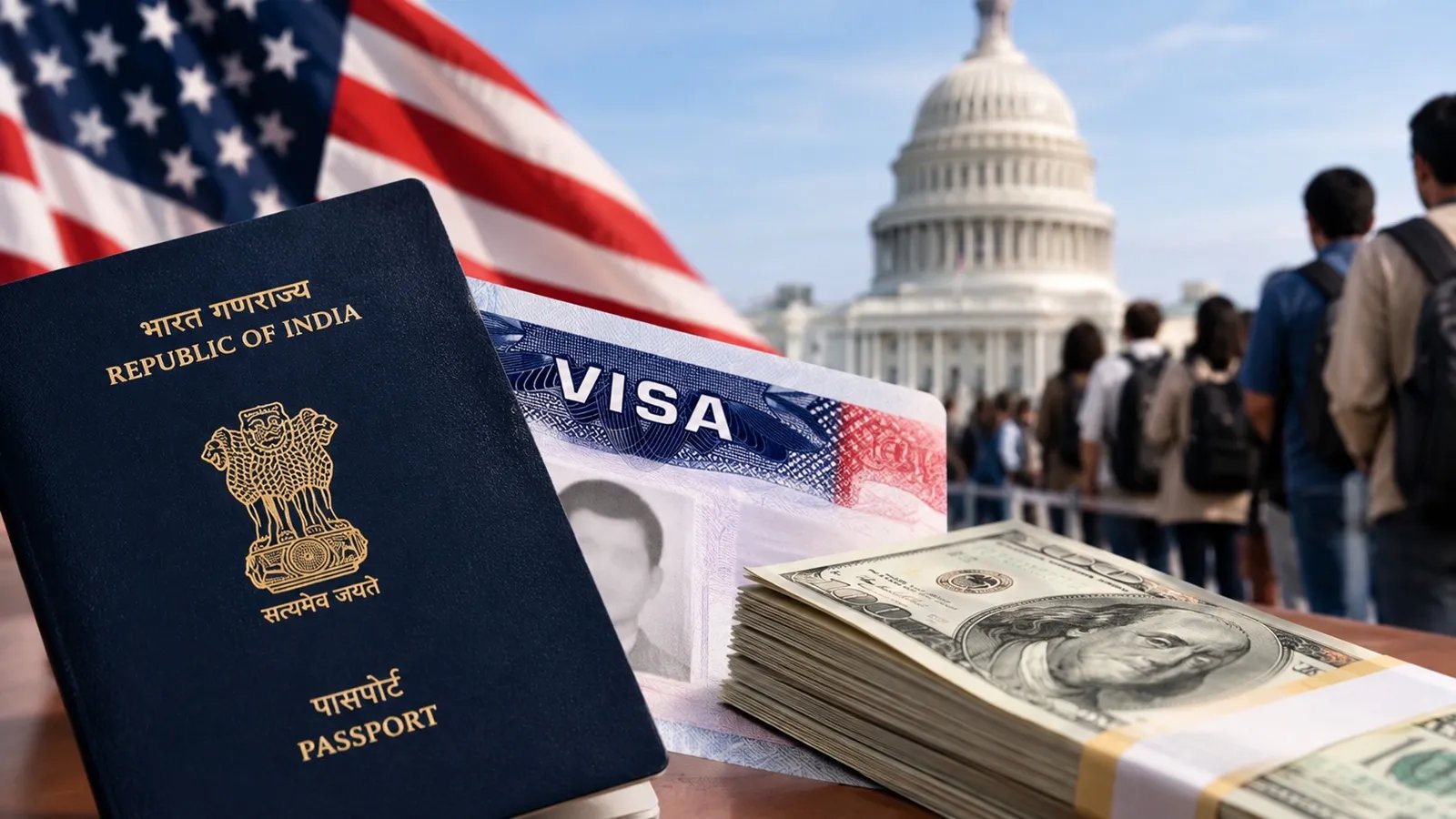
US Implements Visa Bond Programme: India Exempt from New Financial Guarantee Mandate
New Delhi | Oct 4, 2026 10:35 PM IST
The United States Department of State has officially rolled out a stringent visa-bond programme targeting citizens from 50 nations. Under this new policy, travellers seeking B1/B2 tourist and business visas from specific countries must now post a significant financial guarantee—ranging between $10,000 and $20,000—to ensure compliance with US immigration regulations.
The directive, which stems from Section 221(g)(3) of the Immigration and Nationality Act (INA), empowers consular officers to mandate these bonds at the time of a visa interview. While the initiative has raised concerns globally, Indian nationals have received a significant relief, as India has been excluded from this list of countries.
Understanding the Visa Bond Requirement
The primary driver behind this policy is the rate of visa overstays. According to the State Department, the list of affected countries was compiled based on data provided by the Department of Homeland Security’s (DHS) entry/exit overstay reports. Individuals from the designated nations, when applying for a temporary business or tourist visa, may be required to provide a bond to discourage them from remaining in the US beyond their authorized stay.
The specific financial burden, which can reach up to $20,000 per applicant, is determined during the interview process. To complete the requirement, successful applicants must submit the DHS Form I-352. The State Department has mandated that all payments be processed exclusively through the US Treasury’s official platform, Pay.gov.
Protection Against Fraud
In light of the new financial requirements, US officials have issued a strong advisory warning applicants about potential visa bond scams. The government has cautioned citizens not to engage with unofficial websites or third-party platforms claiming to handle bond payments. The Department of State explicitly stated that it will not accept responsibility for funds transferred through unauthorized channels, urging applicants to follow only the instructions provided directly by a consular officer during their official appointment.
Scope and Regional Impact
The visa-bond mandate has been implemented in phases throughout 2025 and 2026. While the policy affects a diverse array of countries across Africa, Asia, and the Caribbean, its impact is felt keenly in South Asia. Bangladesh and Nepal were brought under the mandate on January 21, 2026, while Bhutan was included earlier, on January 1, 2026.
The list of affected nations includes, among others, Algeria, Angola, Burundi, Cambodia, Cuba, Ethiopia, Nigeria, and Venezuela. For nationals of these 50 countries, the added financial barrier represents a major shift in the visa application landscape, further complicating travel plans for business and tourism.
Despite the broad scope of this policy, Indian citizens continue to benefit from an exemption, ensuring that travel and commerce between the two nations remain unaffected by these specific financial constraints. For now, the US government maintains that the bond programme is a necessary tool to enforce immigration compliance and reduce overstay rates for nations currently under scrutiny.
Disclaimer: This content is auto-generated for informational purposes only.
Source: Read Original News