







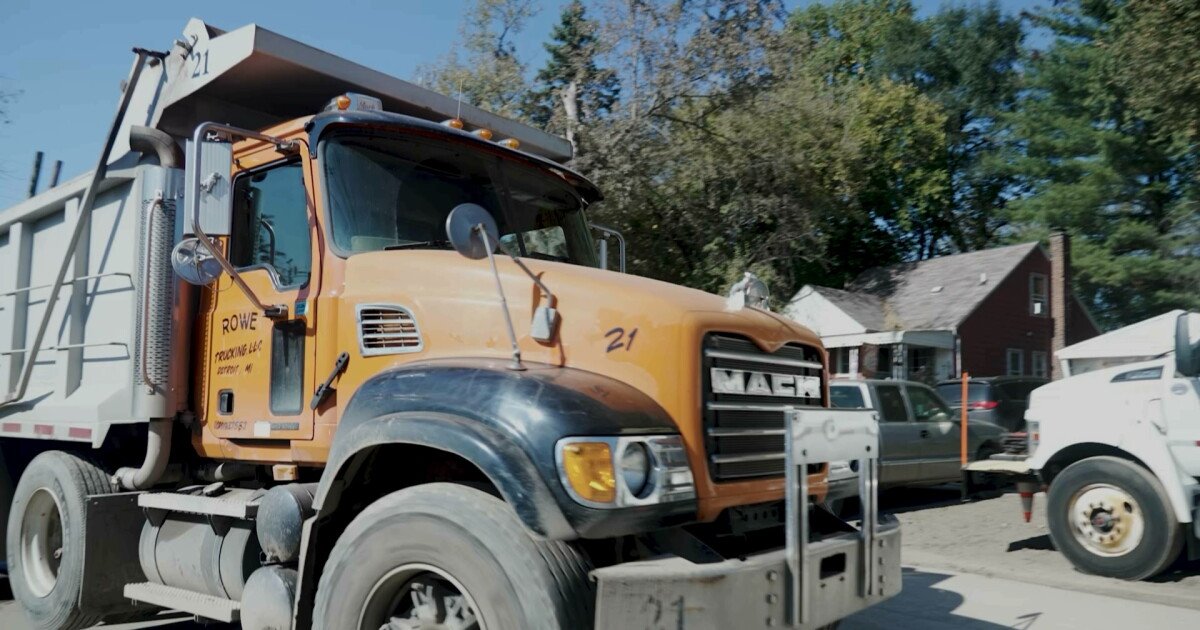
For small business owners like Rhonda Rowe, the engine of the American economy isn’t just running on diesel—it’s running on a thinning margin of patience, faith, and relentless effort. As the owner of a multi-generational trucking firm based outside of Detroit, Rowe is finding that the “family business” model is becoming increasingly difficult to sustain in an era of unpredictable global supply chains and rising overhead costs.
## The Crushing Weight of Operational Overhead
The reality of running a mid-sized trucking operation is a constant balancing act between soaring fixed costs and the fragility of mechanical reliability. Rowe’s ledger paints a stark picture: $5,600 in monthly insurance premiums, payroll expenses nearing $30,000, and fuel costs that fluctuate between $6,000 and $8,000. These figures are mere baseline expenditures; they do not account for the inevitable, often exorbitant, costs of vehicle maintenance.
Her son, Laron, who has spent over a decade behind the wheel, notes that the company effectively pays a “double tax” whenever a vehicle breaks down. There is the immediate invoice from the mechanic, but more damaging is the lost revenue generated by an idle truck. In the logistics world, downtime is the enemy of profit, and keeping an aging fleet roadworthy has become a perpetual, high-stakes game of troubleshooting.
## Geopolitics and the Digital Supply Chain
While the Rowes operate on the asphalt, they are inextricably linked to the digital and political currents emanating from Washington and global trade hubs. Today’s logistics industry is heavily influenced by the same sophisticated data analytics and AI-driven supply chain management tools that major tech giants utilize to predict market shifts. However, for a small business, the “big data” trends often translate into local headaches.
Laron observes that international trade policies, tariffs, and regional conflicts—such as instability in the Strait of Hormuz—create immediate bottlenecks. Even with advanced GPS tracking and real-time logistics software designed to optimize routes, no amount of tech can bypass a stagnant global supply chain. When geopolitical tensions surge, the digital dashboards that once promised efficiency now primarily display shipping delays and rising material costs. For the Rowes, the macro-level decisions made in federal offices have a direct, tangible impact on the price of the spare parts needed to keep their wheels turning.
## Technology, Tradition, and the Human Element
Despite the pressure to automate and scale, Rowe remains committed to a traditional philosophy: her employees are an extension of her family. As the industry faces labor shortages and economic volatility, she has chosen to absorb the financial burden herself rather than pass pay cuts down to her staff. It is a decision that defies the “lean-and-mean” logic often praised by corporate tech analysts, who advocate for aggressive cost-cutting through algorithmic staffing and heavy automation.
Instead, the Rowes are navigating the modern economy by doubling down on human reliability and local resilience. While they utilize modern communication tools and tech-enabled logistics to keep their business afloat, they lean on a foundation that predates any modern digital innovation: community, dedication, and personal conviction.
As the industry continues to grapple with the dual challenges of inflation and global instability, the Rowe family trucking business serves as a microcosm for the broader American small business experience. They are waiting for the political climate to stabilize, but in the meantime, they are operating on a mix of strategic planning and sheer perseverance. For Rhonda Rowe, as the bills pile up and the political horizon remains cloudy, the most essential tools in her arsenal remain her unwavering faith and her commitment to the people who ride with her.
Disclaimer: This content is auto-generated for informational purposes only.
Source: Read Original News