






The Evolution of NPC Complexity in Modern Remakes
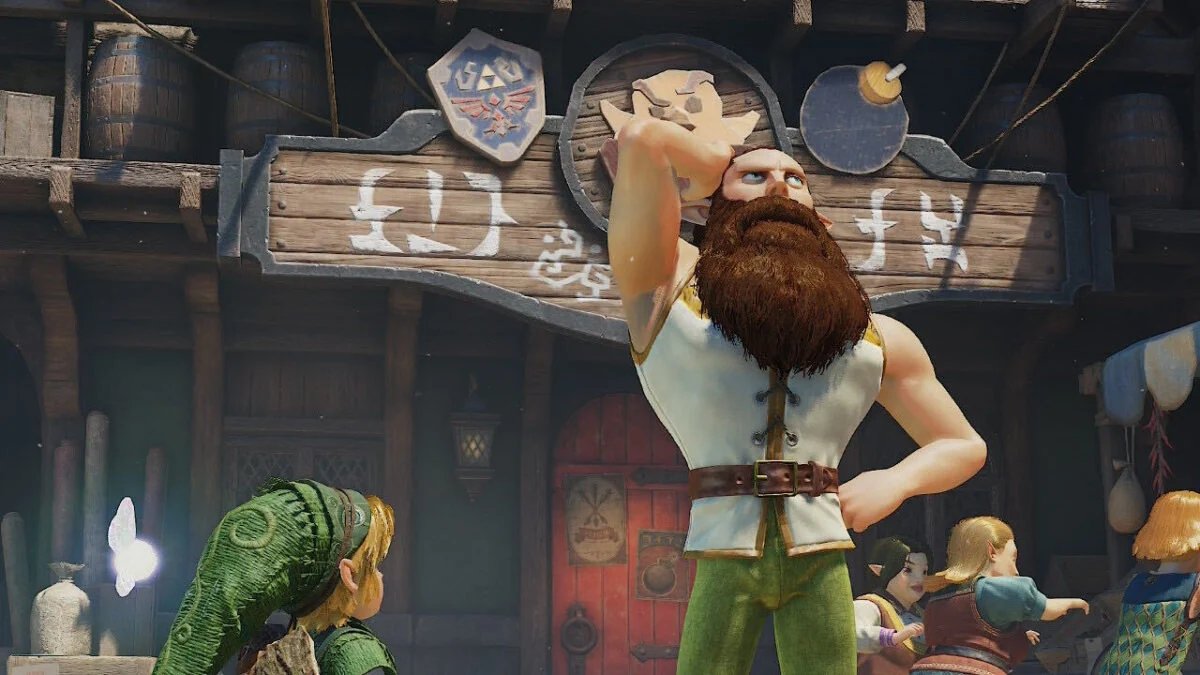
The recent release of the Legend of Zelda: Ocarina of Time remake has brought more than just high-definition textures and updated lighting engines to the classic Nintendo 64 title. It has introduced a nuanced approach to non-player character (NPC) design, transforming background figures into active participants in the player’s journey. Among these updates, the Bearded Guy of Castle Town stands out as a prime example of how developers are utilizing “narrative utility” to guide players through side quests while simultaneously enriching the game world.
In the original release, this character existed merely as part of the atmospheric backdrop of Castle Town. He was a visual static element designed to make the environment feel populated. In the modern remake, however, the development team has injected him with a functional persona. By repurposing legacy assets and applying new logic, the designers have turned a static model into an instructional guide. This shift highlights a growing trend in software development where legacy code is not just ported but augmented with logical layers that improve discovery and quest pacing.
Understanding the Beacon Mechanic: A New Layer of World Building
The specific feature that has captured the attention of players is the character’s ability to act as a “beacon.” Within the game’s logic, this is a streamlined way to introduce the player to Talon, a critical NPC who manages Lon Lon Ranch. By interacting with the Bearded Guy, the player triggers a scripted dialogue tree that directs them toward a specific location in Hyrule. This interaction is technically categorized as a waypoint assist mechanic.
While some players have jokingly interpreted this as a social networking feature, from a game design perspective, it is a clever integration of narrative and function. By establishing that his beard has a unique property, the developers are creating a consistent set of rules for the game universe. When the player later encounters Talon—who also sports a distinct beard—the environmental storytelling creates a satisfying “Aha!” moment. The mechanic acts as a non-intrusive tutorial, ensuring that players do not miss key content like the acquisition of Epona, the horse, which is essential for efficient traversal across the expansive Hyrule map.
The Technical Implementation of NPC Interaction Logic
Under the hood, this interaction relies on state-based flags. When the player speaks to the Bearded Guy, a flag is updated in the player’s save file, tracking the “Beard-Finder Status.” This state then modifies the environmental triggers around the Lon Lon Ranch area. The beauty of this implementation lies in its simplicity; it does not require complex procedural generation or advanced machine learning. Instead, it utilizes standard conditional logic that developers have relied upon for decades, updated with modern triggers that account for the player’s current location and quest progress.
This approach demonstrates how technical updates in remakes are often about optimizing the flow of information. By giving the NPC a personality-driven dialogue, the developers ensure that the quest guidance feels organic. Rather than receiving a generic “go here” map marker, the player engages with the world’s lore. This method of guiding user behavior through character dialogue is a hallmark of high-quality RPG design, ensuring that the game feels both accessible to new players and respectful of the source material.
Balancing Legacy Assets with Modern Expectations
The case of the Bearded Guy also touches upon the technical challenge of updating older game assets. The character model was originally low-polygon and lacked modern animation shaders. In the remake, the developers had to reconcile the original intent of the character—a background dweller—with the increased scrutiny of high-resolution monitors. By giving him a clear narrative purpose and a specific, memorable trait, they justify his continued presence in the updated game.
This process of “character refactoring” is essential for modernizing classics. It prevents the world from feeling empty, which can be a risk when increasing resolution makes old, simple environments look sparse. By adding extra functionality to these models, developers provide a reason for players to slow down and engage with the environment, rather than sprinting through the world at high speeds. It represents a shift from designing for “background filler” to designing for “interactive utility.”
Impact on Player Engagement and Future Development
The reception of this specific character update underscores how players respond to personality in game design. While the mechanic is essentially a navigation tool, the packaging of the feature as a unique, personality-driven ability increases the likelihood that players will seek out interactions with NPCs. It creates a feedback loop where players are more likely to talk to townspeople, which in turn leads to more discovery and a richer overall gameplay experience.
Looking forward, this technique is likely to become more prevalent as developers continue to refresh older titles. As hardware capabilities increase, the ability to layer complex dialogue and unique behaviors onto existing characters becomes more efficient. For the developers, the goal is to maintain the soul of the original experience while providing the quality-of-life adjustments that contemporary audiences expect. The Bearded Guy of Castle Town is not just a joke or a visual quirk; he is a testament to how small, technical adjustments in dialogue and NPC logic can fundamentally improve the pacing and accessibility of a classic game.
Disclaimer: This content is auto-generated for informational purposes only.
Source: Read Original News