







The blurred lines between high-octane action cinema and the grim reality of modern celebrity security have never been more apparent than in the aftermath of the October 18 incident involving Tiger Shroff. In an industry where public perception is meticulously curated, the line between a genuine medical update and a calculated PR rebuttal has become a point of contention for fans and critics alike. Following a harrowing shooting incident outside a football ground that left bystanders injured, the narrative surrounding Shroff’s physical well-being has taken a bizarre turn, highlighting the toxic intersection of digital skepticism and real-world violence.
## The Reality of the Injury: A Visual Rebuttal
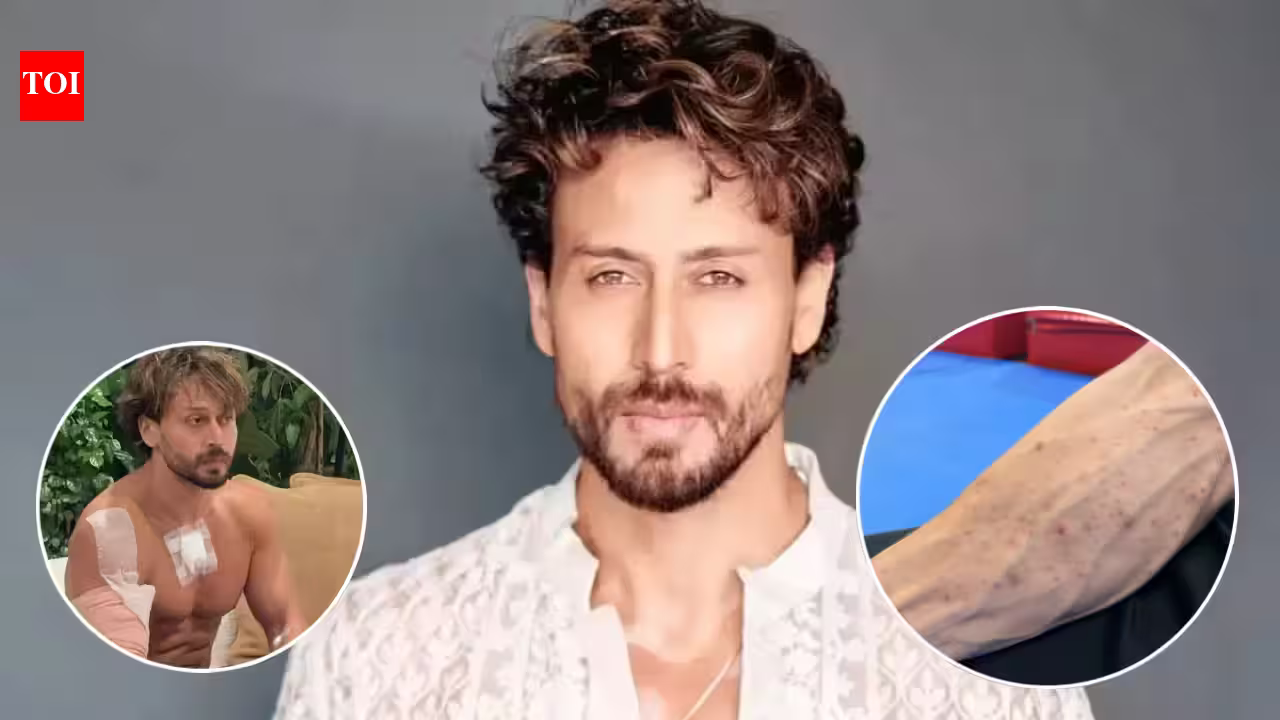
The internet is a harsh critic, and in the days following the shooting, the court of public opinion was quick to label the star’s reported injuries as exaggerated or even staged. Skepticism reached a fever pitch when photographs of Shroff with pristine, unmarked skin surfaced just 48 hours after viral images depicted him sporting heavy bandages.
In a move that serves as a direct response to these armchair investigators, Shroff’s management team took to Instagram this week to silence the noise. The footage provided is stark: a close-up examination of the actor’s arm revealing small, red, gunpowder burn marks. Accompanied by the simple, emotive caption, “God is Kind,” the post serves as a testament to the fact that while the injury may have been superficial, the danger was anything but. By choosing transparency over silence, the team is attempting to reclaim the narrative, reminding the public that even “minor” injuries are the remnants of a life-threatening encounter.
## Combatting the Digital Mirage
The current climate of misinformation—fueled by AI-generated deepfakes and the rapid spread of unverified “insider” accounts—has made it nearly impossible for high-profile celebrities to control their own stories. Tiger Shroff’s team recently issued a sharp, categorical statement aimed at the digital platforms that have sought to exploit the tragedy.
“We would like to categorically clarify that Tiger Shroff has made no statements, released no videos, and authorised no communication regarding the recent incident,” the statement read, addressing the surge of fabricated narratives. The frustration from his team is palpable. They are not merely dealing with the aftermath of a criminal act, but also the exhausting secondary battle of debunking scripted, AI-generated content designed to capitalize on the public’s thirst for sensationalism. By threatening legal recourse against those propagating these fabrications, the team has signaled that the age of passive celebrity PR is over; they are now playing defense against a digital infrastructure that profits from falsehoods.
## The October 18 Shooting: A Chilling Reality Check
To understand the gravity of the situation, one must look past the social media squabbles and back to the events of October 18. What began as an outing at a football ground devolved into a scene of terror when three unidentified men on motorcycles opened fire on Shroff’s vehicle. While the actor miraculously escaped without life-threatening trauma, the reality of the violence was felt by those around him, specifically his driver and a bystander, both of whom sustained injuries.
The incident was not merely a random act of hostility; it has since been linked to wider criminal networks. The subsequent arrest of three shooters—hailing from Haryana and Bihar—by Kota police, and their swift handover to the Mumbai Police, confirms a coordinated, interstate criminal effort. The specter of the Lawrence Bishnoi gang, which has claimed responsibility for the hit and extended their reach to those associated with Salman Khan, paints a terrifying picture of the current security landscape for Bollywood’s elite. For stars like Shroff, the football field is no longer just a place for leisure—it is a potential battleground.
## A City on Edge: Security Reviews and Suspects
The brazen nature of the attack prompted an immediate response from the state government. Maharashtra Deputy Chief Minister Eknath Shinde personally visited the actor’s residence, a gesture that underscores how seriously the authorities are treating the targeting of public figures. The promise of a thorough review of security protocols for high-profile film personalities is a necessary step, but many wonder if it is enough to deter organized crime syndicates that operate with increasing boldness.
The investigation has now turned its lens toward a familiar figure in the criminal underworld: the US-based gangster Anil Pandit. Allegedly the architect behind a string of extortion cases and targeted attacks across Delhi and Haryana, Pandit has become the prime suspect in the ongoing investigation. His potential involvement suggests that this was not a localized dispute, but a strategic move by an organized syndicate.
## The Cost of Fame
As the investigation unfolds, the takeaway remains sobering. For Tiger Shroff, the incident is a stark reminder that fame often carries a heavy, dangerous price. While his team’s recent video release effectively put an end to the “fake injury” rumors, the broader issue of safety remains unresolved.
The incident has forced both the film industry and the government to confront a new reality: the protection of public figures is no longer just about guarding against overzealous paparazzi or obsessed fans; it is about shielding them from a systematic, violent campaign orchestrated by individuals who view celebrities as pawns in a larger, darker game of influence and extortion. As the legal processes continue and the investigation into Anil Pandit’s network deepens, one thing is certain: the industry will never look at a routine visit to a football ground the same way again. The burns on Shroff’s arm may fade, but the scars this incident has left on the collective sense of security within the film fraternity will take much longer to heal.
Disclaimer: This content is auto-generated for informational purposes only.
Source: Read Original News