








A Legacy of Poison: The Long-Term Environmental Toll of the U.S.–Iran War
In March, President Donald Trump declared victory in his “war of choice” against Iran, boasting that the nation had been “very much destroyed and, even, obliterated.” Six months later, the reality on the ground tells a vastly different story. The conflict has devolved into a sputtering, inconclusive struggle, with promised “peace” nowhere in sight. Beyond the immediate death toll and the failure of strategic objectives, a more enduring catastrophe is unfolding: the irreversible poisoning of the Middle Eastern landscape.
While the Pentagon remains tight-lipped about the true human cost—downplaying hundreds of U.S. casualties and ignoring thousands of Iranian deaths, including children—a new, deeper analysis reveals the conflict’s silent killer. The war has left behind a toxic inheritance, with environmental fallout that will haunt the region for generations.
The Weaponization of the Environment
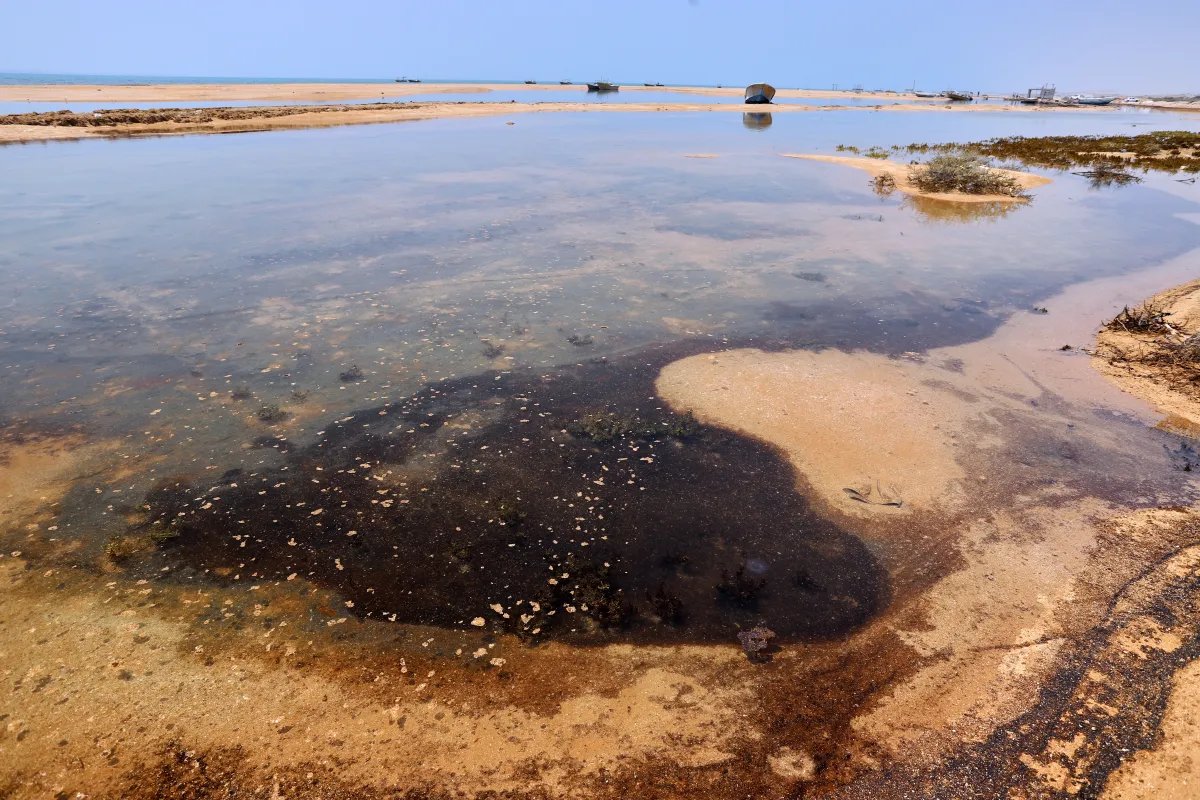
Esmaeil Baqaei, spokesperson for Iran’s Foreign Ministry, recently sounded the alarm regarding the rampant oil contamination spreading through the Persian Gulf and the Sea of Oman. The pollution, he argues, is a direct result of military operations that have turned vital maritime corridors into testing grounds for destructive weaponry.
Data from the Conflict and Environment Observatory (CEOBS) confirms that over 300 incidents of potential environmental harm have been documented across 12 countries. These attacks have systematically targeted “environmentally risky facilities,” including water desalination plants, power stations, and oil infrastructure.
The scope of this damage is difficult to quantify due to a deliberate U.S.-backed blackout. Major satellite companies have restricted data access, a move widely viewed as an attempt to obscure the extent of the damage inflicted during the campaign. However, independent research suggests that in the first 14 days of the war alone, strikes released 5 million metric tons of greenhouse gases—an amount roughly equivalent to the annual carbon emissions of the entire nation of Iceland.
Echoes of Fallujah
The environmental devastation is not merely an incidental byproduct of war; it is a recurring feature of U.S. military intervention. Experts point to the “forever wars” in Iraq and Afghanistan as grim precursors to the current crisis.
The situation in Fallujah provides a haunting parallel. Following intense bombardment and the use of munitions containing heavy metals—including depleted uranium—the city has seen a 12-fold increase in childhood cancer rates and persistent spikes in birth defects and respiratory disease.
“War itself is always about combustion,” notes Kali Rubaii, a cultural anthropologist at Purdue University who has studied the long-term health effects of conflict. “The combustion of generally toxic materials redistributes these toxicants into people’s air, water, and food. Every time someone breathes in everything in the air, they are inheriting the pollutants of war.”
Those who return to bombarded areas, rebuild homes, or consume local resources unknowingly absorb the radioactive particles and heavy metals left behind. Research has found that residents in such zones carry significantly higher levels of contaminants in their bones than their peers in other parts of the world. The toxic chemical exposure resulting from these conflicts creates a biological legacy that does not end when the ceasefire is signed.
A Global Crisis
The ecological impact of the current war extends far beyond the borders of Iran. By targeting energy infrastructure and commercial vessels, the belligerents have triggered regional fuel shortages and disruptions to food security that threaten to push millions toward hunger.
International law, specifically the 1998 Rome Statute, categorizes the infliction of widespread and severe environmental damage as a war crime. The International Committee of the Red Cross maintains that the environment is a “civilian object” entitled to protection. Yet, as the conflict continues to flare, the strategic targeting of critical infrastructure suggests a blatant disregard for these international norms.
As the fires of war eventually cool, the residents of the Persian Gulf will be left to face a reality where the land itself has become a threat to life. As Rubaii and other experts emphasize, the only effective way to mitigate this form of suffering is to cease the bombing of civilian centers. Until that shift occurs, the “victory” claimed by political leaders remains shadowed by the reality that people cannot be healthy if they are forced to live on sick, contaminated land.