







RSS Chief Mohan Bhagwat Champions “Unity in Diversity” During New York Visit
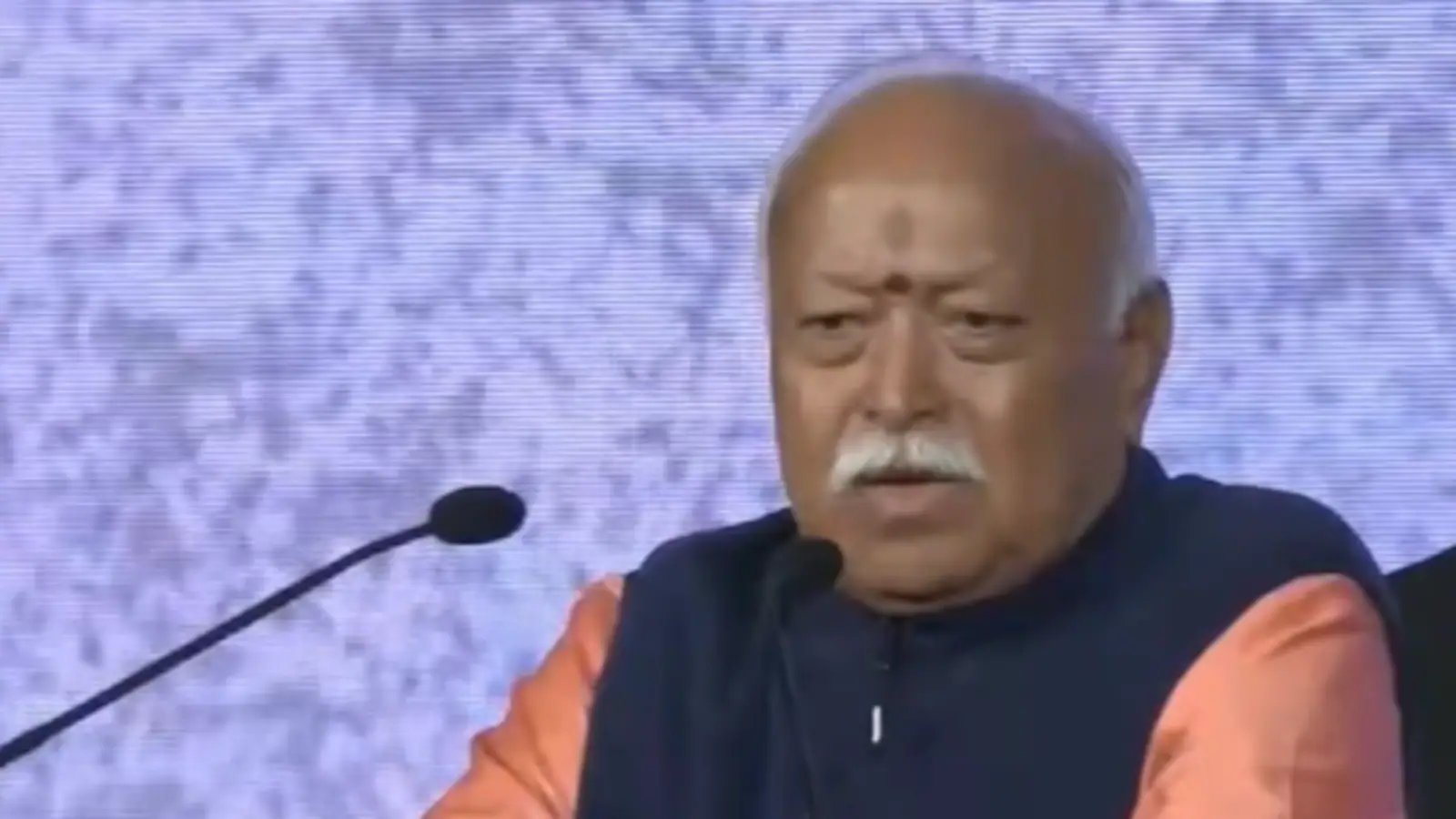
NEW YORK — Mohan Bhagwat, the chief of the Rashtriya Swayamsevak Sangh (RSS), addressed a major gathering at Madison Square Garden this Saturday, framing the core identities of both India and the United States as rooted in a shared commitment to unity and diversity.
The event, titled the “Universal Oneness Celebration” and organized by the group American Hindus for Engagement and Dialogue (AHEAD), served as a platform for the RSS leader to offer his vision on global coexistence. Drawing a parallel between the two nations, Bhagwat argued that while the U.S. frequently emphasizes “plurality,” India has long lived by the ethos of “unity in diversity.”
“Unity and diversity are in the DNA of both Bharat and the United States of America,” Bhagwat said. “[That] we are one, and due to diversity, that oneness is decorated.”
Philosophical Perspectives on Human Nature
In a wide-ranging speech, Bhagwat touched upon the philosophical responsibilities of nations, invoking the teachings of Swami Vivekananda. He contended that nations are not merely geopolitical markers but entities with a destiny to fulfill.
He drew a distinct line between the animal kingdom and human capacity, noting that while animals are driven by biological instincts, humans possess the unique ability to think, store resources, and—more importantly—choose their moral path. “If you think in the right way, you go nearer to God. If you think in the wrong way, you go nearer to the animal kingdom,” he stated.
Addressing Concerns Over Inclusion
The RSS leader also addressed questions regarding the place of Muslims in India, a recurring topic in his recent dialogues. Responding to inquiries about his movement’s stance, Bhagwat stated, “If any Hindu thinks that there should be no Muslim in Bharat, he will not remain Hindu.” He emphasized that the definition of a Hindu involves the belief that all paths lead to the same goal and that every individual possesses inherent dignity.
To illustrate this point, he recalled the 1996 Charkhi Dadri mid-air collision in India, where two planes collided, resulting in the deaths of all 349 passengers and crew. Bhagwat cited the relief efforts of RSS volunteers who provided assistance to the victims and their families without regard to the religious background of the deceased, arguing that the organization acts based on humanity rather than identity.
A Divisive Backdrop
Bhagwat’s visit to the United States has not been without controversy. Zohran Mamdani, a New York City council member and the first Indian-American Muslim to hold the position, has been an outspoken critic of the RSS. Ahead of the event, Mamdani described the organization as “communal” and expressed concern over what he termed an “exclusionary vision” promoted by the RSS and India’s ruling Bharatiya Janata Party (BJP).
Despite the criticism, Bhagwat utilized his platform to advocate for a deeper global understanding of his organization’s mission. Reflecting on the role of the RSS in modern politics, he remarked, “Politics today… depends on the public view. If there is public opinion, then no politician will dare to go against it,” urging his audience to focus on local engagement to foster their stated goals of social harmony.
As the RSS continues its outreach, the speech highlighted the ongoing international debate surrounding the unity and diversity inherent in India’s socio-political identity, a theme Bhagwat appears determined to amplify on the global stage.