








HSBC India Doubles Down on Affluent Banking as Assets Cross $50 Billion
MUMBAI: HSBC India is aggressively pivoting toward the wealth management sector, doubling down on its affluent banking strategy as the global lender cements its position as the leading foreign bank in the country. With pre-tax profits doubling over the past four years and a balance sheet now exceeding $50 billion (approx. ₹5 lakh crore), the bank is signaling a period of robust expansion in its Indian operations.
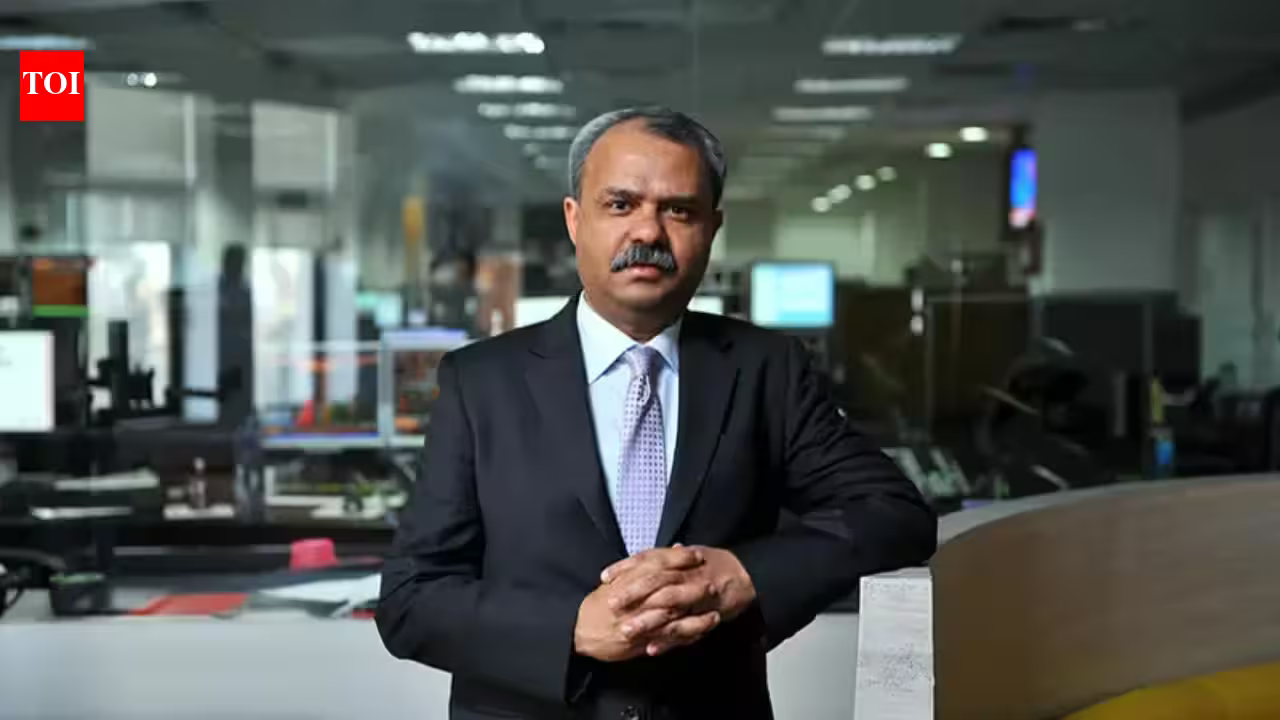
Hitendra Dave, CEO of HSBC India, attributed the bank’s growth to its unique ability to bridge international capital and local opportunities. Since taking the helm in 2021, Dave has overseen a strategic shift that prioritizes digital-first services, cross-border financial products, and high-net-worth individual (HNI) engagement.
Dominating NRI and Affluent Segments
HSBC’s strength in mobilizing Foreign Currency Non-Resident (FCNR(B)) deposits has been a cornerstone of its recent success. Leveraging its global footprint, the bank has become a preferred destination for the NRI diaspora. Beyond retail deposits, HSBC has been a key liquidity provider for Indian banks, deploying between $1.5 billion and $2 billion via bilateral bonds and foreign currency loans—often acting as the sole participant in large-scale transactions.
“We are doubling down on wealth and affluent banking through digital platforms, advisory services, and cross-border products spanning LRS, offshore accounts, GIFT City, and premium cards,” Dave explained. The bank is currently executing an expansion plan that includes opening 20 new branches in cities with high NRI density and mutual fund penetration.
Navigating Market Volatility
Addressing concerns regarding the current investment climate in India, Dave acknowledged that global investors are increasingly sensitive to currency fluctuations. He warned that persistent weakness in currency can create a self-fulfilling negative loop, causing investors to remain on the sidelines.
“Financial markets are inherently short-term in their thinking,” Dave noted. “Capital chases whatever is currently selling elsewhere. We need a spark to shift the narrative—whether that be lower oil prices, new land or labor reforms, or major FDI announcements.”
Evolution of Corporate Capex
Dave also offered a nuanced perspective on India’s capital expenditure (capex) cycle. Distinguishing between the debt-heavy, promoter-light projects of the 2012–14 era and the current landscape, he pointed out that modern expansion is now led by well-capitalized conglomerates—such as Tata, UltraTech, and Adani—that rely on internal cash flows rather than pure debt-financing.
“We do not want the projects of the past, which involved little genuine promoter equity and relied too heavily on bank funding,” Dave said. Instead, HSBC is leaning into acquisition financing, positioning itself as a top-tier partner for major domestic mergers and acquisitions.
Looking Ahead
As HSBC continues to build out its local infrastructure—including the establishment of a new stockbroking arm—the bank remains bullish on India’s capacity to handle large-scale liquidity. While large IPOs have dominated the headlines, Dave believes these successful listings serve as a vital mechanism to draw deeper pools of international institutional capital, ultimately strengthening the Indian financial ecosystem.
With its balance sheet surpassing the ₹5 lakh crore mark, HSBC India is proving that its century-long history in the country is not just a legacy, but a launchpad for modern, digital-led growth.