








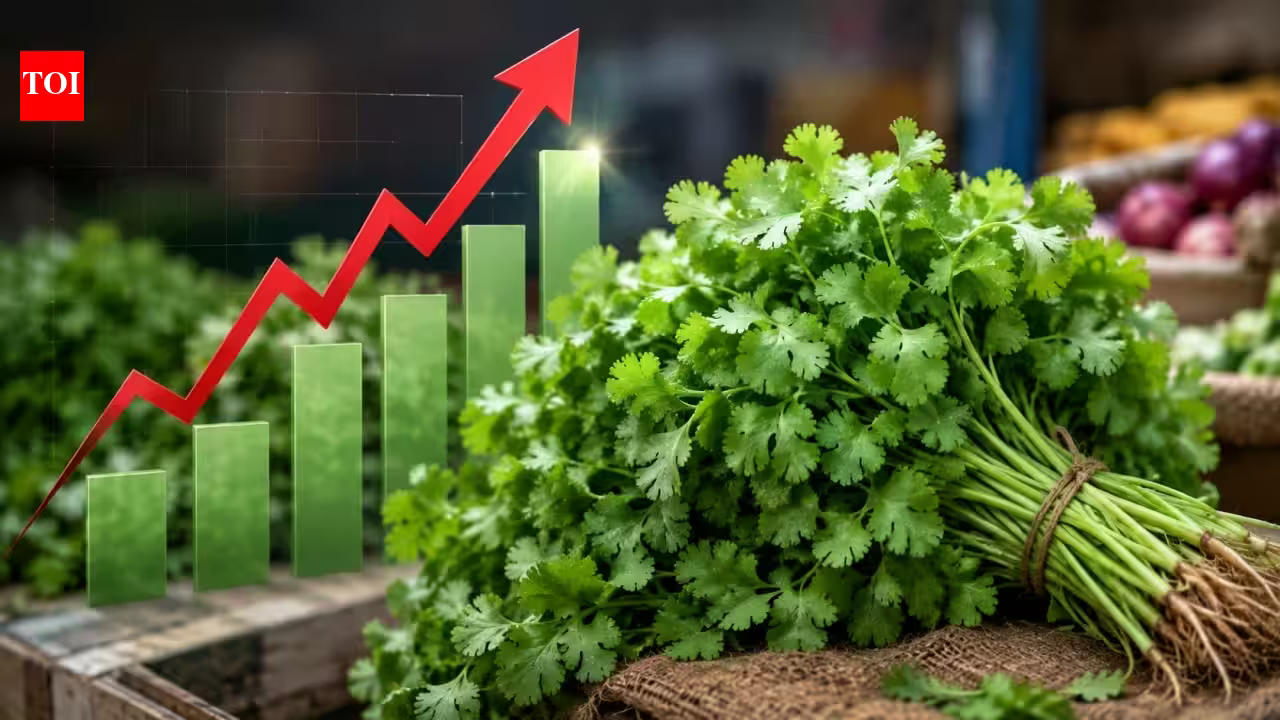
The once-humble coriander, a staple often given away freely by vegetable vendors alongside green chillies, has dramatically transformed into a pricey commodity, now fetching over Rs 200 per kilogram. This significant surge in cost can be primarily attributed to severe weather disruptions, particularly intense rainfall, which have devastated crops and obstructed transportation routes in key growing regions.
The dramatic increase in the cost of this essential herb follows a period of torrential rain in and around Nashik, Maharashtra, a critical source of fresh coriander for markets across northern India. At the close of July, widespread flooding caused substantial damage to standing crops and severely impeded the movement of goods, drastically reducing the volume of coriander that could be transported over long distances to major consumption centers like Delhi. These weather-induced logistical challenges further exacerbated price volatility, leading to sharp fluctuations in market rates observed throughout the week.
At Delhi’s Azadpur mandi, a significant wholesale market, fresh coriander prices soared to Rs 175 per kilogram, with retail prices climbing even higher, reaching between Rs 220 and Rs 230 per kilogram earlier this week. In stark contrast, a vegetable trader at Azadpur mandi, Mukesh Kumar, noted that wholesale prices for coriander during this time of year typically hover around Rs 25 per kilogram. While wholesale rates briefly spiked to Rs 200 per kilogram, they later eased slightly to approximately Rs 110 per kilogram.
Even a month prior, the availability of high-quality green coriander had already begun to tighten, driving local prices in Nashik up to nearly Rs 130 per kilogram, according to Krushna Borade, a local vegetable trader and exporter. Borade also highlighted that supplies from other producing hubs, including Bengaluru and Latur, had also diminished due to delayed monsoon rains. He explained that the recent deluge caused widespread damage to coriander crops across numerous regions, making the procurement of premium-quality produce increasingly difficult. This shortage has been particularly acute for varieties robust enough to withstand the rigors of long-distance transport to markets such as Delhi.
While Karnataka has provided some relief by contributing to the supply, the volume of arrivals has remained limited, and the overall quality of the produce from this region has generally been inferior. The standard supply chain involves coriander harvested near Nashik being first routed to cold-storage facilities in Indore before being shipped to Delhi. This intricate network makes the supply chain highly vulnerable to interruptions caused by adverse weather conditions. As Aniket Kapadi, a coriander trader from Nashik, succinctly put it, predicting the prices of leafy greens during the monsoon season is exceptionally challenging, as they can escalate exponentially within a single day if arrivals are delayed. This situation underscores the delicate balance of the agricultural business in India, especially concerning perishable goods highly susceptible to environmental factors.