









The Long Shadow of Silence: Harvey Weinstein’s Legal Odyssey Continues
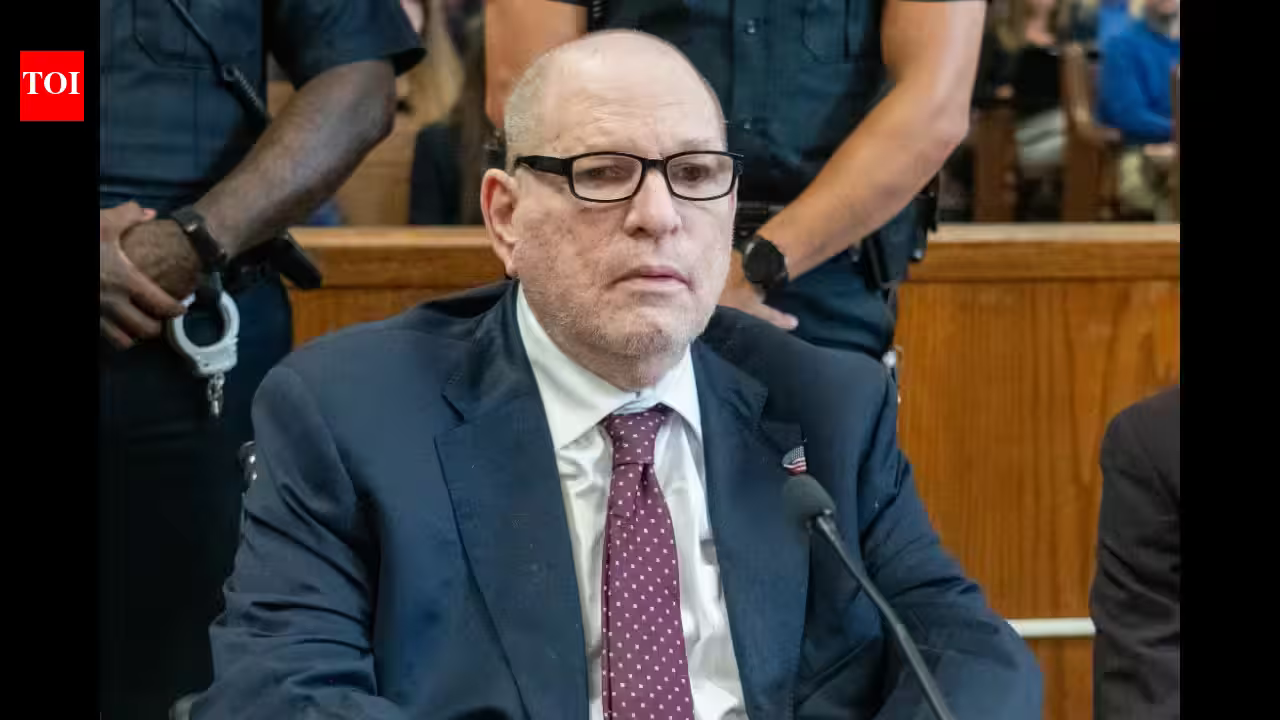
The image is hauntingly familiar: Harvey Weinstein, once the untouchable kingmaker of Miramax, sitting slumped in a wheelchair inside a Manhattan courtroom. It is September 2026, over six years since the disgraced producer first heard a judge deliver a prison sentence that signaled the start of a seismic cultural shift. Yet, here he remains—caught in a relentless legal tug-of-war that has seen convictions erased, trials re-litigated, and a #MeToo movement that refuses to let the past remain buried.
With his latest sentencing of 15 years for the 2006 assault of former production assistant Miriam Haley, the legal saga of the 74-year-old producer has entered a grueling new chapter. While the defense frames his plight as a matter of humanitarian concern for a dying man, for his survivors, this is the final, exhausting validation of a truth they have been telling for nearly a decade.
A Reckoning Re-Litigated
The road back to this moment has been anything but linear. In 2020, Weinstein was sentenced to 23 years in prison, a verdict that felt like the definitive end of an era in Hollywood. But in 2024, the New York Court of Appeals dealt a staggering blow to the prosecution, overturning that conviction. The high court ruled that the inclusion of testimony from women whose specific allegations were not part of the formal charges had created an unfair trial environment—a “prejudicial” error that necessitated a restart.
What followed was a legal minefield. The retrial forced survivors to once again take the stand, revisiting the most traumatic moments of their lives under the harsh lights of cross-examination. For Miriam Haley, the psychological toll has been immense. “Having been sexually assaulted by Harvey Weinstein has had a devastating effect on my life and sense of security that may never go away,” she stated in court, her voice a testament to the endurance required to hold a powerful man accountable. “It’s a life sentence for me.”
The Physical Decline: A Defense of Leniency
As the gavel falls on his latest sentence, the strategy from Weinstein’s legal team has shifted from arguing factual innocence to highlighting physiological fragility. His attorney, Jacob Kaplan, argued for a sentence of just three additional years, emphasizing the producer’s rapidly deteriorating state. Behind the scenes, the man who once wielded immense influence over the careers of the world’s biggest stars is now a patient in the medical unit of Bellevue Hospital.
Battling chronic myeloid leukemia, congestive heart failure, and severe kidney issues, Weinstein’s defense paints a picture of a man whose remaining time is limited. They argue that a lengthy sentence is, in effect, a life sentence—though the prosecution, seeking 20 years, argued that the nature of his crimes demands a severity that reflects the gravity of his actions. Despite his visible weakness, Weinstein continues to maintain a posture of defiance. Addressing the court, he offered a carefully hedged apology for the “pain” caused, but maintained his innocence, promising that he would eventually be “proven” to have committed no wrongdoing.
The Survivor’s Burden: Miriam Haley’s Testimony
The emotional core of this trial remains the testimony of Miriam Haley. Her account, detailed and harrowing, paints a stark picture of the power dynamics that defined Weinstein’s reign. A native of Sweden who moved to the U.S. with aspirations in the entertainment industry, Haley met Weinstein during her time working on Project Runway.
Her decision to visit his Manhattan apartment was, she testified, rooted in the professional obligations of the era. She was scheduled to fly to Los Angeles on the company’s dime the next day; refusing the boss was rarely an option. What she described upon arrival was a terrifying breach of trust: a sudden lunge, a forced entry into his bedroom, and an assault that she describes as the point where her sense of security was shattered forever. Her persistence in the face of multiple trials serves as a grim reminder that for victims, the “legal process” is often a traumatic repeat of the original wound.
A Legal Maze Across State Lines
The complexity of this case is compounded by the fact that Manhattan is not the only jurisdiction where Weinstein is answering for his past. He is currently awaiting a resentencing in Los Angeles, stemming from a 2022 conviction that was upheld on appeal. However, that case was sent back to the lower court because the judge had inappropriately factored in the now-voided New York convictions during the original sentencing.
This cross-country shuffling highlights the extraordinary nature of the Weinstein case. He has survived a bout of COVID-19 in prison, shuttled between state facilities and Rikers Island, and spent his final years as a ward of the state within a hospital ward. Whether he remains behind bars for the remainder of his life or is granted a measure of mercy due to his health, the legal reality is that the institutions of the justice system have proven, through trial and error, that his influence could not shield him from the consequences of his actions.
The Legacy of the #MeToo Era
As the dust settles on this latest sentencing, the conversation around Weinstein has shifted from the shock of the initial 2017 reports to the endurance of the legal system. The #MeToo movement began with the premise that silence was the fuel for abuse. By forcing these cases through the appellate process and back into open court, the system has certainly been tested to its breaking point.
For the public, the Weinstein saga remains a barometer of how society handles the intersection of power, celebrity, and gender-based violence. The fact that he was tried, convicted, overturned, and convicted again speaks to a persistence in the judiciary that, while agonizingly slow, has refused to let the power of a Hollywood titan override the testimony of his accusers. Whether he spends his final days in a prison cell or a medical facility, Harvey Weinstein’s story—and more importantly, the voices of Miriam Haley, Jessica Mann, and others—has been indelibly written into the record, effectively ending the era of silence that once allowed him to operate with impunity.
Disclaimer: This content is auto-generated for informational purposes only.
Source: Read Original News