







The Myth of the Big Budget: Why ‘Hanuman Ansh’ Is Choosing Substance Over Spectacle
In an era where Indian cinema seems caught in an escalating arms race of gargantuan production budgets and excessive CGI, a quiet revolution is brewing in the corridors of independent filmmaking. While major studio tentpoles fight for headlines with nine-figure investments, the team behind the breakout hit Hanuman Ansh is taking a refreshingly contrarian stance. Producer Anupriya Nagar, fresh off the film’s unexpected triumph, has made it clear that a bigger bank account isn’t necessarily on the horizon for the much-anticipated sequel.
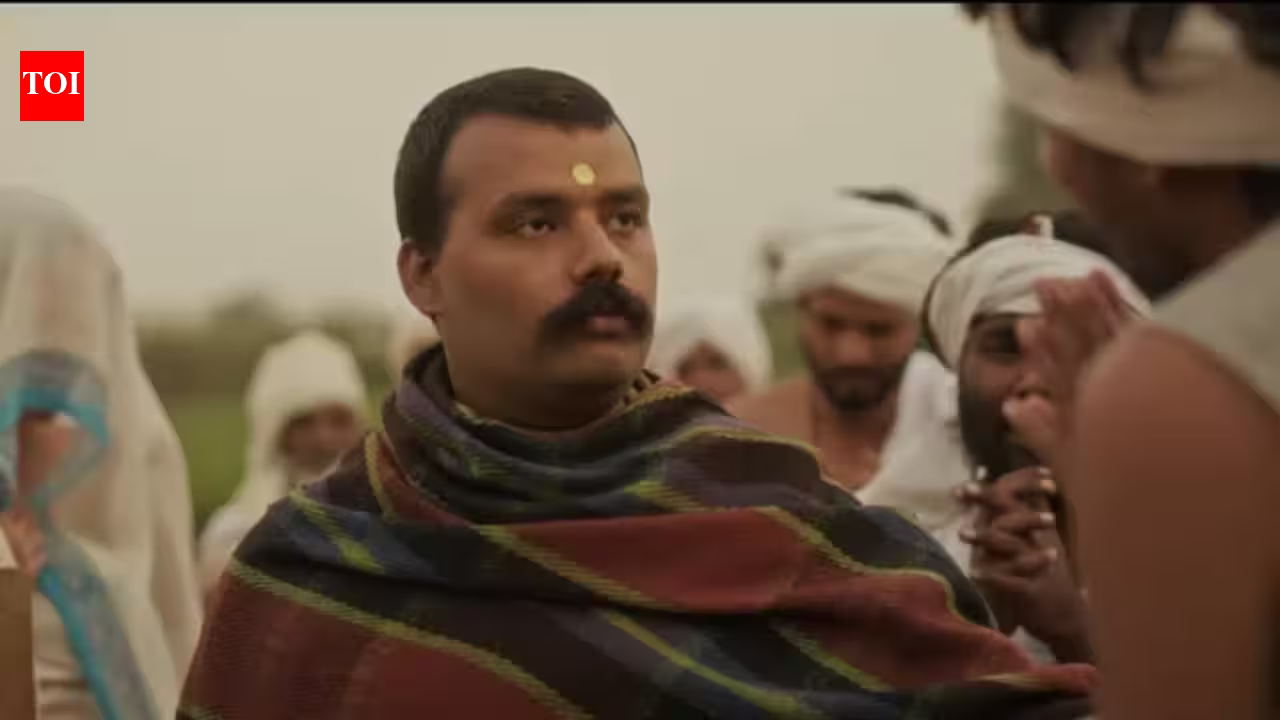
For the uninitiated, Hanuman Ansh arrived on August 7 without the fanfare of a pan-India superstar or the backing of a major distribution conglomerate. Yet, it captured the imagination of the audience, proving that heart and narrative intent can outpace marketing muscle. Now, as discussions regarding a second installment begin to bubble, the industry has been rife with speculation about a massive budgetary upgrade. Nagar, however, is quick to dampen those expectations, insisting that the philosophy of “less is more” remains the guiding principle for her creative team.
Authenticity Above All Else
When asked about the rumors suggesting the next film might be mounted on a hefty Rs 15-20 crore budget, Nagar’s response was characteristically grounded. In a candid conversation with Dainik Bhaskar, she dismissed the idea that scaling up spending is a prerequisite for a superior follow-up.
“My thinking is very clear: I believe the second film should be made on a budget similar to the first,” Nagar explained. She argues that the pressure to spend for the sake of spending often leads to a creative trap. “Simply investing Rs 10 crore or Rs 20 crore would not necessarily make the film better. It could even lead to unnecessary use of VFX or AI, which the story may not require, and that could affect its authenticity.”
This sentiment strikes at the core of what ails modern filmmaking. We have reached a saturation point where the visual palette of many films feels manufactured—over-polished and sterile. Nagar’s commitment to “period authenticity” suggests that the team is more interested in the granular details of their setting—the texture of the ground, the natural lighting of the environment, and the organic reality of the characters—than in creating a shiny, artificial digital playground that disconnects the viewer from the emotional stakes of the story.
The Reality of Financial Stewardship
The transparency surrounding the first film’s budget is as striking as its box office performance. While various reports had speculated on the costs behind the production, Nagar clarified the financial reality of the project. “The film was made for slightly more than Rs 1.5 crore, but it was not Rs 2 crore. The budget remained below Rs 2 crore.”
It is a sobering figure in an industry where publicity budgets alone often dwarf this amount. By operating as a lean, three-person producing team—with each partner contributing a third of the investment—the makers maintained a level of control and personal investment that likely contributed to the film’s cohesive vision. Nagar emphasized that this fiscal responsibility is rooted in gratitude. “The audience has given us so much love and support, so we cannot spend money wastefully,” she noted.
This approach serves as a stark reminder to the industry that success isn’t just measured by how much you spend, but how effectively you manage your resources. By keeping the overheads low, the creators ensured that the film didn’t need to break records to be considered a victory; it only needed to find its audience.
The Case Against ‘Technological Overreach’
The producer’s concern regarding the “unnecessary use of VFX or AI” is perhaps the most salient point in the current cultural climate. As generative AI and advanced CGI become cheaper and more accessible, filmmakers are increasingly tempted to fill empty frames with digital embellishments. However, as Nagar points out, these tools often strip a film of its human touch.
If the story of Hanuman Ansh is rooted in traditional values or, as reports have suggested, inspired by the spiritual teachings of figures like Neem Karoli Baba, then the aesthetic must reflect that simplicity. A hyper-stylized, high-gloss visual approach would clash with the grounded, earthy tone required to tell such a story. Nagar’s willingness to stick to a modest budget is, in effect, a creative choice to keep the audience’s focus on the narrative rather than the special effects. It is a bold move to prioritize “atmosphere” over “spectacle,” but in a market where audiences are increasingly craving stories that feel real and intimate, it might be the smartest path forward.
What’s Next for the Franchise?
Despite the buzz, fans of the first film shouldn’t hold their breath for a quick turnaround. Nagar emphasized that while the sequel is a priority, the team is far from ready to set a premiere date. The film’s director has moved on to another project, and the creative team has yet to lock in the finer details of the script or the thematic direction of the second installment.
“It would be too early to give a definite timeline,” Nagar admitted. “Our team has not yet had a detailed discussion about the project either. Until that happens, it would not be right to announce a date.”
This measured approach is refreshing. In an industry that treats franchises like assembly-line products, where sequels are often rushed to capitalize on a brief window of popularity, the Hanuman Ansh team’s patience is a virtue. They are essentially telling their audience that the story will be told when it is ready, and it will be made on its own terms—not the terms of an investor looking for a quick return on a bloated budget.
For now, Hanuman Ansh stands as a testament to the fact that you don’t need a massive canvas to create a masterpiece. It proves that the “Hanuman Ansh”—the spark of divinity or inspiration—cannot be bought with a larger budget. It lives in the script, the sincerity of the performances, and the commitment to a vision that doesn’t feel the need to shout to be heard. If the sequel maintains this integrity, it will surely find its place in the sun, proving once again that in the world of cinema, restraint is the ultimate form of luxury.
Disclaimer: This content is auto-generated for informational purposes only.
Source: Read Original News