








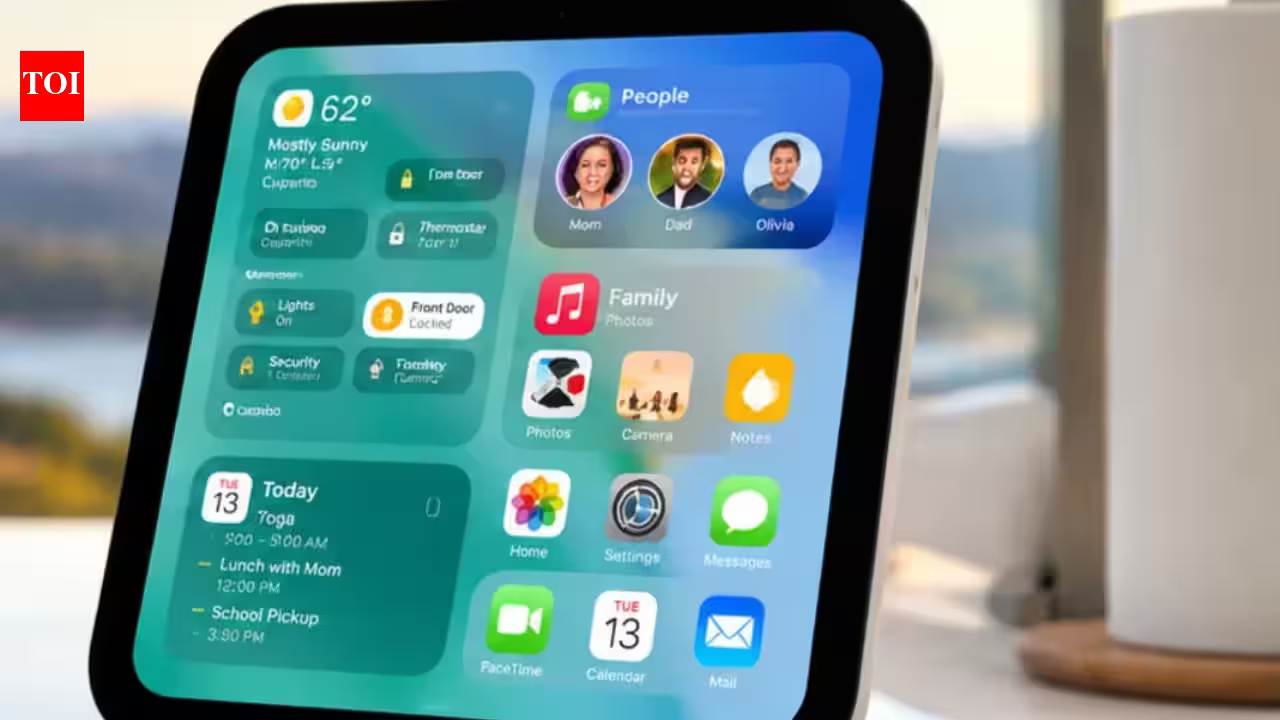
The Evolution of Apple’s Smart Home Strategy
Apple’s recent announcement regarding its renewed foray into the smart home ecosystem signifies a fundamental shift in the company’s product philosophy. By introducing HomeView, an updated HomePod mini, and a refreshed Apple TV 4K, the Cupertino-based tech giant is transitioning from a siloed hardware manufacturer to an integrated service provider within the domestic space. For years, Apple’s smart home footprint remained peripheral, hampered by a limited device portfolio and a closed ecosystem that struggled to compete with the expansive, budget-friendly reach of Amazon’s Alexa and Google Home.
The introduction of HomeView, priced at Rs 39,900, suggests that Apple is aiming directly at the premium segment. Unlike its predecessors, which functioned primarily as accessories to the iPhone, HomeView is designed as a centralized command center. By integrating the newly enhanced Siri AI directly into a dedicated smart display, Apple is attempting to bridge the gap between user intent and home automation. This strategic pivot acknowledges that the future of the smart home lies not in disjointed apps, but in a unified, context-aware interface that can anticipate user needs before they are explicitly articulated.
Navigating the Competitive Landscape in India
The Indian smart home market presents a unique set of challenges and opportunities for Apple. Currently, the market is dominated by cost-effective smart speakers and budget-friendly IoT devices from competitors who have capitalized on the price-sensitive nature of the Indian consumer. Apple’s high-price point strategy, exemplified by the Rs 39,900 price tag for HomeView and the new Apple TV 4K, positions the company in the luxury tier of the domestic technology market.
In India, where urban migration and the rise of smart city infrastructure are accelerating the adoption of home automation, Apple’s premium positioning may serve as both a shield and a barrier. The Indian consumer is increasingly sophisticated, showing a preference for high-quality audio, seamless privacy features, and long-term hardware support—areas where Apple excels. However, to achieve meaningful market penetration beyond the early-adopter demographic, Apple will need to localize its offerings. This includes deepening integration with regional smart appliance brands and ensuring that its AI, Siri, is optimized for the linguistic diversity and specific household management habits found in Indian cities. The success of this launch will depend on Apple’s ability to communicate the tangible value of its premium hardware in a market where basic smart home functions are already being fulfilled by more economical solutions.
The Role of Context-Aware AI as a Differentiator
The core differentiator in Apple’s latest push is the integration of context-aware AI. While traditional smart home devices rely on rigid, rule-based commands, Apple’s focus on advanced machine learning aims to create a more fluid interaction model. The ability of the new HomeView to process complex, multi-layered requests could redefine the user experience within the connected home. For example, rather than simply turning lights on or off, a context-aware system can adjust the ambient environment based on the time of day, current activities, and user preferences learned over time.
Industry analysts suggest that the effectiveness of this technology will be the ultimate test of Apple’s strategy. If the AI can move beyond simple utility and provide genuine proactive assistance, it could justify the premium price tag. In the context of an Indian household, where multi-generational living and complex daily routines are common, an AI that can manage multiple user profiles and adapt to shifting domestic requirements would provide a significant competitive edge over systems that are currently restricted to basic task execution. Apple is essentially banking on the idea that the consumer is ready for a “smarter” home that acts as a proactive assistant rather than a reactive remote control.
Addressing Interoperability and Ecosystem Barriers
One of the historical weaknesses of Apple’s smart home strategy has been its insistence on a closed-loop ecosystem. Historically, users were required to invest heavily in HomeKit-compatible devices, which often came at a higher price than standard third-party IoT products. To compete effectively with Amazon and Google, Apple must lower the barriers to entry by embracing broader interoperability. The adoption of the Matter standard is a critical step in this direction, as it allows Apple’s hardware to communicate more effectively with a wider array of appliances regardless of the manufacturer.
For the Indian market, where smart home setups are often fragmented—comprising a mix of smart lighting from one brand, security cameras from another, and air conditioning units from a third—interoperability is non-negotiable. If Apple can position HomeView as the universal bridge that brings these disparate components together, it will significantly boost its appeal. The goal is to make the Apple Home ecosystem the “nervous system” of the house, where hardware brand loyalty becomes secondary to the quality of the management experience provided by the interface.
Long-term Prospects in the Connected Home Market
Looking ahead, Apple’s strategy reflects a long-term commitment to the Internet of Things (IoT). By refreshing the HomePod mini and Apple TV 4K alongside the flagship HomeView, the company is building a tiered hardware ecosystem. This allows the consumer to start with a budget-friendly entry point—the HomePod mini at Rs 18,900—and gradually expand into a fully integrated smart home. This “gateway” approach is essential for scaling in diverse markets like India, where consumers are cautious about investing in high-end systems without first experiencing the benefits of the platform.
The expansion into the smart home is also a calculated move to reinforce Apple’s services ecosystem. A smart home hub that is seamlessly linked to Apple Music, iCloud, and privacy-focused health data creates a “stickiness” that is difficult for competitors to replicate. As the company prepares for the October 30 launch phase, the focus will be on ensuring that the hardware performance matches the lofty expectations set by the Apple brand. If the company can successfully demonstrate that its AI-driven smart home is not just a luxury but a fundamental upgrade to modern living, it may well capture a significant portion of the premium market share, effectively neutralizing the advantages currently enjoyed by more entrenched players in the IoT space. The challenge remains in execution: turning high-end hardware into an indispensable domestic utility.
Disclaimer: This content is auto-generated for informational purposes only.
Source: Read Original News