







How Google AI detects high blood pressure using a smartwatch
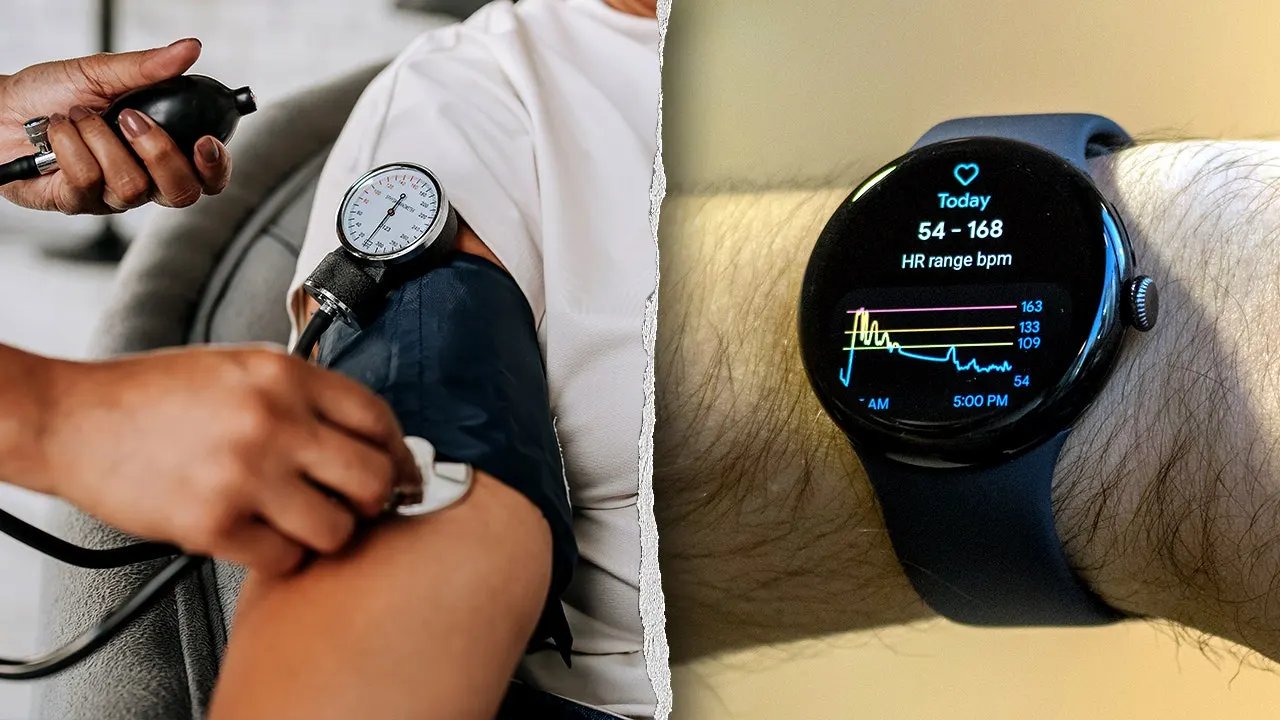
Your smartwatch is capable of tracking more than just your daily step count or sleep quality. Recent developments from Google Research indicate that the device on your wrist could soon serve as a sophisticated tool for monitoring cardiovascular health. Researchers have demonstrated an artificial intelligence system that identifies signs of hypertension by analyzing sensor data typically found in consumer-grade smartwatches.
The system utilizes two primary sensors already present in most wearable devices. The first is an optical sensor that employs light to monitor blood volume changes beneath the skin, a method commonly used to track pulse rates. The second is an accelerometer designed to detect movement. Researchers discovered that this motion sensor is sensitive enough to capture minute, rhythmic vibrations caused by the heart as it pumps blood throughout the body. By applying machine learning models to these subtle vibrations and pulse patterns, the AI can detect biomarkers associated with hypertension. This process operates in the background, requiring no calibration against a traditional inflatable blood pressure cuff.
The results of the clinical study
To validate this technology, Google collaborated with experts from Harvard Medical School and the Beth Israel Deaconess Medical Center. The AI model was trained on approximately 500,000 hours of sensor data collected from over 2,000 participants. Following the training phase, the team conducted a clinical study involving 196 individuals across five locations in the United States. None of these participants had a prior history of cardiovascular disease or were currently undergoing treatment for high blood pressure.
The study participants wore smartwatches for seven days. Researchers compared the AI’s detection capabilities against the results of 24-hour ambulatory blood pressure monitoring, which is currently the clinical standard for diagnosing hypertension. The findings were encouraging: the system demonstrated 65.8% sensitivity and 90% specificity. Furthermore, it achieved an 80.6% positive predictive value, meaning that when the system identified a participant as having high blood pressure, that result was accurate in roughly four out of five instances. While these results show promise, researchers noted that the system still missed approximately one-third of participants who had hypertension.
Distinguishing between wellness tools and diagnostic equipment
It is vital for consumers to distinguish between experimental AI research and the features currently available on their devices. Google has integrated a “blood pressure trends” feature into the Google Health app for users of the Pixel Watch 3, 4, and 5. This feature tracks long-term patterns and informs users whether their blood pressure trends appear elevated over a monthly period.
However, this feature is strictly categorized as a wellness tool rather than a medical diagnostic device. It does not provide specific systolic or diastolic readings, and Google explicitly advises against using these trends to adjust medications or treatment plans. The experimental technology presented in the research paper published in Nature is significantly more advanced, but it remains in an exploratory stage. It has not yet been approved as a commercial diagnostic tool, meaning that for medical purposes, clinical-grade equipment remains the only authorized standard.
The competitive landscape of wearable health
Google is not the only company exploring this domain. Apple has introduced FDA-cleared hypertension notifications for select Apple Watch models. Much like the research conducted by Google, Apple’s feature monitors for patterns consistent with chronic high blood pressure over extended periods. If the watch detects irregularities, it sends a notification to the user. Apple similarly maintains that these alerts are not equivalent to a professional medical diagnosis. Both companies emphasize that the purpose of these notifications is to prompt users to seek a formal medical evaluation using a validated, traditional upper-arm blood pressure cuff.
The importance of early hypertension detection
Hypertension is frequently referred to as a “silent killer” because it often presents no symptoms until a severe cardiac event occurs, such as a heart attack or stroke. According to the World Health Organization, more than one billion adults worldwide live with high blood pressure, many of whom remain unaware of their condition. The potential impact of AI-driven wearable technology lies in its ability to flag warning signs in demographics that might otherwise avoid clinical screenings, such as younger, seemingly healthy adults. If a wearable device can encourage an individual to visit a doctor earlier, the potential for intervention and the reduction of long-term health risks becomes significant.
Guidelines for users receiving an alert
If a smartwatch identifies potential signs of high blood pressure, it should be treated as a prompt for a secondary, more accurate check rather than a definitive diagnosis. Medical professionals generally recommend using an automatic upper-arm monitor for home verification, as these devices are significantly more accurate than wrist-based or finger-based monitors.
If a user receives a high trend alert, the standard medical recommendation is to perform consistent, twice-daily readings over the course of at least one week to build a clear dataset. These readings should be recorded and shared with a primary care physician to facilitate an informed discussion. Reliance on a digital summary at the expense of manual, validated measurements is discouraged. While the integration of AI into wearables offers a promising path forward for proactive healthcare, it is intended to supplement, not replace, the guidance and diagnostics provided by trained medical personnel.
Disclaimer: This content is auto-generated for informational purposes only.
Source: Read Original News