






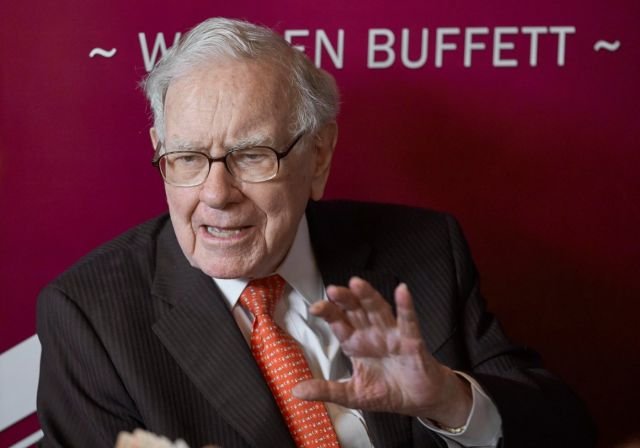
OMAHA, Neb. — An era of American corporate history concluded on Friday as Warren Buffett, the legendary “Oracle of Omaha,” officially stepped down as chairman of Berkshire Hathaway. After steering the $1 trillion conglomerate for over half a century, the 96-year-old investor is transitioning to the role of chairman emeritus, marking the final stage of a meticulous, long-term succession plan.
The leadership handoff sees Howard Buffett, Warren’s son and a member of the company’s board since 1993, assume the role of chairman. This shift follows the earlier installation of Greg Abel as CEO at the start of this year. While the transition signifies a major change in the C-suite, Warren Buffett will remain on the board, maintaining a watchful eye over the institution he transformed from a struggling textile mill into one of the world’s most valuable companies.
## A Legacy Built on Enduring Values
For decades, Buffett’s approach to investing—emphasizing long-term growth and identifying undervalued companies—created a gravitational pull that defined Wall Street. Under his guidance, Berkshire Hathaway achieved a compounded annual growth rate of 19.9%, nearly doubling the returns of the S&P 500.
In a poignant letter to shareholders, Buffett expressed confidence in the new guard. “Greg runs the company; Howard will guard its culture and values—both worth more than anything on our balance sheet,” Buffett wrote. By separating the operational management of the business from the stewardship of its identity, Buffett has sought to ensure that the unique character of Berkshire survives his departure.
Michael Withers, a management professor at the University of Notre Dame, noted that Buffett’s departure is the culmination of a deliberate, incremental strategy. “Buffett understood that succeeding him wasn’t just about finding another extraordinary leader,” Withers observed. “It was about building a structure that could preserve what makes Berkshire different long after he has stepped away.”
## Navigating a Tech-Dominated Market
As the business world shifts, Berkshire Hathaway faces the challenge of maintaining its market dominance in an economy increasingly defined by artificial intelligence, cloud computing, and aggressive digital transformation. While Berkshire became the first non-tech firm to reach a $1 trillion valuation in 2024, the market today is vastly different from the one where Buffett first cemented his reputation.
Observers are now looking to see how Abel, who already holds the reins on daily operations, will navigate the intersection of traditional industrial conglomerate management and the rapid integration of emerging technologies. The tech industry, which has long influenced the broader market, remains the primary hurdle for traditional firms attempting to sustain double-digit growth rates in a modern context.
## The Future of the Berkshire Ecosystem
The transition comes at a time when the investment landscape is undergoing a technological revolution. From algorithmic trading to AI-driven market analysis, the tools that define modern finance are unrecognizable from the methods that helped Buffett earn his fortune.
Despite these changes, the “Buffett effect” persists. Whenever the company files public disclosures regarding its stock portfolio, the news immediately ripples through global financial markets, proving that his influence remains profound even as he steps back.
Looking forward, the test for both Abel and the younger Buffett will be balancing the company’s storied, conservative heritage with the necessity of adapting to a high-speed digital economy. As shares of Berkshire Hathaway showed some volatility in early trading Friday, the markets remain sensitive to the transition. However, as Buffett himself noted in his farewell letter, he has “never felt better about what comes next,” signaling that for the Oracle of Omaha, the foundation for the company’s next 50 years is already firmly in place.
Disclaimer: This content is auto-generated for informational purposes only.
Source: Read Original News