







Environmental Crime: Global Crisis Intensifies as Structural Failures Persist
Eighteen years after a landmark report first exposed the devastating scale of environmental crime, experts warn that the situation has deteriorated, with criminal networks becoming more sophisticated, lucrative, and entrenched.
In 2008, the Environmental Investigation Agency (EIA) released Environmental Crime – A Threat to Our Future, a pioneering analysis that called for a coordinated global response to the interconnected web of environmental offenses. Nearly two decades later, the EIA’s latest report, Crimes that Affect the Environment – STILL a critical threat to our future, presents a sobering conclusion: the world has largely failed to heed those warnings.
A Growing Security Threat
Justin Gosling, Lead of the EIA’s Securing Criminal Justice Programme, notes that the structural weaknesses identified in 2008 remain firmly in place. “Many of the structural weaknesses identified — fragmented legislation, weak deterrence, limited cross-border cooperation and insufficient political will — persist today, even as the consequences of inaction have become progressively harder and, in some cases, impossible to reverse,” Gosling said.
The report argues that environmental offenses—ranging from illegal logging and wildlife trafficking to the illicit trade in climate-damaging refrigerants—should not be viewed as isolated regulatory breaches. Instead, they are sophisticated, interconnected expressions of transnational organized crime that fuel the “triple planetary crisis” of climate change, pollution, and biodiversity loss.
The Scope of the Crisis
The EIA report outlines the staggering breadth of these crimes:
- Climate Crime: Criminal networks are exploiting legal loopholes to traffic hydrofluorocarbon (HFC) refrigerant gases. In Europe alone, this illicit trade costs governments millions in lost VAT annually and undermines international efforts to stabilize the climate.
- Waste and Pollution: From illegal plastic waste shipments to domestic recycling fraud, pollution is increasingly recognized as serious criminality with irreversible health and ecological consequences.
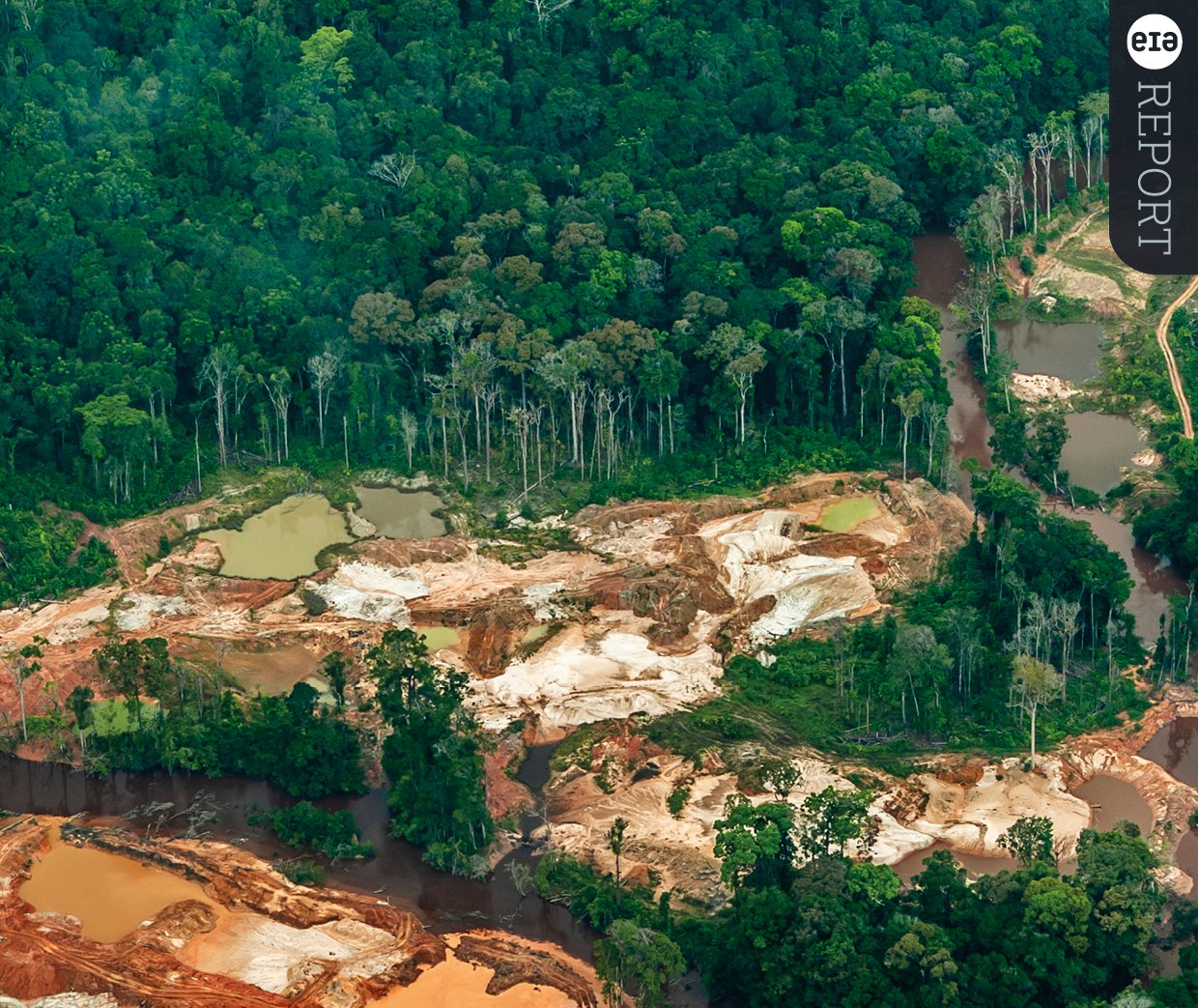
- Forest and Wildlife Trafficking: Illegal logging and mining are primary drivers of deforestation and mercury contamination. Meanwhile, wildlife crime remains a high-reward, low-risk enterprise, with thousands of species trafficked between 2015 and 2021, further exacerbating the risk of zoonotic diseases.
- Illegal Fishing: Estimated to represent up to 30% of global annual catches, illegal fishing is worth as much as $23.5 billion a year, often acting as a front for labor exploitation and human trafficking.
The Failure of Political Will
According to the EIA, the primary obstacle is not a lack of legal tools, but a glaring absence of action. Existing frameworks, such as the UN Convention against Transnational Organised Crime (UNTOC), are available to governments but remain underutilized.
“This is not a failure of available tools — the legal frameworks and cooperation mechanisms needed to act already exist,” Gosling added. “The failure has been one of [the] failure of political will, resourcing and coordination.”
The EIA’s report concludes with an urgent call to action, demanding that nations move beyond rhetoric. The organization urges policymakers to treat environmental crime as the urgent global security threat it truly is—by strengthening cross-border enforcement, prioritizing high-level prosecutions, and fully operationalizing international treaties to disrupt the profit incentives that continue to drive this planetary decay.