!['Vishwanath And Sons' Box Office Collection Day 2 [LIVE]: Suriya and Mamitha Baiju starrer holds strong, nears Rs 20 crore as it eyes a big weekend](https://dailysamchar.in/wp-content/uploads/2026/08/1786788235_photo.jpg "‘Vishwanath And Sons’ Box Office Collection Day 2 [LIVE]: Suriya and Mamitha Baiju starrer holds strong, nears Rs 20 crore as it eyes a big weekend")






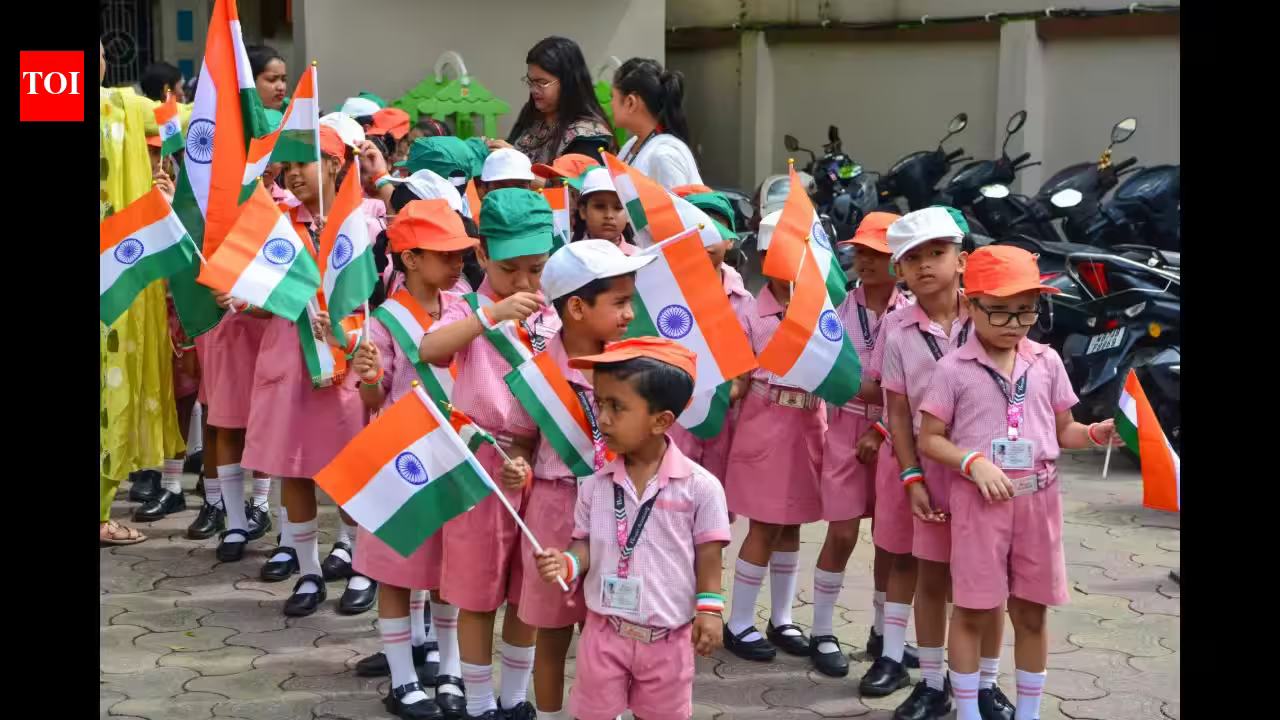
Each year on August 15th, students across India take to the stage to commemorate Independence Day. These occasions serve as a powerful reminder of the extraordinary individuals who spearheaded the nation’s struggle for liberation. Figures like Mahatma Gandhi, Bhagat Singh, Subhas Chandra Bose, Rani Lakshmibai, and Sardar Patel, among countless other valiant freedom fighters, are revered for their immeasurable sacrifices that ultimately paved the way for India’s sovereignty.
However, merely acknowledging their contributions is often just the initial step. The true art of delivering a compelling Independence Day speech lies in a student’s ability to imbue historical accounts with genuine sincerity, drawing meaningful connections between past sacrifices and the contemporary essence of freedom. Crucially, the speaker must captivate the audience’s attention while preserving the profound solemnity inherent in such a momentous occasion. With the annual celebration just around the corner, here are insightful recommendations designed to transform a conventional ceremonial address into a truly confident, engaging, and unforgettable experience for both the speaker and the listeners.
To deliver a truly impactful Independence Day address, students should consider several key strategies. Firstly, the speech must begin by thoroughly establishing the profound significance of the day. A strong opening could involve reflecting on the deeper meaning August 15th holds for every Indian, subsequently introducing the arduous journey and the innumerable sacrifices that culminated in India’s independence. For example, one might eloquently state: “On August 15, we do not simply celebrate the day India became independent. We remember a long struggle, countless sacrifices, and the courage of people who believed that a free India was worth fighting for.”
Secondly, it is vital to remember freedom fighters with appropriate context, rather than presenting their names as a mere list. When mentioning an iconic figure like Bhagat Singh, it is imperative to explain what his immense courage symbolized. Similarly, when discussing Mahatma Gandhi, his philosophy of non-violence should be intricately linked to the broader freedom movement. For Subhas Chandra Bose, emphasizing the unwavering determination that fueled his pursuit of India’s independence adds significant depth. A name truly resonates when accompanied by the specific contribution or the profound values it embodies.
Thirdly, the narrative of sacrifice should be woven into the speech. The freedom struggle was far from a singular event; it was a complex and protracted movement that involved individuals from diverse regions, communities, and socio-economic backgrounds. A speech gains immense power when it succinctly recounts a specific episode or personal story that genuinely moves the speaker, rather than attempting to encompass the entire, vast history of India’s independence in a few brief minutes. Choosing a particular event and articulating its enduring relevance can make the message profoundly impactful.
Fourthly, it is crucial to bridge the historical gap between 1947 and contemporary India. After paying homage to those who bravely fought for independence, the speech must transition to the present, prompting reflection on what their sacrifices mean for today’s generation. For a student, this could translate into valuing education, upholding democratic institutions, exercising freedom responsibly, treating fellow citizens with dignity, and actively contributing to society’s betterment. This vital connection ensures that the speech not only honors the past but also remains deeply relevant to the audience listening in the present.
Fifthly, speakers should convey conviction, not just rote memorization. An Independence Day speech, while factually accurate, can feel detached if the speaker doesn’t personally connect with the subject matter. Students should contemplate what freedom signifies to them personally. What opportunities exist today because India is an independent nation? What responsibilities does their generation bear? Including a genuine, personal reflection can lend an authentic and heartfelt tone to the entire speech.
Sixthly, clarity and dignity in language are paramount. There is no need for overly complex vocabulary to make an Independence Day speech sound impressive. The language should be confident, respectful, and easily understandable. Shorter sentences often facilitate smoother delivery and allow crucial points to register effectively with the audience. The primary objective is not to showcase an extensive vocabulary, but rather to communicate ideas with clarity and unwavering conviction.
Seventhly, practice extends beyond just memorizing words to perfecting delivery. A well-crafted speech demands equally thoughtful execution. Speakers should practice aloud, maintaining eye contact, strategically pausing after significant points, and avoiding rushing through their address. If quoting a freedom fighter, those words should be given appropriate weight and gravity. True confidence on stage stems less from speaking loudly and more from an inherent understanding of the message one wishes to convey.
Finally, the conclusion should transform remembrance into responsibility. The ending should revisit the sacrifices highlighted at the beginning of the speech, reminding the audience that the freedom inherited by current generations inherently carries its own set of responsibilities. For example, a powerful concluding statement might be: “The freedom we celebrate today was built on the courage and sacrifice of generations before us. The least we can do is value it, protect it, and use it responsibly. As we remember those who gave us a free India, let us also ask ourselves what kind of India we will leave for the generations that follow.” A simple, yet resonant, “Jai Hind” can then serve as a fitting and impactful close.