








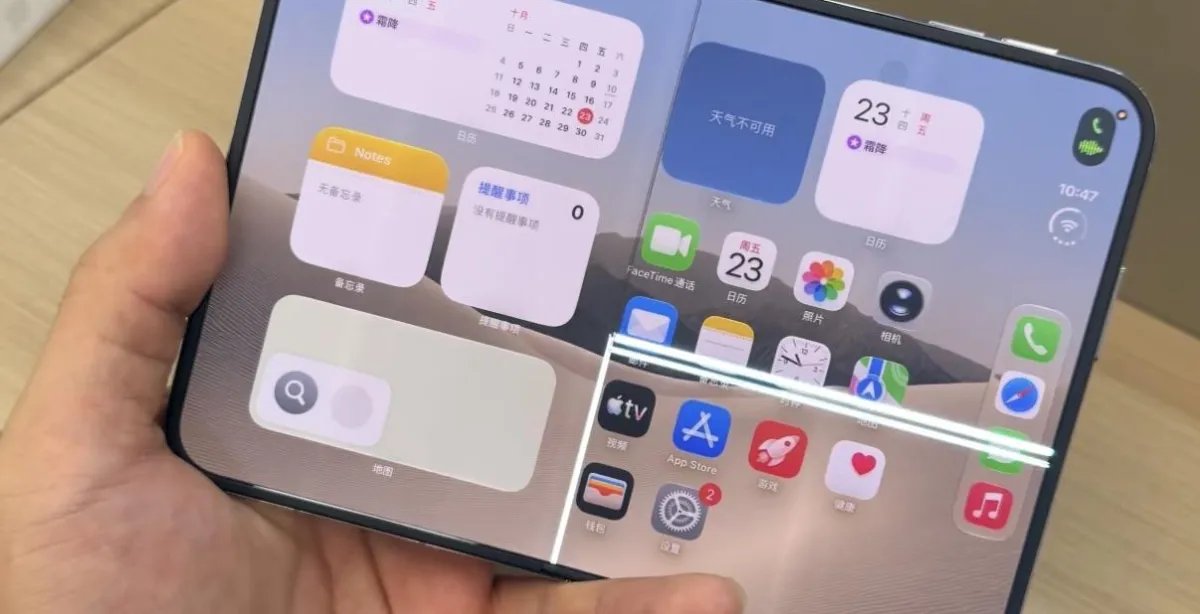
The Architecture of the iPhone Duo Hinge
The release of the iPhone Duo was positioned as Apple’s definitive answer to the burgeoning foldable smartphone market. By integrating a dual-screen interface with a fluid folding mechanism, the company aimed to set a new standard for portable productivity. However, early adopters are encountering a severe technical failure that threatens to undermine the device’s reputation. Reports emerging from technical communities and user forums indicate that the hinge mechanism is failing within hours of initial deployment, often resulting in catastrophic damage to the primary display.
The structural failure revolves around a sophisticated hinge assembly. Unlike simpler designs that utilize a single-axis pivot, the iPhone Duo employs a hybrid construction featuring a central gear-based hinge flanked by two distinct sets of linking hinges. This complex arrangement was designed to distribute tension evenly across the flexible display, ensuring that the screen does not suffer from excessive strain during the opening and closing cycles. Unfortunately, the precision of this assembly appears to be its greatest liability. Recent tear-down analysis has revealed that a specific set of internal links—those positioned in the center of the chassis—lack the mechanical robustness required to sustain long-term operation.
Failure Point Analysis
Technical investigations, including a widely circulated teardown performed by the content creator CuriousHagi, have identified the exact point of failure. Within the intricate gear system, there is a central linkage plate that acts as a structural bridge. This specific component is manufactured with a thickness significantly lower than the surrounding links located above and below it. More critically, the part features a machined notch designed to accommodate the folding geometry, which creates a concentrated stress riser at the narrowest section of the metal.
Under normal operational conditions, this notch is intended to manage the transition of the folding leaves. However, forensic examination of units that suffered screen fractures shows that the linkage is prone to snapping under minimal lateral pressure. When the hinge is articulated, the insufficient thickness at the notch leads to mechanical fatigue or immediate shearing. Once this link fails, the hinge assembly loses its alignment, causing the metal framework to grind against the support plate of the display. The audible crack reported by many users is the sound of the display glass being punctured or crushed from behind by the misaligned hinge components.
The Mechanism of Mechanical Interference
The primary indicator of a systemic flaw is the consistency of the damage. Nearly every reported failure occurs in the same geographic region of the device, centered directly over the structural link identified as the point of failure. Marks discovered on the support plate during teardown analyses confirm that the internal components are physically colliding with the screen backing. When the hinge gear becomes caught or fails to seat correctly, it generates a high-pressure point that pushes directly against the thin, flexible OLED panel.
Because the iPhone Duo utilizes a sophisticated polymer-based screen protection layer intended to bridge the gap over the hinge, there is very little tolerance for internal movement. The screen acts as a tightly tensioned membrane. When the structural foundation shifts by even a fraction of a millimeter due to a snapped link, the display is forced to accommodate the distortion. Given the rigid nature of the internal display glass, it quickly reaches its breaking point, resulting in the characteristic fissures that follow the horizontal axis of the fold.
Engineering Challenges of Foldable Displays
The catastrophic failures observed in the iPhone Duo highlight the extreme difficulty of balancing mechanical longevity with consumer-grade aesthetics. Designing a hinge that is both thin enough to maintain the slim profile of the iPhone lineup and durable enough to withstand thousands of folds requires materials science that reaches the current limit of manufacturing capabilities. Apple’s transition to this multi-link, gear-driven system demonstrates a push for a seamless user experience, but it also creates a high-maintenance environment for the internal components.
A significant challenge in foldable hardware is the accumulation of microscopic debris. In the case of the iPhone Duo, however, the failure is purely mechanical and independent of environmental contamination. The system is failing under its own designed load, suggesting that the fatigue tolerance of the specific metal alloy used for the central links was not sufficiently tested for the force requirements of the closing mechanism. When the linkage snaps, the energy stored in the hinge tensioner is released abruptly, which accounts for the “spectacular” nature of the failures described by early users.
Impact on Future Hardware Iterations
The hardware crisis facing the iPhone Duo serves as a critical case study for the entire foldable industry. As companies race to refine the user experience, the reliance on increasingly complex mechanical linkages may prove to be a barrier to reliability. If the core structural components cannot support the intended lifespan of the device, the integration of folding technology will remain a high-risk proposition for the end-user.
For Apple, the path forward involves a rigorous re-evaluation of the materials and geometry used in the hinge assembly. The current design requires an immediate overhaul of the linkage density and the removal of stress-inducing notches. Whether this can be achieved through software adjustments—such as altering the tensioning algorithms that control the hinge motors—or if it requires a total recall for a hardware revision remains to be seen. In the immediate future, these reports will likely lead to a tightening of quality control protocols and potentially a redesign of the internal architecture to ensure that even in the event of a minor mechanical deviation, the support plates remain shielded from direct contact with the display. This situation underscores the reality that in mobile engineering, the complexity of a feature should never supersede the necessity of foundational structural integrity.
Disclaimer: This content is auto-generated for informational purposes only.
Source: Read Original News