






Mounting Concerns Over Digital Censorship: Satire and Voter Lists Under Scrutiny
The intersection of digital regulation and political discourse in India has reached a flashpoint following the removal of a high-profile parody video by Meta. Stand-up comedian Brijesh Jha found his viral content stripped from Instagram just days after its upload, sparking a broader debate about the boundaries of free speech and the integrity of the nation’s electoral processes.
The Viral Parody and Its Removal
Brijesh Jha’s video, which garnered 1.7 million views within 48 hours of its September 29 release, featured a satirical take on the systematic removal of citizens from electoral rolls in West Bengal. In the clip, Jha alleged that Chief Election Commissioner Gyanesh Kumar had orchestrated the disenfranchisement of millions of voters under directives from the Bharatiya Janata Party (BJP).
Meta’s decision to remove the video, citing local legislation, has invited sharp criticism from civil society groups. Jha himself suggested that the takedown was a direct response to authorities attempting to suppress public discourse surrounding a recent journalistic investigation into the revision of national voter lists.
Disputed Electoral Revisions
At the heart of the controversy is a massive administrative exercise launched in June of last year, characterized as a “special intensive revision” of voter lists aimed at removing deceased or duplicate entries. However, internal friction within the Election Commission of India has cast doubt on the impartiality of the process.
According to reports from The Indian Express, two of the three Election Commissioners raised formal objections on at least 14 occasions regarding Commissioner Kumar’s management of this revision. The figures behind the exercise are staggering: approximately 130 million people—roughly 14% of India’s total electorate—were purged from the lists. Critics, including opposition leaders, have pointed out that a disproportionate number of those removed are Muslims, a demographic that traditionally represents a significant challenge to Prime Minister Narendra Modi’s Hindu nationalist platform. These irregularities have prompted urgent calls for an independent probe into the Commission’s operations.
Protests and the Regulatory Climate
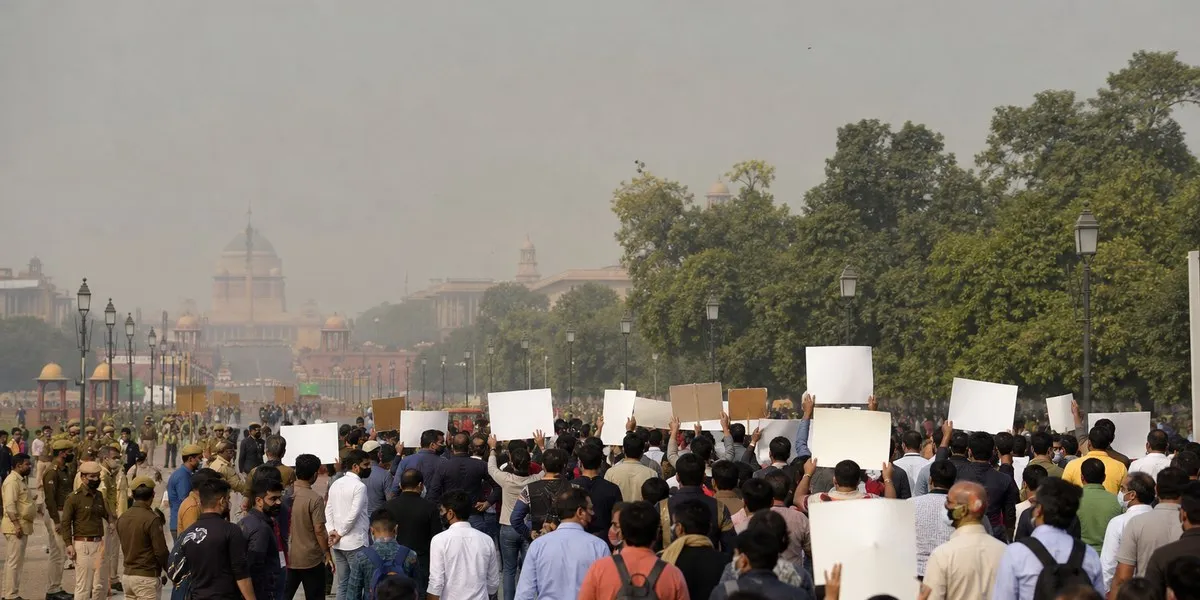
The fallout from these revelations has translated into tangible unrest. Opposition figures, including Congress leader Rahul Gandhi, have faced temporary detention by New Delhi police while attempting to protest outside the election commission’s office. The BJP has countered these actions by framing the opposition’s demands as an attempt to destabilize India’s democratic institutions.
The environment for online dissent has grown increasingly constrained. In February, the Indian government enacted stringent regulations requiring social media platforms to remove content deemed illegal within three hours of receiving a government or judicial order, a significant reduction from the previous 36-hour window. Data suggests the scale of these interventions is vast; The Indian Express reported that nearly 195,000 content-blocking orders were issued to Instagram, Facebook, and YouTube between March and July alone.
The chilling effect is not limited to comedians. Renowned political cartoonist Satish Acharya reported that his Instagram account was blocked for over a week starting in late September, with several of his historical cartoons—some years old—removed by the platform. As these instances of content moderation accumulate, observers fear that the digital space for satire and political dissent is rapidly narrowing, leaving artists and journalists to navigate an increasingly restrictive environment.
Disclaimer: This content is auto-generated for informational purposes only.
Source: Read Original News