








Desperate Search for Trapped Hydropower Workers Continues as Nepal Reels from Glacier Collapse
KATHMANDU – Rescue operations in Nepal intensified on Sunday as teams resumed the perilous task of reaching over 100 hydropower workers believed to be trapped deep within mud-choked tunnels. The search efforts, concentrated on the Trishuli 3A and 3B project sites, were briefly paused overnight due to torrential rainfall and dangerous surges in river levels.
The disaster, which has left the nation in mourning, was triggered last Wednesday when a massive section of a Himalayan glacier collapsed at an altitude of approximately 5,200 meters. The ice mass plunged 1,200 meters, pulverizing rock and debris into a catastrophic deluge that slammed into the Lende River. The resulting surge caused water levels in the Trishuli River to spike by nine meters in just 30 minutes, sweeping through the districts of Rasuwa, Nuwakot, and Dhading.
A Race Against Time
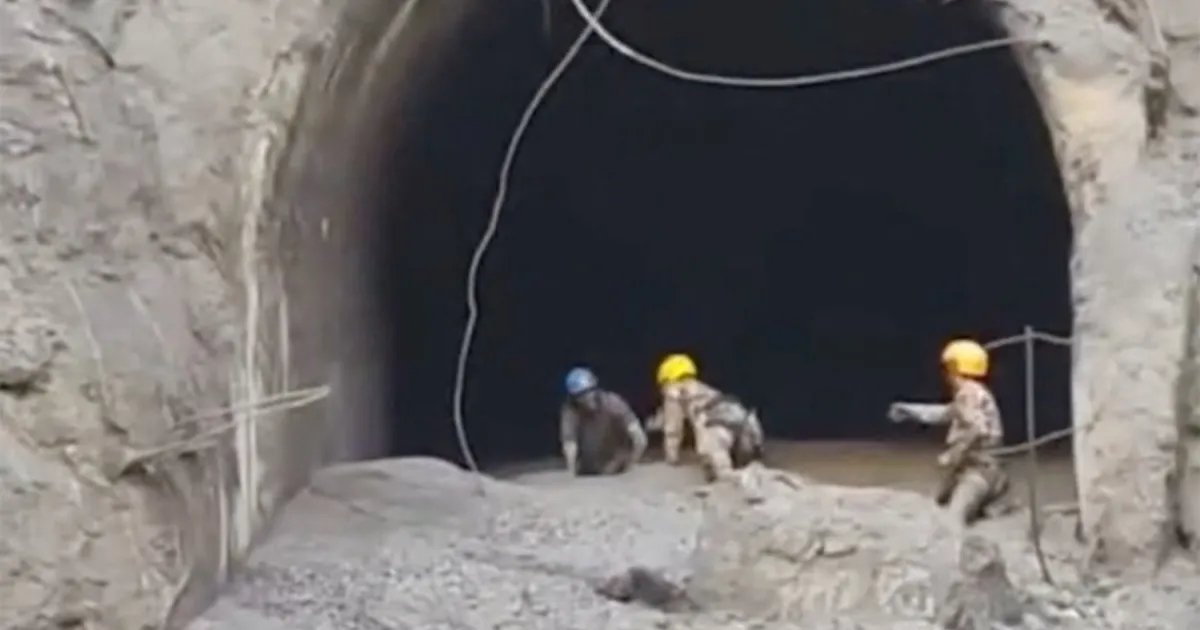
At the Trishuli 3A site in Rasuwa, specialized army units deployed heavy machinery, including drills and hydraulic cutters, to penetrate the debris-filled tunnels. Despite the volatile conditions, rescuers successfully breached the upper sections of a tunnel on Saturday evening, immediately pumping oxygen into the void and deploying cameras to search for survivors.
“As the floodwaters have receded, the team has resumed efforts to locate the tunnel entrance,” the Nepal Army stated on Sunday.
The government has launched an urgent appeal for international expertise to bolster its rescue capacity. Officials are coordinating with specialists from India and China to navigate the complex, high-risk environment. The government remains focused on the “best shot” at saving lives, though the window of opportunity is rapidly closing.
Staggering Human and Economic Toll
The scale of the catastrophe is immense. Nepal’s National Disaster Risk Reduction and Management Authority reports that at least 750 people have been confirmed dead, with more than 3,000 still missing—a list that includes 933 hydropower project workers. Across the border in Tibet, authorities have confirmed 16 deaths and 546 missing, including 261 foreign nationals from 23 different countries.
For the survivors, the disaster has brought total ruin. Reports from the ground in Dhading describe flattened homes, with many residents losing not only their shelter but their primary livelihoods as small businesses were obliterated by the floodwaters.
International Response and Recovery
The global community has begun to mobilize, with significant humanitarian pledges pouring in. The United Kingdom has offered $6.8 million in aid, while the United States and Canada have pledged $3.6 million each. The United Nations and the International Federation of Red Cross and Red Crescent Societies have also released millions in emergency funding to support the recovery.
Despite the influx of aid, officials warn that the logistical challenge remains daunting. The rugged Himalayan terrain and destroyed infrastructure have hampered the “second phase” of operations, which involves distributing essential humanitarian supplies and reconnecting isolated communities.
Nepal’s Finance Minister has estimated the initial economic losses at over $4 billion, a figure that is expected to rise as search and recovery efforts continue. With warnings for further flooding still in effect, the nation remains on high alert, bracing for the long road to recovery ahead.