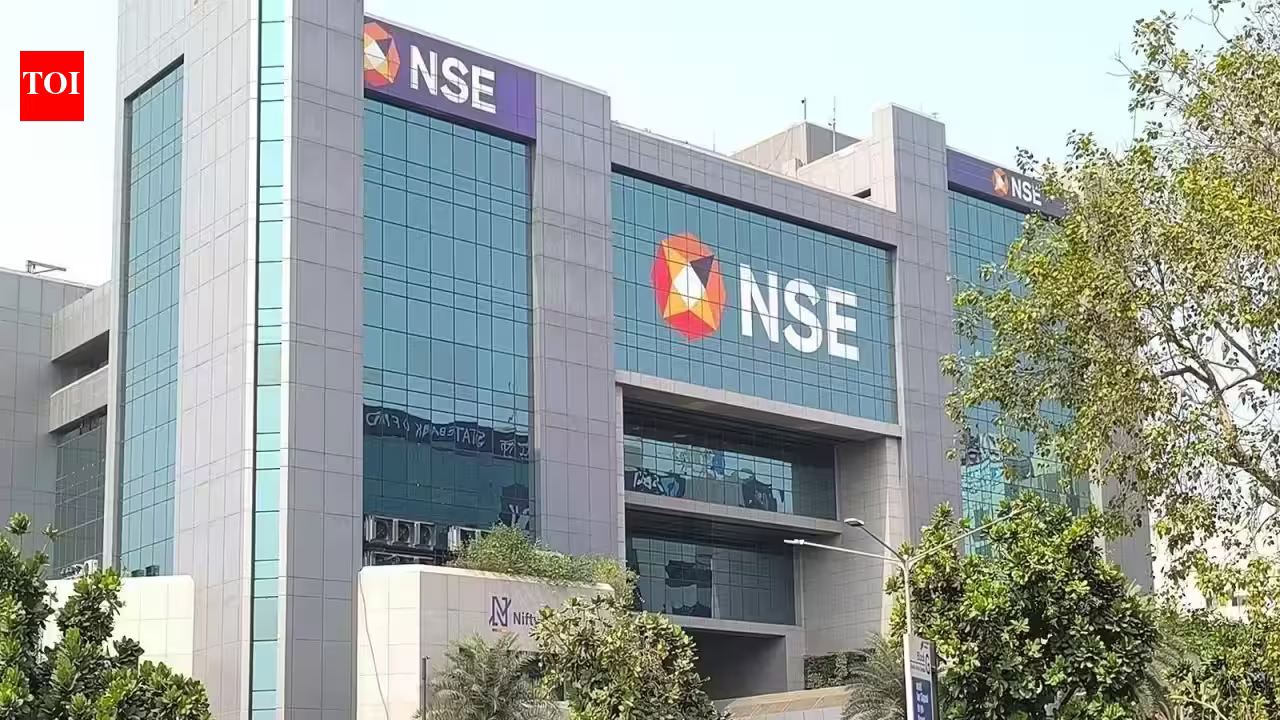










The Mechanics of a Landmark Public Offering
The National Stock Exchange of India (NSE) initial public offering (IPO) represents a monumental moment in the maturation of Indian financial markets. With an issue size of Rs 22,569 crore, it stands as the second-largest public offering in the nation’s history, trailing only the Hyundai Motor India listing. Despite its stature as the world’s largest derivatives exchange, the opening day of subscription witnessed a muted response, with only 43% of the available shares being subscribed.
To understand this performance, one must look past the initial subscription metrics. In the Indian market context, massive IPOs often experience a phased subscription pattern. Institutional buyers frequently wait for the final days of the book-building process to gauge sentiment and liquidity flows. The NSE IPO, being an offer for sale (OFS), does not involve capital dilution for the company’s internal operations, which changes the dynamic for long-term investors. Because no fresh capital is being raised, the primary focus for stakeholders is the valuation benchmark set by existing shareholders against the backdrop of current market conditions.
Market Overcrowding and Liquidity Constraints
A significant factor contributing to the tepid first-day response is the sheer density of the primary market in mid-September. The Indian equity market has seen an aggressive influx of IPOs, with five mainboard and six SME offerings coinciding with the NSE’s window. When Rs 24,500 crore worth of new supply hits the market simultaneously, it inevitably creates a strain on available institutional and retail liquidity.
Investors are currently forced to triage their capital allocations across multiple assets. With NSE accounting for over 90% of the total issue value for the week, it became the centerpiece of a competitive landscape. Retail investors, in particular, often diversify their participation across smaller, potentially high-growth SME listings, which can detract from the subscription levels of large-cap giants on their opening day. This concentration of supply effectively forces institutional investors to be more tactical with their bidding schedules, often holding off until the final day to ensure they are not over-committing capital in an overheated week.
Regulatory Headwinds and the Derivatives Shift
The valuation of the NSE is inextricably linked to its dominance in the derivatives segment, which historically accounts for 60% of its trading revenue. However, recent regulatory adjustments designed to align Indian market standards with global best practices have created an environment of uncertainty. The data shows a 27% decline in options volumes from their 2024 peak, signaling a cooling period in the retail-driven speculative activity that previously propelled the exchange’s rapid revenue growth.
This contraction in volume has forced analysts and prospective investors to reconsider the long-term growth trajectory of the exchange. The NSE’s decision to price its IPO between Rs 1,700 and Rs 1,785 per share—a level 15% to 20% below previous pre-deal projections and 40% lower than private-market valuations from earlier in the year—reflects a pragmatic adjustment to this new regulatory reality. By choosing a more conservative valuation, the NSE is attempting to provide a more attractive entry point, acknowledging that the exponential growth phase of the options market is being tempered by stricter risk management and regulatory oversight.
Valuation Rationality in an Evolving Landscape
The debate surrounding the NSE IPO is essentially a clash between the exchange’s historical performance and its future regulatory prospects. Historically, the NSE has functioned as a proxy for the growth of the Indian economy and the increasing financialization of household savings. However, professional investors are now focusing on whether the exchange can maintain its margins if trading volumes in the derivatives segment continue to face regulatory pressure.
The move to lower the issue size—from the originally planned 14.9 crore shares—indicates that existing shareholders are sensitive to market appetite. This downward revision is a strategic choice, prioritizing a successful listing over an aggressive valuation. In the context of Indian public markets, where “listing gains” often drive retail participation, the current price band suggests that the NSE is seeking a more stable, long-term investor base rather than short-term momentum. This approach is common among systemic financial institutions that prioritize stability over the volatility associated with highly speculative pricing.
The Role of Anchor Investors and Institutional Confidence
Despite the lukewarm retail and overall first-day subscription figures, the presence of anchor investors provides a crucial floor for the IPO’s credibility. The inclusion of entities such as the Life Insurance Corporation of India (LIC), Goldman Sachs, Fidelity, GIC Singapore, and the Abu Dhabi Investment Authority serves as a powerful signal of institutional trust. These investors, who have committed Rs 6,746 crore, are rarely influenced by short-term sentiment or the “crowdedness” of an IPO week.
For these sovereign wealth funds and global asset managers, the NSE is a strategic, long-term asset. Their participation suggests that despite regulatory concerns and shifting volume trends, the core infrastructure of the Indian capital market remains a compelling destination for global capital. The anchor book provides the necessary ballast to stabilize the issue during the turbulent book-building period, ensuring that the IPO is likely to reach its subscription targets as the bidding window nears its close.
Conclusion: The Path Toward Listing
The NSE IPO is a reflection of a broader transition within the Indian financial ecosystem. As the exchange moves from a private, closely held entity to a publicly traded behemoth, it must navigate the complexities of investor expectations regarding both growth and stability. While the first day was characterized by caution, the structural importance of the NSE to the Indian economy remains unchallenged.
For prospective investors, the decision to participate hinges on a broader assessment: is the current valuation an entry point that accounts for a permanent shift in market dynamics, or is it a temporary discount caused by a high-supply week? The final subscription numbers will likely reflect a recovery in momentum as institutional players complete their due diligence. Regardless of the immediate outcome, the listing will provide a new benchmark for the financial services sector in India, marking a definitive chapter in the evolution of the country’s capital markets. Investors should look beyond the first-day metrics and focus on the exchange’s ability to pivot its business model in a more transparent and regulated financial environment.
Disclaimer: This content is auto-generated for informational purposes only.
Source: Read Original News