








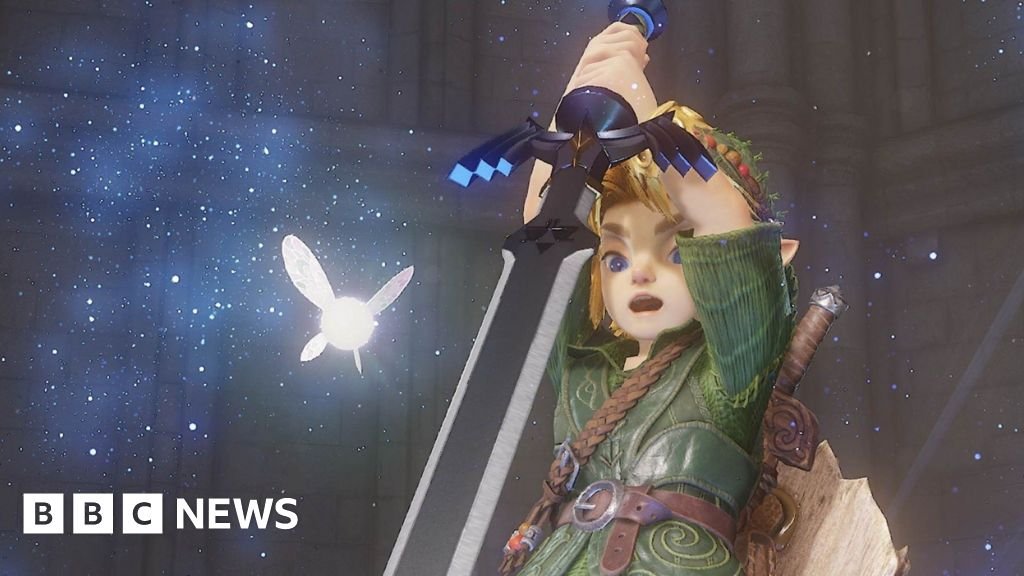
The nostalgia of digital landscapes often serves as a primary driver for technological evolution. When a ten-year-old child sat before a cathode-ray tube television three decades ago to navigate the intricate dungeons of a Nintendo 64 classic, the limitations of hardware were clear: blurry textures, restricted draw distances, and primitive polygon counts. Yet, the narrative depth and musical composition of that experience transcended the technical constraints of the era. Today, the convergence of high-fidelity emulation, AI-driven upscaling, and modern processing power has transformed how these foundational gaming experiences are preserved and experienced.
The Technical Evolution of Retro Preservation
The preservation of early 3D gaming hardware faces a unique set of challenges compared to 2D titles. While sprite-based games can be scaled using integer-ratio algorithms without losing their original aesthetic, 3D titles from the mid-1990s rely on low-resolution textures mapped onto geometric meshes. When viewed on modern 4K displays, the raw output of original hardware appears pixelated and distorted.
Recent advancements in emulation software have introduced high-level graphics APIs such as Vulkan and DirectX 12 to the retro gaming scene. These APIs allow developers to implement modern lighting shaders, anti-aliasing, and widescreen hacks on top of the original game logic. By decoupling the rendering engine from the game state, developers can inject high-resolution texture packs and 60-frame-per-second patches, effectively modernizing the visual fidelity of games that were once confined to 240p resolution.
Upscaling and AI-Driven Asset Reconstruction
One of the most significant leaps in modern gaming technology is the use of neural networks for image reconstruction. In the context of older games, machine learning models are trained to recognize the intended detail of a low-resolution texture and generate the missing pixel information. This process, known as AI upscaling, allows for the replacement of muddy, compressed textures with high-definition assets that retain the stylistic intent of the original artists.
For players who grew up playing foundational titles on the Nintendo 64, this technology provides a bridge between memory and reality. Where the original hardware rendered a blurred, monochromatic stone wall, modern upscaling tools can reconstruct the texture with detailed crevices and color depth. This approach preserves the core gameplay loop and puzzle architecture while removing the visual barriers that often discourage new audiences from engaging with older software.
Expanding the Reach of Legacy Titles
Beyond the visual enhancements, the accessibility of these titles has been revolutionized by hardware-software integration. Modern field-programmable gate arrays (FPGAs) allow for the cycle-accurate reproduction of original hardware at the hardware level. Unlike software emulation, which translates instructions via a middle layer, FPGA-based consoles replicate the physical behavior of the original microchips.
This ensures that the timing of inputs—crucial for puzzle-heavy adventure games—remains identical to the experience of thirty years ago. As players return to their favorite dungeons, they benefit from the original, perfected mechanical design, untainted by the latency issues that often plague software emulation. The impact of this approach is profound: it validates historical gaming software as a medium that deserves the same archival rigor as film or literature.
Modern Interfaces and QoL Improvements
Technological progress is not limited to visuals and hardware logic; user interface design has also played a crucial role in modernizing legacy experiences. Many retro-focused projects now include “Quality of Life” (QoL) features that were inconceivable during the original development cycles. These include state-saving functions, fast-forwarding through tedious travel segments, and customizable controller mapping.
These features address the primary criticism leveled against classic titles: that they are often too punishing or time-consuming for modern schedules. By allowing players to suspend their progress at any moment or map functions to more ergonomic, modern controllers, these updates lower the barrier to entry. This ensures that the storytelling and environmental design of seminal games remain the central focus, rather than the archaic input constraints of the past.
The Future of Interactive Archiving
As we look toward the next generation of computing, the preservation of early 3D software will likely move toward cloud-based distribution and real-time ray tracing integration. By moving the heavy lifting of high-resolution rendering to server-side infrastructure, gaming platforms can provide seamless access to classic libraries without requiring the end-user to possess high-end hardware.
The narrative arc of a ten-year-old child helping a sibling navigate a digital labyrinth is a human experience, but the medium through which that occurs is purely technical. By continuing to iterate on how these games are rendered, accessed, and played, the industry ensures that the “beautiful music” and “puzzle-filled dungeons” that captivated a generation remain relevant. The goal is no longer just to replicate the past, but to ensure that the foundational works of the industry remain a vibrant, playable part of our shared cultural landscape. The evolution from a grainy TV screen to an ultra-high-definition interactive experience represents a triumph of engineering, ensuring that the wonder of discovery is never lost to the passage of time.
Disclaimer: This content is auto-generated for informational purposes only.
Source: Read Original News