







iPhone 18 Pro Max vs Samsung Galaxy S26 Ultra: Specs Comparison
The landscape of flagship smartphones in 2026 is dominated by the Apple iPhone 18 Pro Max and the Samsung Galaxy S26 Ultra. Both devices serve as the peak of non-foldable hardware, offering industry-leading chipsets, high-refresh-rate displays, and sophisticated multi-lens camera arrays. While they share a high-end price point and a premium build philosophy, their architectural differences and feature sets appeal to distinct user priorities.
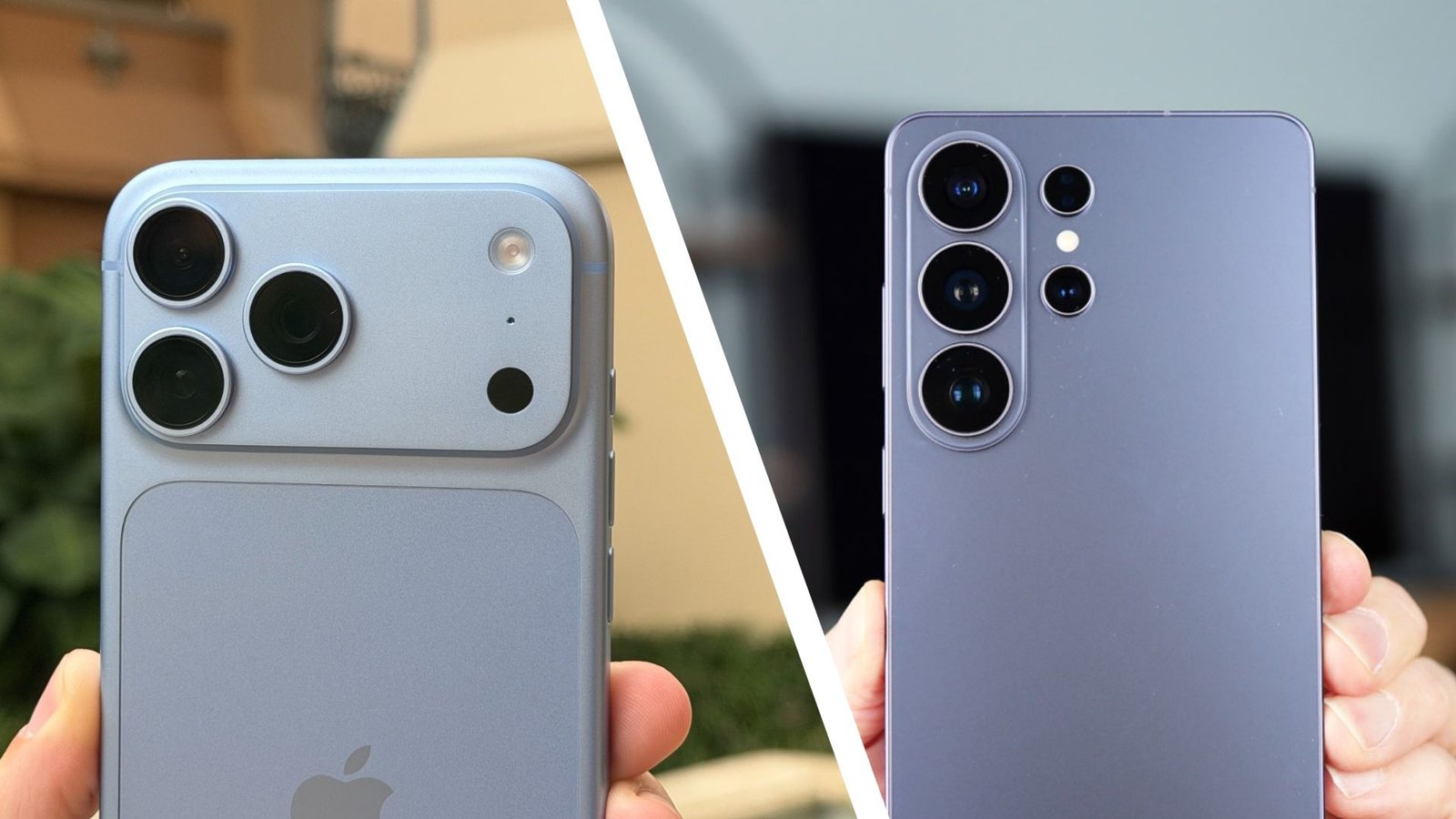
The iPhone 18 Pro Max measures 163.4 x 78 x 8.8mm and weighs 249g. It utilizes a 6.9-inch Super Retina XDR OLED panel with a peak brightness of 3,000 nits. Powering the device is the A20 Pro chipset paired with 12GB of RAM. The camera system is led by a 48MP main sensor featuring a variable aperture (f/1.48–4.0), supported by a 48MP ultra-wide and a 48MP telephoto lens.
In contrast, the Samsung Galaxy S26 Ultra is slightly larger in footprint at 163.6 x 78.1 x 7.9mm but notably lighter at 214g. It features a 6.9-inch Dynamic AMOLED 2X display with 2,600 nits of peak brightness. Under the hood, it runs the Snapdragon 8 Elite Gen 5 chipset, offering 12GB or 16GB of RAM. Samsung’s camera array is built around a 200MP main sensor, a 50MP ultra-wide lens, and a dual-telephoto setup (10MP and 50MP), providing significantly higher optical zoom capabilities than its Apple counterpart.
Pricing and Market Positioning
Pricing remains a key differentiator. The iPhone 18 Pro Max starts at $1,299/£1,299/AU$2,299 for the 256GB model. Apple scales the price aggressively for higher capacities, reaching $2,499/£2,499/AU$4,699 for a 2TB configuration. The Samsung Galaxy S26 Ultra starts at $1,299.99/£1,279/AU$2,199 for 256GB. While the entry-level pricing is competitive, the S26 Ultra peaks at the 1TB level, priced at $1,799.99/£1,699/AU$2,649, making it a more accessible choice for users requiring massive local storage without the premium overhead of Apple’s 2TB tier.
Design and Ergonomics
The design ethos separates the two manufacturers significantly. Apple continues with the familiar, squared-off industrial aesthetic of the iPhone 17 Pro Max, characterized by its substantial 249g weight and horizontal rear camera island. The construction emphasizes durability with its IP68 rating, tested for six meters of water depth.
Samsung has opted for a thinner, lighter chassis at 7.9mm, which accommodates a built-in silo for the S Pen stylus. The S26 Ultra features a more modern, slightly less curved edge profile compared to previous iterations. While the S26 Ultra shares the IP68 rating, its testing standard is 1.5 meters, compared to Apple’s six-meter certification. The color palettes also diverge: Apple maintains a classic professional aesthetic with Black, Silver, Glacier, and Burgundy, whereas Samsung provides more vibrant selections including Cobalt Violet, Sky Blue, and Pink Gold.
Display Innovation: The Privacy Edge
Both devices feature 6.9-inch panels with 120Hz adaptive refresh rates, providing excellent visual fluidity. Apple maintains a slight lead in raw peak brightness at 3,000 nits, which improves legibility under direct sunlight. However, the S26 Ultra introduces the “Privacy Display,” a proprietary technology that restricts the viewing angle of the screen to prevent “shoulder surfing.” This feature offers a practical security advantage that is currently absent on the iPhone 18 Pro Max, providing a unique selling point for mobile professionals and frequent travelers.
Camera Versatility vs. Optical Control
The camera debate centers on two distinct philosophies. The iPhone 18 Pro Max’s primary strength is its variable aperture. By physically adjusting the aperture, users can manipulate depth of field and light intake at a hardware level, offering a level of creative control that mimics professional mirrorless cameras.
The Galaxy S26 Ultra prioritizes versatility and raw resolution. With a 200MP main sensor and two dedicated telephoto lenses, it provides superior zoom coverage. While the iPhone caps out at 40x digital zoom, the S26 Ultra reaches 100x. The S26 Ultra’s ability to switch between 3x and 5x optical zoom settings makes it the more capable device for candid, distant photography, whereas the iPhone remains the preferred choice for color accuracy, video consistency, and superior selfie output.
Performance and Longevity
Both devices are powered by top-tier silicon that exceeds the requirements of current mobile applications. The A20 Pro and Snapdragon 8 Elite Gen 5 are both optimized for complex background processing and high-end gaming. While Apple’s integration of the A20 Pro with iOS 27 provides a highly optimized, power-efficient experience, Samsung’s use of 16GB of RAM in its 1TB model provides extra headroom for intense multitasking.
Software longevity is a priority for both firms, with both Apple and Samsung pledging extended support. Ultimately, the choice between them often reverts to the ecosystem: the uniform, secure nature of the Apple ecosystem versus the open, customizable architecture of the Android/One UI platform. Given the high performance of both handsets, the decision typically rests on whether the user prioritizes the creative utility of the variable aperture and MagSafe on the iPhone, or the zoom capability, stylus integration, and display security of the Samsung Galaxy S26 Ultra.
Disclaimer: This content is auto-generated for informational purposes only.
Source: Read Original News