







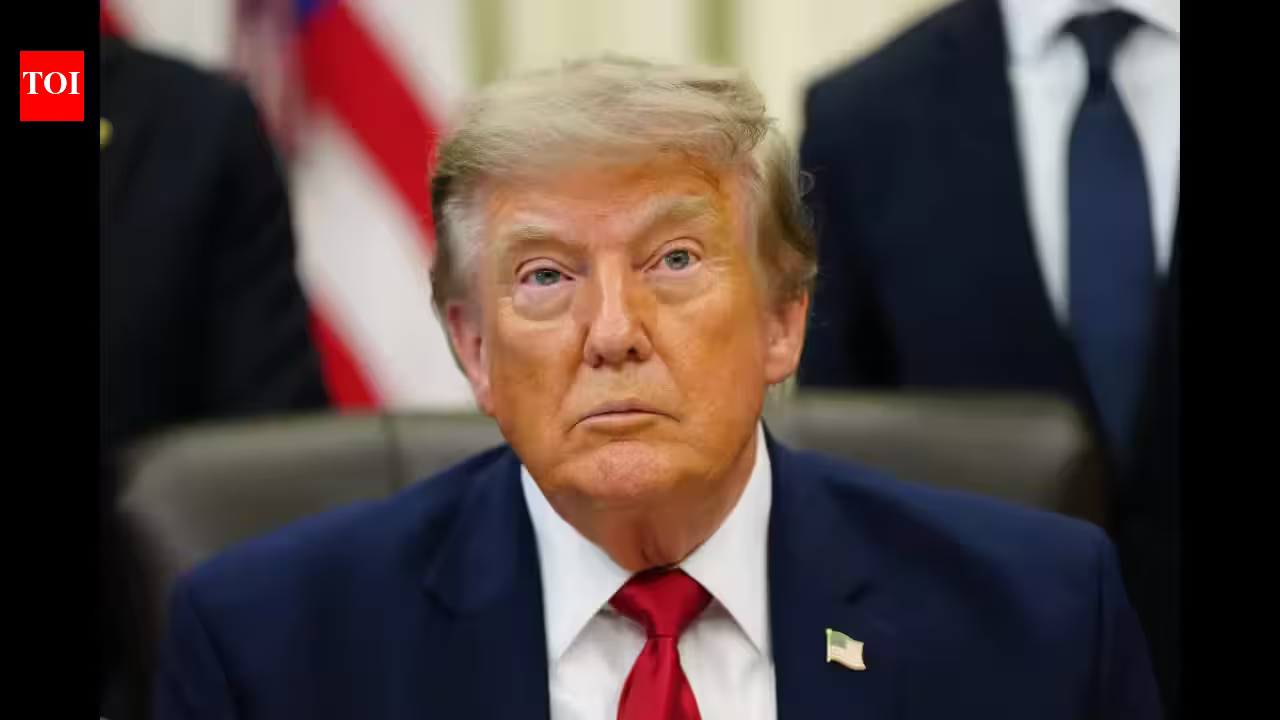

The intersection of political power and personal financial gain remains a contentious focal point in global governance. Recent reports indicate that United States President Donald Trump has engaged in a volume of securities trading that dwarfs the combined activity of all members of the U.S. Congress since his return to the White House in early 2025. This development has reignited a complex debate regarding the ethics of high-level officials participating in financial markets while wielding the power to influence those very markets through policy, intelligence access, and executive rhetoric.
The Mechanics of Presidential Trading and Disclosure
A review of financial disclosures covering the 17-month period from the second inauguration through June 2026 reveals approximately 28,700 individual trades tied to the president or his designated money managers. This figure stands in stark contrast to the roughly 22,200 transactions reported by all members of the U.S. Congress over the same duration.
The White House maintains that these assets are managed independently by third-party financial institutions utilizing computer-based models, such as those tracking the Schwab 1000. Officials argue that this structure precludes the president or his family from exercising direct control over specific buy or sell decisions. However, critics, including ethics experts like Kedric Payne of the Campaign Legal Center, argue that the issue transcends simple insider trading. Even in the absence of illegal information usage, the mere perception of a conflict of interest persists because a president’s policy decisions, social media communications, and executive orders can move markets instantaneously, inherently favoring the assets held in a portfolio.
Legislative Hypocrisy and the Regulatory Divide
The current political atmosphere has seen a push for legislation that would restrict congressional members from trading stocks. President Trump has publicly championed such measures, arguing that lawmakers should not be permitted to profit from their positions. Paradoxically, the legislation he supports is tailored to apply exclusively to the legislative branch, leaving the presidency unaffected.
This selective application of ethics rules has met with resistance from within the president’s own party. Some lawmakers have attempted to extend these prohibitions to the executive branch, including the president and vice president, though these efforts have historically been rebuffed by the president himself. Critics suggest that applying the same standards to the president as those proposed for Congress creates a moral hazard: while Congress is subject to potential oversight by ethics committees or the Department of Justice, applying similar enforcement mechanisms to a sitting president presents significant constitutional and practical challenges.
Market Influence and the Appearance of Conflict
The potential for market manipulation—intentional or otherwise—is a central concern. Reports have highlighted instances where companies that benefited from presidential policy or visibility saw market activity shortly after the president acquired, or publicly commented on, their stock. For example, during the first quarter of the year, significant capital was allocated to shares of DoorDash, followed by high-profile interactions between the president and the company.
Similar concerns have been raised regarding other technology and manufacturing firms. When an individual with the capacity to dictate industrial policy or influence national security agendas holds active, frequent trading positions, the standard firewall between public service and private accumulation becomes porous. As the president himself noted, the rising tide of the stock market benefits many participants; however, the ability of a head of state to profit from the volatility and sector-specific shifts generated by their own administration’s actions remains a significant point of concern for market integrity.
Comparative Context: The Indian Business Perspective
The debate regarding the personal trading habits of political leaders resonates with ongoing discussions in the Indian corporate and political landscape. In India, the Securities and Exchange Board of India (SEBI) maintains rigorous regulations regarding insider trading and the disclosure of interests by key managerial personnel and public officials.
While the Indian political system generally places a stronger emphasis on public declaration of assets by elected representatives, the discourse surrounding the “professionalization” of political wealth is notably different. In India, the focus is often on the prevention of “crony capitalism,” where business houses and political entities maintain close, often opaque, ties. The U.S. scenario, where the executive is actively participating in high-frequency trading of individual securities, presents a distinct model of conflict. For Indian observers and institutional investors, this highlights the necessity of strict, institutionalized blind trusts for leaders in high office—a practice that, while common, is not legally mandated in every jurisdiction to the extent required to prevent the influence of political power on personal wealth.
The Challenges of Oversight and Enforcement
Historically, legislative attempts to curb trading among elected officials have struggled to gain traction. The Stop Trading on Congressional Knowledge (STOCK) Act of 2012 remains the primary framework for governing the financial behavior of U.S. lawmakers, yet it has been widely criticized for its limited enforcement and negligible penalties.
Efforts to expand these rules to the executive branch are met with the defense of institutional tradition. Proponents of current standards argue that executive conduct is managed through norms, public scrutiny, and political accountability rather than statutory prohibition. Yet, as the volume of presidential trading continues to grow, the reliance on “norms” is increasingly viewed as an outdated mechanism.
Conclusion: The Future of Political Financial Integrity
The tension between individual property rights and public service requirements is unlikely to be resolved easily. The current U.S. landscape shows that even as transparency requirements increase, the sophistication of trading portfolios and the frequency of transactions allow for a level of involvement in financial markets that was previously unseen.
For the global business community, the ongoing situation serves as a case study in governance. As domestic and international markets become more sensitive to political rhetoric, the ability of leaders to maintain independent, insulated financial portfolios is becoming a critical metric of political integrity. Whether the U.S. eventually adopts a stricter, legally binding standard for the executive or continues to rely on the current framework of disclosure and public pressure, the matter remains a defining issue for the credibility of democratic institutions and the fairness of capital markets. The objective, for any robust economy, remains ensuring that the machinery of state policy serves the broader public interest rather than the individual gains of those at the helm.
Disclaimer: This content is auto-generated for informational purposes only.
Source: Read Original News