






The Strategic Shift Toward Indigenous High-Speed Rail
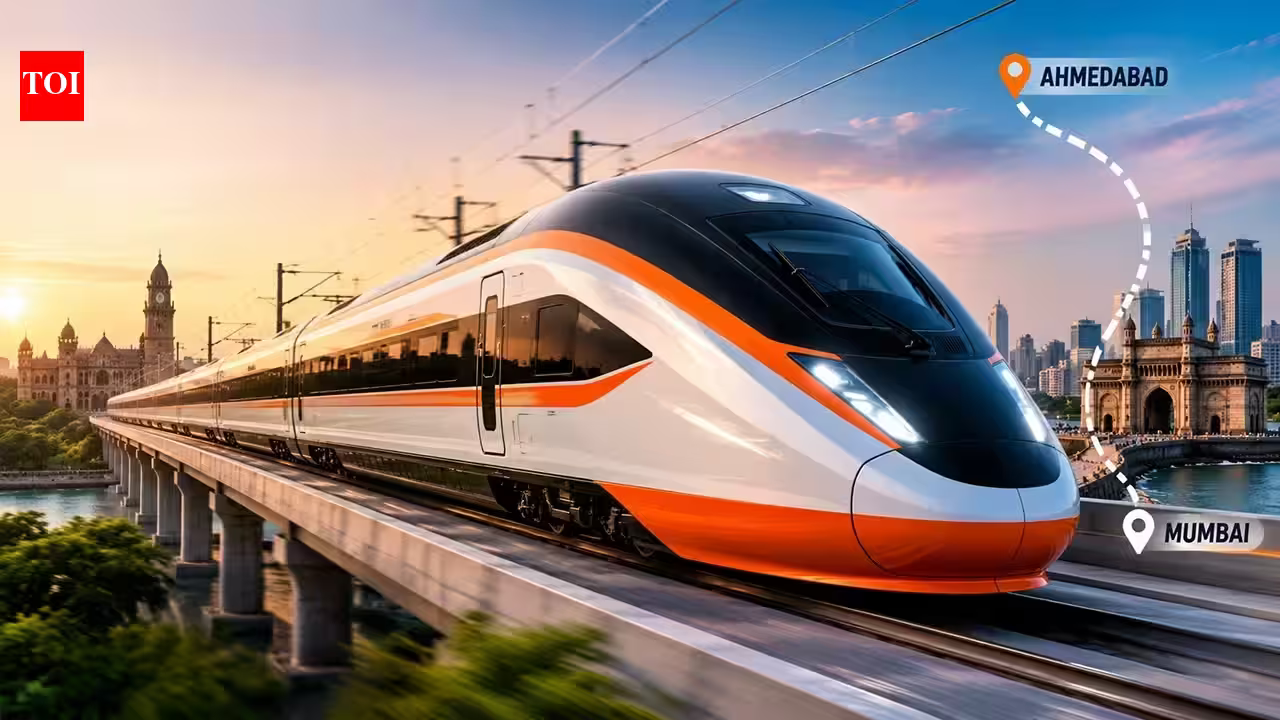
India is currently undergoing a transformative phase in its transportation sector, transitioning from conventional rail networks to advanced high-speed transit systems. The central pillar of this evolution is the Mumbai-Ahmedabad High-Speed Rail (MAHSR) project. Recent developments indicate that the Indian government is not merely relying on international technology imports but is aggressively pursuing an indigenous manufacturing roadmap. By 2030, India aims to produce its own high-speed trains capable of reaching 350 kmph, a milestone that will align the nation’s technological prowess with global leaders like Japan.
This ambition is underscored by the development of the B35 and B28 train sets. While the B28 series is designed for an operating speed of 249 kmph to serve the initial segments of the MAHSR corridor, the B35 project represents a forward-looking strategy to master high-speed rolling stock manufacturing. This shift is critical as Japan prepares to phase out its E5 series in favor of the next-generation E10 trains. By developing internal expertise, India intends to mitigate dependency on foreign suppliers, reduce long-term capital expenditure, and establish a domestic ecosystem for high-speed infrastructure.
The B28 Project and Manufacturing Localization
The B28 project serves as the foundational step in India’s high-speed rail journey. BEML, a key player in this initiative, has been entrusted with the manufacturing of these advanced train sets. With the establishment of the Aditya High-Speed Rail Complex in Bengaluru, the company is building specialized facilities dedicated to the precision engineering required for bullet train production. The current order pipeline, which includes the manufacturing of over 40 train sets, signals the scale of the industrial ramp-up required for the MAHSR corridor.
Manufacturing a bullet train is qualitatively different from standard coach production. It necessitates high-grade materials that balance structural strength with low weight to ensure aerodynamic stability at speeds exceeding 200 kmph. Furthermore, these trains are being engineered specifically for the Indian environment. Unlike European or Japanese models designed for temperate or cold climates, Indian high-speed trains must maintain high operational efficiency amidst extreme heat and heavy dust. This adaptation is not merely an engineering adjustment but a critical requirement for ensuring the longevity and safety of the rolling stock.
Economic Implications and Project Costs
The expansion of the MAHSR project has seen a significant increase in capital allocation, with the revised budget now exceeding Rs 2 lakh crore. This escalation reflects both the complexity of land acquisition and the inclusion of advanced technological infrastructure. Land acquisition costs have tripled since the project’s inception, accounting for a significant portion of the budget increase. However, the investment in rolling stock and signalling systems is equally substantial.
From a macroeconomic perspective, the rise in project cost must be viewed in the context of the long-term utility of the asset. The transition from imported technology to an indigenous “Make in India” approach for high-speed trains is designed to yield dividends in the form of cost-effective maintenance and the ability to scale infrastructure across other proposed corridors. By developing the Bharat Train Control System (BTCS), modeled after successful frameworks used in other high-speed networks, India is creating a self-sustaining system that controls speed, safety, and operational intervals across its entire future high-speed network.
Technical Challenges and Engineering Excellence
Achieving stable transit at 350 kmph involves more than just a powerful engine. It requires a sophisticated integration of track geometry, suspension dynamics, and real-time data management. As Indian Railways moves toward the B35 series, it faces the challenge of managing passenger comfort during rapid pressure changes and ensuring that the train body remains aerodynamically resilient.
The integration of advanced infotainment, ergonomic cabin design, and accessibility features for diverse passenger groups further complicates the engineering requirement. The transition from LHB (Linke Hofmann Busch) coaches—the current standard for premium express trains in India—to high-speed bullet train units requires a complete overhaul of the manufacturing supply chain. This involves sourcing specialized components and fostering a tier-2 and tier-3 supplier base that can adhere to the rigorous quality standards demanded by high-speed rail operations.
The Future of High-Speed Corridors in India
The Mumbai-Ahmedabad corridor is merely the starting point for a broader national vision. The government has already outlined seven additional high-speed rail corridors, including high-traffic routes such as Delhi-Varanasi, Hyderabad-Bengaluru, and Chennai-Bengaluru. These projects are intended to reduce travel times between major industrial hubs by significant margins, potentially transforming the economic geography of the country.
For instance, the proposed Hyderabad-Bengaluru corridor, with a travel time of just two hours, will facilitate deeper integration between two of India’s most vital technology centers. Similarly, the Delhi-Varanasi link is poised to enhance connectivity in the northern corridor. The ability to deploy domestically manufactured trains on these routes will be the ultimate test of India’s engineering capacity. If successful, India will join an elite group of nations capable of designing, building, and maintaining an indigenous high-speed railway ecosystem, positioning itself as a hub for advanced rail technology in the Global South.
Conclusion: Setting the Stage for 2030
The timeline leading up to 2030 is packed with milestones: the 2027 trials of the B28 trains, the continued development of the B35 series, and the completion of the Mumbai-Ahmedabad corridor. While the project faces logistical and financial hurdles, the commitment to building an indigenous high-speed rail industry provides a clear roadmap for modernization. By investing in the Bharat Train Control System and specialized manufacturing complexes, India is laying the infrastructure for a future where high-speed travel is a core component of its national transport strategy. The success of these initiatives will depend on the seamless integration of manufacturing speed, technical rigor, and consistent policy support as India marches toward its 350 kmph reality.
Disclaimer: This content is auto-generated for informational purposes only.
Source: Read Original News