








The Crisis of Consciousness: Is Electoral Politics Failing Indian Democracy?
As India navigates a period defined by intense political friction and recurring public protests, a profound question emerges: Can a nation truly forge a democratic, egalitarian, and secular path without fundamentally transforming its cultural landscape and human consciousness? The current state of Indian politics suggests that we have become trapped in a hollow, instrumental version of democracy where the sole objective is winning elections at any cost.
The Ritualization of Democracy
In our contemporary landscape, democracy has been largely reduced to the periodic ritual of casting ballots—an act that offers voters little control over the candidates or ideologies that govern them. True democracy requires a vibrant civil society capable of intellectual freedom, nuanced debate, and robust dissent. Instead, we see a political culture dominated by Machiavellian strategists who prioritize power over principles.
This instrumental approach to politics feeds regressive social tendencies. By weaponizing parochial identities—whether based on caste, ethnicity, or religious hyper-nationalism—the political class effectively reinforces the patriarchal and hierarchical structures that prevent true societal progress.
The Cultural Roots of Authoritarianism
The failure of our democracy is rooted in how we socialize our citizens. From family dynamics to classroom environments, Indians are conditioned to prioritize obedience over critical thought. We are raised to submit to the authority of the patriarch, the social norm, or the regimented discipline of the school system. When children are taught that to be “good” is to be “silent,” we create a citizenry primed for submission.
This cultural milieu explains why Indian democracy is so susceptible to degenerating into electoral autocracy. We have become comfortable elevating leaders into larger-than-life figures, making it remarkably easy for the ruling regime to criminalize dissent and castigate those who challenge the status quo. Furthermore, while the nation occasionally celebrates symbolic victories—such as the appointment of leaders from marginalized communities—these gestures often mask the persistence of deep-seated systemic inequality, including the enduring shame of caste violence and patriarchal oppression.
The Secular Challenge and the Quest for Reform
The aspiration for a secular society remains obstructed by the immense influence of organized religion and a surge in the popularity of new-age gurus. While a sincere religiosity grounded in compassion can foster a cosmopolitan outlook, religion today is too often reduced to an identity marker—a weapon in the toxic “Hindu vs. Muslim” discourse. This fixation on sectarian identity stifles the spirit of free inquiry, which is the cornerstone of a healthy, functioning democracy.
Historically, visionaries like Jotirao Phule, B.R. Ambedkar, and Mahatma Gandhi understood that political progress is meaningless without a cultural and psychic revolution. Yet, in our rush toward technological and economic modernization, we have neglected this vital work. We have embraced the gadgets of the 21st century while clinging to the archaic social hierarchies of the past.
Can the Next Generation Lead the Way?
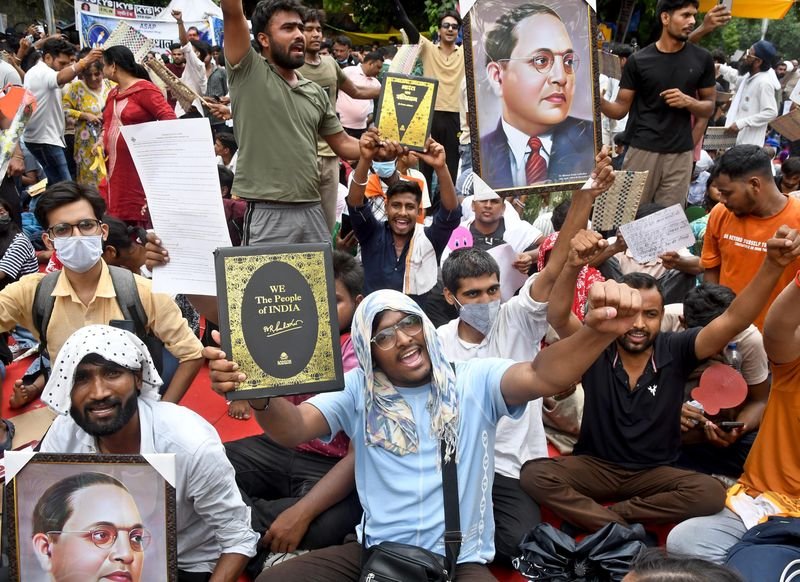
There is a flicker of hope in the rising voice of India’s youth, who are increasingly challenging the culture of silence. However, a deeper challenge remains: can this generation look beyond the temporary resignations of officials and the immediate grievances of the day to commit to a long-term cultural transformation? If India is to move beyond its current political stagnation, it must pivot from being a nation of passive consumers to one of intellectually awakened, active citizens. Without a fundamental shift in our cultural consciousness, our democracy risks becoming little more than a hollow shell.
Disclaimer: This content is auto-generated for informational purposes only.
Source: Read Original News