






Trump Praises Indian Electoral System, Renews Call for Mandatory Voter ID in US
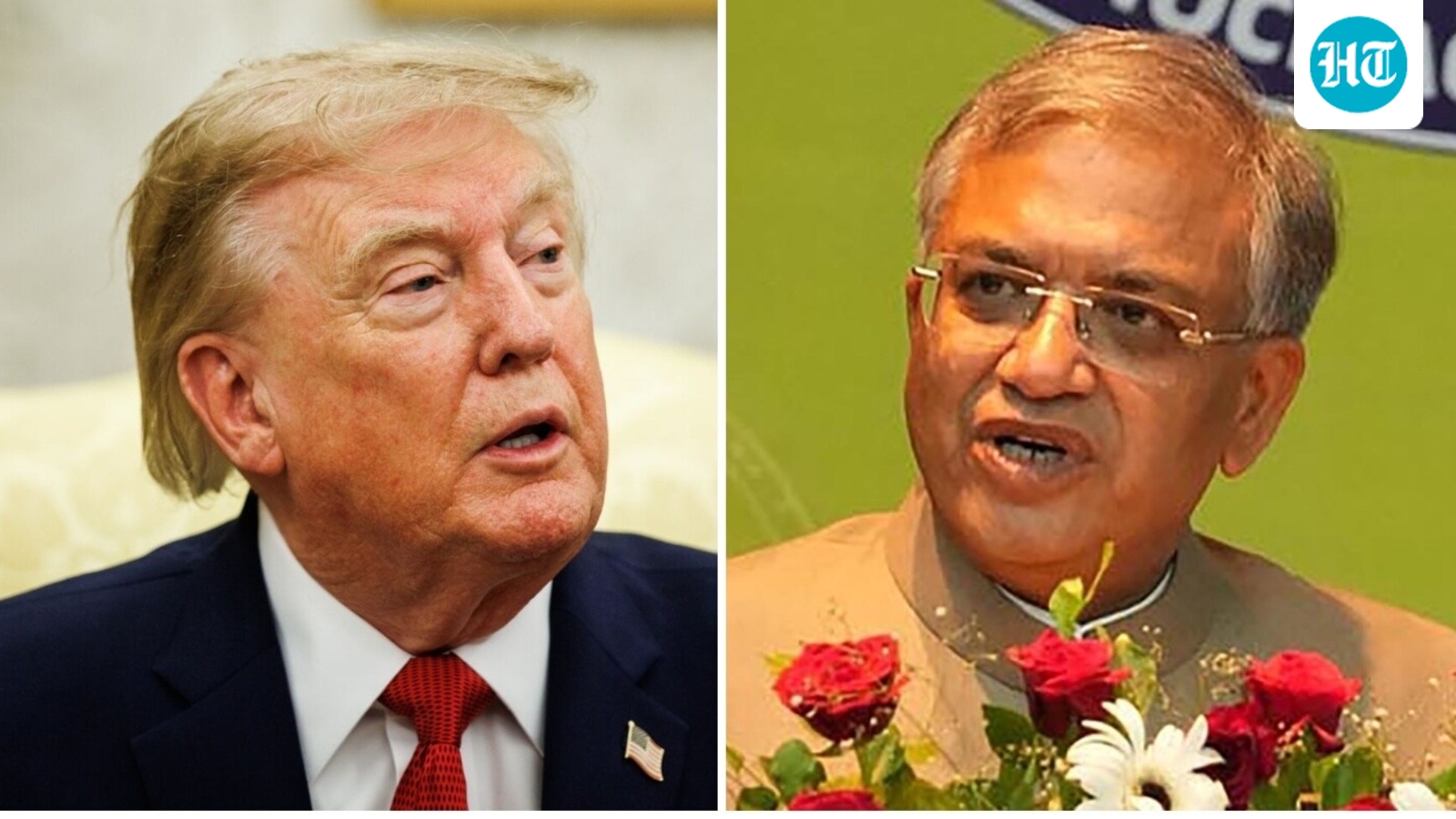
Washington D.C. – In a move that highlights the ongoing debate surrounding election integrity in the United States, former President Donald Trump has invoked India’s robust electoral system and its Chief Election Commissioner (CEC), Gyanesh Kumar, to bolster his push for mandatory photo identification for American voters. Trump’s renewed call comes as he champions the "SAVE America Act," a proposed legislation aimed at tightening voter registration and identification requirements.
On Tuesday, Trump took to his social media platform, Truth Social, to emphasize the stark contrast between the two democracies’ electoral practices. "Earlier this month, India’s Chief Election Commissioner, Gyanesh Kumar, asked our Administration — How can you have Elections in the US without a valid Photo ID?" Trump wrote. He further highlighted the immense scale of India’s recent elections, noting, "India’s last Election had 646,000,000 Voters! Less than 1 per cent voted by mail, and every single Voter had to have a VALID Photo Identity Document. We need to pass THE SAVE AMERICA ACT, now!"
This endorsement of India’s election protocols follows a recent meeting between CEC Gyanesh Kumar and US Ambassador to India, Sergio Gor. The two officials reportedly discussed deepening collaboration on election management and the training of electoral staff, signaling a potential for future cooperation and exchange of best practices. Ambassador Gor echoed Trump’s sentiment on X (formerly Twitter), stating, "President Donald J. Trump is absolutely correct! 646 MILLION voters, every single one required an ID in India’s last election. Congress should pass THE SAVE AMERICA ACT!"
The "SAVE America Act," a cornerstone of Trump’s legislative agenda, seeks to mandate documentary proof of citizenship for voter registration and require photo identification at the polls. While the House of Representatives passed the bill earlier this year, it has consistently faced roadblocks in the Senate, America’s upper legislative chamber.
The debate surrounding voter ID laws in the United States is deeply polarized. Supporters argue that such measures are crucial for ensuring the integrity of elections and restoring public trust, particularly in the wake of heightened political tensions surrounding the legitimacy of recent election outcomes. They point to the perceived security benefits of requiring voters to present a valid photo ID, asserting it helps prevent fraud and impersonation.
However, critics of the "SAVE America Act" raise significant concerns about potential voter suppression. They argue that existing laws already prohibit non-citizens from voting, rendering some provisions of the proposed act redundant. More importantly, opponents highlight that millions of registered voters in the US currently lack the specific documentation that would be mandated by the act.
According to research from the Bipartisan Policy Center, approximately 12% of registered American voters do not possess common forms of documentary proof, such as a birth certificate or a valid passport. The Center further contends that verifying the validity of these documents would place an immense and potentially unmanageable burden on election officials, who often lack the necessary resources. Illustrating the potential impact, the Center cited an example from Kansas, where the introduction of more restrictive voter ID laws reportedly prevented around 31,000 eligible US citizens from registering to vote.
The invocation of India’s electoral system by a prominent American political figure underscores the global attention on voter identification and the varying approaches democracies take to ensure fair and secure elections. As the debate over the "SAVE America Act" continues, the comparison with India’s extensive and mandatory voter ID system is likely to fuel further discussion on the balance between election security and voter accessibility in the United States.