








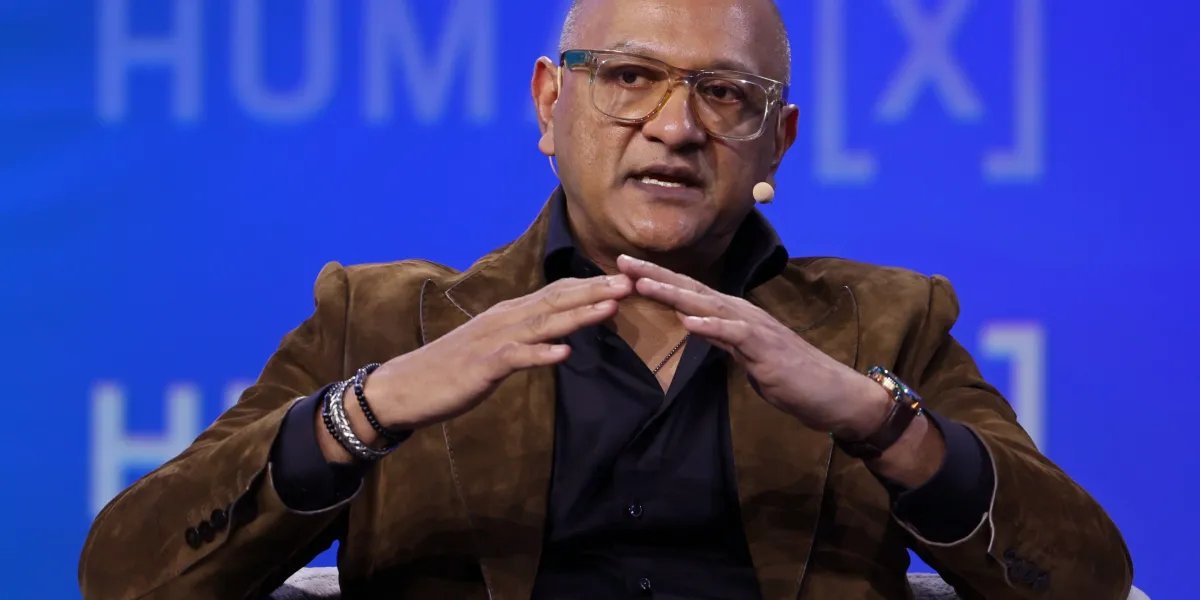
The landscape of modern corporate hiring is currently undergoing a radical shift. While many organizations are reducing their intake of entry-level employees due to the rise of artificial intelligence, some industry leaders are actively doubling down on younger talent. At the forefront of this movement is Cisco’s president and chief product officer, Jeetu Patel. By prioritizing “AI-native” perspectives, Patel is challenging the long-standing corporate bias that equates experience with superior problem-solving capability.
Refactoring Legacy Systems with AI-Native Talent
The shift in strategy at Cisco is best illustrated by the promotion of Padmanabhan “Paddy” Krishnamurthy, a 27-year-old former startup founder acquired by the company through its purchase of EzDubs. Despite being positioned several levels deep in the organizational hierarchy, Krishnamurthy was identified by Patel as a key asset for modernizing the firm’s infrastructure.
Patel granted the young engineer broad access to computational resources—specifically, an “unlimited token” budget—to facilitate the refactoring of legacy code. This initiative is not merely a technical upgrade; it is a high-stakes proof of concept. The objective is to achieve a 98% rewrite of legacy codebases within a 24-month window, a timeline that would typically be viewed as impossible under traditional development constraints. By empowering younger employees to operate with autonomy, Cisco is attempting to bypass the institutional inertia that often slows down large technology firms.
The Strategic Role of Internal Friction
Patel advocates for what he describes as productive tension. In his view, the most effective teams are not those characterized by uniform agreement, but those that combine the expertise of veteran operators with the disruptive questioning of early-career staff. The goal is to move past the traditional model where junior employees are assigned repetitive data entry tasks and instead position them as “reverse mentors.”
This approach forces senior staff to defend long-standing workflows against fresh, technologically unburdened scrutiny. Patel notes that while this creates interpersonal friction, the outcome is a more robust, battle-tested strategy. By encouraging this collision of perspectives, management can identify systemic inefficiencies that experienced staff—accustomed to the status quo—might otherwise overlook.
Beyond Cisco: The Search for Untapped Potential
Cisco is not an outlier in its commitment to hiring individuals with minimal industry experience. Prominent investors and founders are increasingly looking toward the next generation as the primary source of innovation. Josh Kushner of Thrive Capital has long maintained a strategy of hiring individuals with less than four years of experience. Kushner’s philosophy is rooted in the idea that established professionals often possess inherent biases that prevent them from adapting to the rapid pace of technological change. This approach contributed to early investment successes in companies like OpenAI.
Similarly, Alon Chen, CEO of the generative AI platform Tastewise, emphasizes that younger workers are not bound by the limitations of historical market constraints. Because this demographic has matured alongside the emergence of generative AI, they are naturally adept at identifying new use cases for these tools. They are effectively “AI natives,” capable of viewing complex problems through a lens of possibilities rather than legacy restrictions.
Creating Diverse Technical Ecosystems
The integration of these diverse talent pools into a single organization requires a structured approach to management. Patel outlines a framework for team composition that allocates responsibilities across three distinct pillars: scaled operators who maintain the “Cisco engine,” systems thinkers who provide an outside perspective, and AI-native entrepreneurial talent.
This model relies on the interaction of all three groups to generate breakthroughs. When isolated, each group possesses inherent limitations: the operators risk stagnation, while the AI natives may lack the necessary context to navigate massive enterprise environments. The synthesis of these groups is intended to produce a high-velocity environment capable of adapting to the rapid evolution of software development tools.
Impact on the Future of Technical Employment
The broader implication for the workforce is significant. As artificial intelligence automates entry-level tasks, the value proposition for junior hires is transitioning from labor-intensive work to intellectual contribution. If this trend continues, the definition of an “entry-level” role will change, shifting from a position of learning to one of active innovation.
For institutions and universities, this underscores the necessity of cultivating students who can demonstrate consistent follow-through and a hunger for technical mastery. Patel’s practice of seeking out students who display the persistence to maintain communication and solve problems that baffle experienced staff suggests that future hiring will favor those who can articulate unique strategies rather than those who simply possess traditional credentials. As companies navigate the complexities of digital transformation, the ability to bridge the gap between historical experience and the capabilities of emerging AI technologies will define the next generation of industry leaders.
Disclaimer: This content is auto-generated for informational purposes only.
Source: Read Original News