








Understanding the iPhone Duo Battery Architecture
Following the opening of pre-orders for the highly anticipated iPhone Duo, technical documentation submitted to European regulators has surfaced, providing a definitive look at the device’s internal power specifications. The iPhone Duo utilizes a dual-cell battery configuration to manage the hardware requirements of a folding form factor. Specifically, the device houses a 2962mAh cell alongside a 1921mAh unit, resulting in a combined total capacity of 4883mAh.
This dual-cell approach is a common engineering solution for foldable devices, allowing manufacturers to distribute the battery weight across the two halves of the chassis. By separating the energy storage, Apple can ensure that the weight distribution remains balanced while providing sufficient capacity to drive both the outer cover display and the expansive inner foldable panel. This 4883mAh figure places the iPhone Duo firmly in the upper echelon of current smartphone energy storage, surpassed only by the most recent Pro Max iterations in the company’s catalog.
Performance Metrics and Power Management
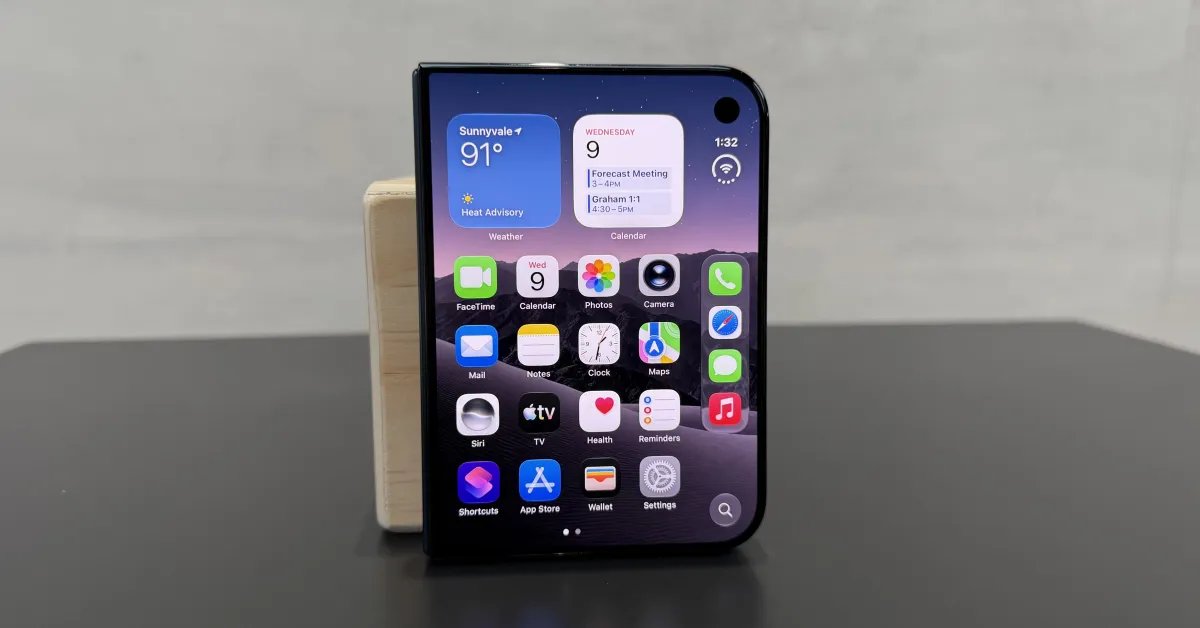
When evaluating the longevity of the iPhone Duo, it is essential to distinguish between the two distinct operating modes enabled by its hardware. Apple’s official performance benchmarks indicate that the device achieves up to 44 hours of video playback when utilized on the outer display alone. This high efficiency is likely due to the smaller screen surface area and reduced power consumption of the secondary panel.
Conversely, the transition to the inner foldable display shifts the power consumption profile significantly. When the device is fully unfolded, the playback duration shifts to 31 hours. This reduction is anticipated, as the larger, higher-resolution inner screen demands substantially more power from the battery cells. Prospective users should consider this discrepancy in their usage patterns. For tasks requiring shorter durations, the inner screen offers an immersive experience, while the outer screen serves as a high-efficiency alternative for tasks that do not necessitate the full display real estate.
Comparative Analysis within the iPhone Ecosystem
The 4883mAh capacity of the iPhone Duo positions it as a bridge between the traditional Pro and Pro Max tiers. For comparison, the iPhone 18 Pro Max leads the lineup with a 5567mAh battery, providing the maximum endurance available in the current generation. The iPhone Duo sits roughly 14 percent below that flagship capacity but outperforms the standard iPhone 18 Pro, which features a 4288mAh battery, by approximately 12 percent.
This placement is strategic. By exceeding the capacity of the standard Pro model, the iPhone Duo compensates for the higher power requirements of its foldable display architecture. While it does not reach the levels of the Pro Max, it manages to maintain a physical profile that balances thinness when closed with high-capacity storage. When measured against smaller models like the iPhone Air or the standard iPhone 17, the Duo offers significantly more energy, reflecting the higher requirements of its multi-display system.
The Technical Impact of Foldable Hardware
The adoption of a 4883mAh total capacity is a significant technical milestone for Apple’s transition into the foldable market. Implementing such a large battery in a device that must also accommodate a sophisticated hinge mechanism and two display layers requires precise internal component placement. The dual-cell layout not only solves physical packaging constraints but also allows for faster charging throughput, as the cells can technically be managed in parallel to reduce thermal stress during high-wattage charging cycles.
The engineering challenge here is not merely about raw capacity; it is about current density and efficiency. Foldable screens present a unique hurdle for thermal management and power delivery, as the ribbon cables and sensors must navigate the hinge without losing efficiency. By opting for a 4883mAh total capacity, Apple appears to have prioritized a balance that keeps the device competitive with non-folding flagships while addressing the increased power draw associated with larger organic light-emitting diode panels.
Use-Cases and User Expectations
Understanding the battery capacity of the iPhone Duo helps set realistic expectations for power users. Professionals who rely on multitasking—such as utilizing the inner display for complex workflows, video editing, or remote collaboration—will find that the 31-hour playback metric translates to a full day of heavy utility. For these users, the device is designed to handle intensive graphical output and high refresh rates without requiring constant tethering to a charging source.
Casual users who primary utilize the outer cover display will likely find that the iPhone Duo exceeds their daily requirements. The efficiency gains found when keeping the device in its folded state suggest that the 44-hour playback limit is highly sustainable for reading, messaging, and audio streaming. Ultimately, the iPhone Duo offers a dual-natured experience, where the power user can prioritize utility and display size, while the general user can prioritize battery longevity by leveraging the optimized performance of the exterior interface. This variability ensures that the device is versatile enough to meet the conflicting demands of display size and energy efficiency.
Disclaimer: This content is auto-generated for informational purposes only.
Source: Read Original News